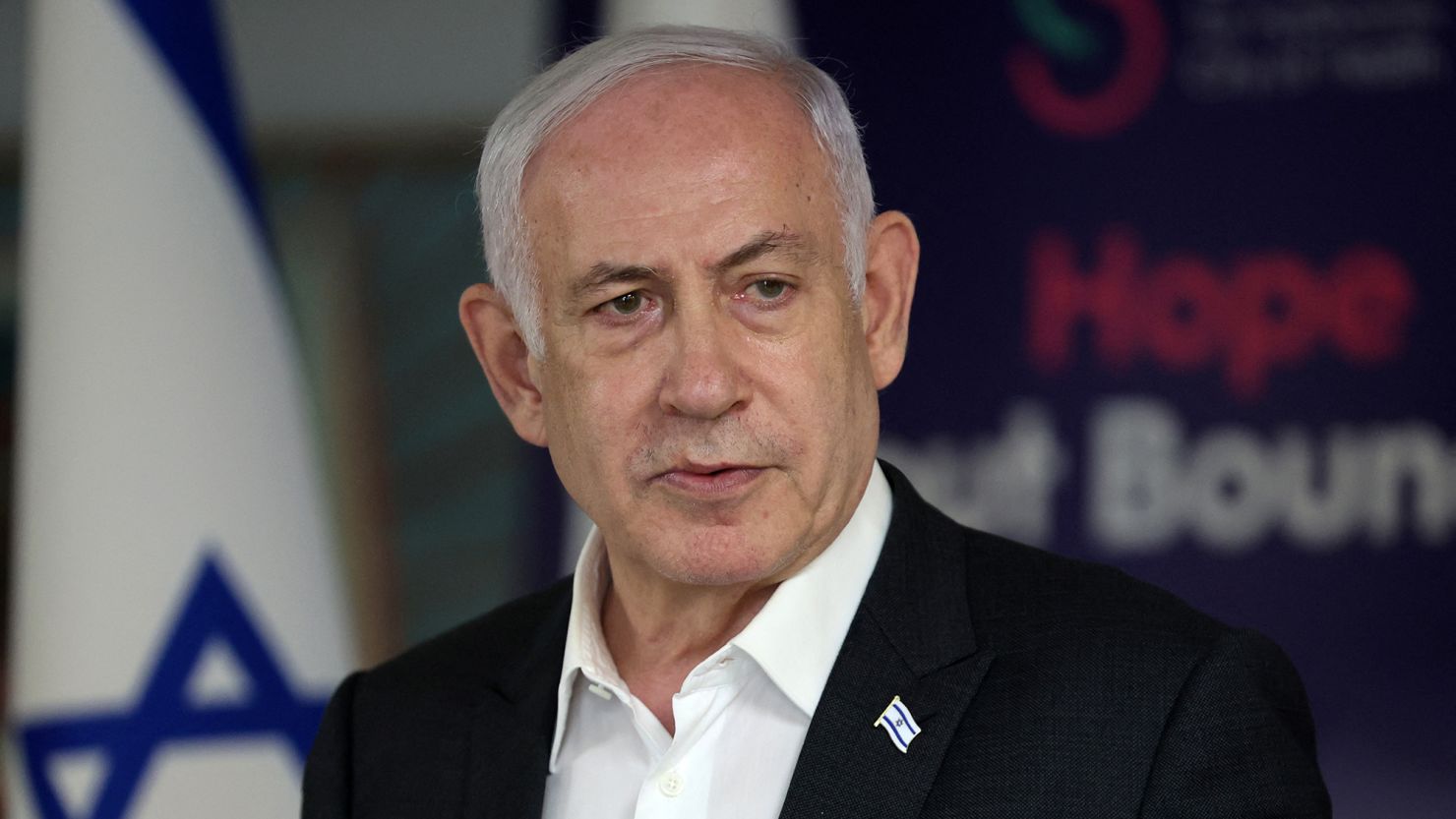
Benjamin Netanyahu is signaling a readiness to talk. After months of escalating cross-border fire and a bruising ground campaign in Southern Lebanon, the Israeli Prime Minister has shifted his public posture toward a "settlement" with Hezbollah. To the casual observer, this looks like a diplomatic breakthrough. To those who have tracked Netanyahu’s long career of survival, it looks like a desperate bid to reconcile an overextended military with a fractured domestic base.
The core premise being floated by Jerusalem is simple. Israel wants a deal that pushes Hezbollah north of the Litani River, ensures the return of displaced citizens to the Galilee, and grants the Israeli Defense Forces (IDF) the freedom to strike if the agreement is breached. But this is not a peace treaty. It is a strategic pause born of exhaustion.
The Mirage of a Diplomatic Solution
Talk of a ceasefire is often a tool of war by other means. In the case of Lebanon, Netanyahu is facing a reality that his cabinet rarely admits in public. The IDF is currently fighting on seven fronts. Soldiers who have spent the better part of a year in Gaza are now being recycled into the hills of Southern Lebanon. Reserves are stretched. The economy is bleeding.
A deal with Lebanon serves a very specific purpose. It decouples the northern front from the carnage in Gaza. For months, Hezbollah leader Hassan Nasrallah—and his successors—insisted that the rocket fire would only stop when a Gaza ceasefire was signed. By signaling a readiness for a separate track, Netanyahu is attempting to break the "unity of arenas" strategy that Iran has spent decades building.
If he can force a wedge between Lebanon and Gaza, he solves one of his most pressing political problems. The tens of thousands of Israelis who were evacuated from northern towns are losing patience. They don't care about the grand geopolitics of the Middle East; they want to go home. If Netanyahu can get them back into their houses through a diplomatic arrangement, he can claim a victory without having to conquer and hold Lebanese territory—an endeavor that historically ends in disaster for Israel.
Why the Litani Line is a Technical Nightmare
The demand to push Hezbollah back to the Litani River is a repeat of UN Security Council Resolution 1701. That resolution has existed since 2006. It failed. It failed because the Lebanese Armed Forces (LAF) lack the will and the firepower to disarm Hezbollah, and the UN peacekeeping force, UNIFIL, has the mandate of a wet paper towel.
When Netanyahu says he is ready for talks "as soon as possible," he is effectively asking for a mechanism that has never worked.
The geography of Southern Lebanon favors the insurgent. The terrain is a labyrinth of limestone caves, deep wadis, and dense thickets. Hezbollah has spent nearly twenty years turning these villages into fortresses. Even if their formal military structures move north of the river, their social and intelligence roots remain. You cannot negotiate away a local population’s allegiance.
Israel’s "red line" in these negotiations is the demand for enforcement rights. They want the ability to fly drones over Lebanon and conduct airstrikes the moment a Hezbollah truck moves a crate of rockets. For the Lebanese government, agreeing to this is political suicide. It is a formal surrender of sovereignty. This is the friction point where the talks will likely grind to a halt, regardless of the optimistic headlines.
The Washington Pressure Cooker
The timing of this sudden diplomatic flexibility is no accident. Netanyahu is dancing a delicate tango with the United States. With a shifting political climate in Washington, the window for unchecked military operations is narrowing.
The Biden administration has been desperate for a "win" in the Middle East to stabilize the region. By appearing cooperative, Netanyahu buys himself two things:
- Continued arms shipments: By showing he is "exhausted" all diplomatic options, he makes it harder for the U.S. to justify withholding munitions.
- Political cover: If the talks fail, he can blame Lebanese intransigence or Iranian interference, thereby justifying a massive expansion of the air campaign.
It is a cynical cycle. We have seen it in every major conflict involving this administration. The talk of "talks" often precedes the most violent phases of the war.
The Economic Ghost in the Room
Behind the bravado of the "Total Victory" slogan lies a terrifying balance sheet. Israel’s credit rating has been slashed. The cost of calling up hundreds of thousands of reservists is cratering the tech sector, which is the engine of the national economy.
A war in Lebanon is exponentially more expensive than a war in Gaza. Hezbollah's arsenal is not made of "garage rockets." They possess precision-guided missiles that can reach the skyscrapers of Tel Aviv and the chemical plants in Haifa. The "Iron Dome" is a marvel, but it is not a magic shield against a saturation attack of 3,000 rockets a day.
Netanyahu knows that a full-scale, multi-month war that shuts down the Israeli economy would be the end of his career. He is looking for an exit ramp that looks like a victory lap.
The Hezbollah Counter-Play
Hezbollah is also hurting, though they will never show it. The targeted assassinations of their entire top-tier leadership have left the organization in a state of chaotic transition. Their communication networks have been compromised in ways that seem like science fiction.
However, an organization like Hezbollah thrives on being the "defender of Lebanon." If they can survive the current onslaught and keep their rocket teams active, they win by not losing. For them, a ceasefire that leaves their infrastructure largely intact—even if moved a few miles north—is a gift. It allows them to rearm, recruit, and wait for the next cycle of violence.
The Forgotten Variable: The Lebanese People
While Jerusalem and Tehran trade threats, the Lebanese state is a ghost. The economy there has already collapsed. The currency is worthless. There is no president.
Any deal Netanyahu strikes will be with a government that has no power to enforce it. This is the fundamental flaw in the "talks" narrative. You cannot sign a contract with someone who doesn't own the property. If the Lebanese Army cannot or will not stop Hezbollah from returning to the border, the deal is nothing more than a piece of paper that buys a few months of quiet.
The Mechanics of a Looming Escalation
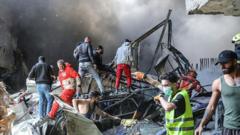
What does "ready for talks" actually look like on the ground? It looks like more bombing.
In the logic of the Middle East, you negotiate only when the other side feels they have no other choice. Netanyahu's sudden interest in diplomacy is backed by a massive increase in strikes on Beirut’s southern suburbs. It is the "escalate to de-escalate" strategy.
The goal is to make the cost of continuing the war so high for the Lebanese civilian population that they turn on Hezbollah. It is a high-stakes gamble. Often, this tactic has the opposite effect, driving the population into the arms of the only group that seems to be fighting back.
The Strategic Trap
There is a danger that Netanyahu is walking into a trap of his own making. By setting the bar for a "settlement" so high—complete Hezbollah withdrawal and Israeli military freedom of movement—he creates a standard that is impossible to meet.
When the talks inevitably stall, he will be forced to choose between a humiliating climb-down or a full-scale invasion of Beirut. The middle ground is disappearing.
The "as soon as possible" timeline is a PR stunt. It is designed to soothe the international community while the IDF prepares its next move. The reality is that the conditions for a stable, long-term peace in Lebanon do not exist. There is no "day after" plan for the north, just as there isn't one for Gaza.
The Military Reality of the North
Fighting in Lebanon is different from Gaza in one terrifying way: the tunnels. While Gaza’s tunnels are dug in sand and clay, Hezbollah’s are carved into solid rock. They are deeper, more reinforced, and designed for heavy vehicle movement.
Israeli intelligence knows that a ground campaign to actually "clear" the border area would take months and cost hundreds of soldiers' lives. This is the shadow hanging over Netanyahu's shoulder. He remembers the 18-year occupation of Southern Lebanon that ended in a hasty retreat in 2000. He remembers the 2006 war that ended in a stalemate.
He is desperate to avoid a third Lebanese quagmire, but he has promised his voters a level of security that can only be achieved through total military dominance. These two things are in direct conflict.
The False Promise of Diplomacy
We are entering a phase of the conflict where words are used to mask the lack of a clear exit strategy. Netanyahu’s "readiness" for talks is a placeholder. It is a way to manage the clock.
If you want to know what is actually happening, ignore the statements from the Prime Minister’s Office. Look at the movement of heavy artillery toward the border. Look at the emergency procurement of bunker-buster bombs. Look at the increasing frequency of sorties into the Bekaa Valley.
The diplomacy being discussed is not about finding a lasting peace. It is about defining the parameters of the next phase of the war. Netanyahu isn't looking for a handshake; he’s looking for a surrender that he can package as a diplomatic success.
The brutal truth is that as long as Iran views Lebanon as its forward operating base against Israel, no amount of talking will change the fundamental trajectory toward a larger confrontation. The "settlement" is a pause, a breath of air before the next plunge.
Governments speak of peace when they are out of breath. Netanyahu is currently gasping for air, but he still has his hand on the trigger. He is betting that he can out-negotiate a group that has nothing to lose and out-fight a country that is already broken. It is a gamble with the lives of millions, played out in the headlines of newspapers that are too eager to believe that "talks" mean the end of the killing.
The talks aren't the end. They are the intermission. Prepare for the second act.