The Orion capsule will hit the Pacific Ocean at nearly 25 miles per hour, a jarring deceleration that marks the end of the first crewed lunar flyby in over half a century. While the public sees a graceful parachute descent, the reality for the four astronauts inside is a violent transition from the vacuum of space to the crushing grip of Earth’s gravity. This splashdown isn't just a photo op for NASA; it is the ultimate stress test for a recovery architecture that has been idle since the 1970s. If the heat shield fails or the uprighting bags don't deploy, the mission's success turns into a catastrophe in the final seconds.
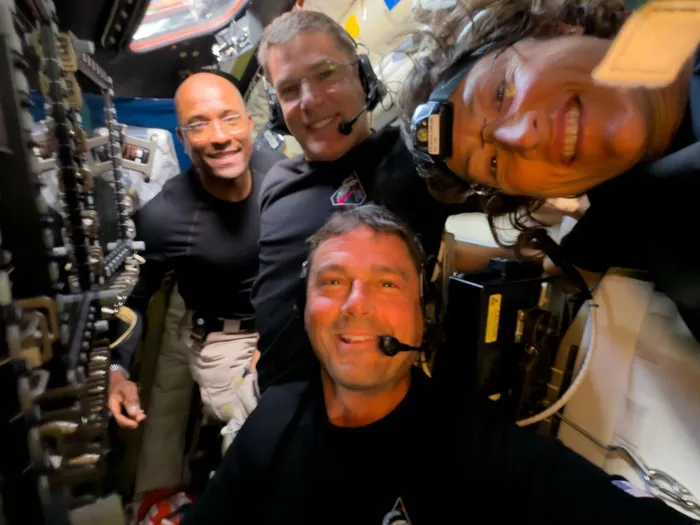
Artemis II is the bridge between proving the hardware and actually putting boots on the lunar south pole. It carries Reid Wiseman, Victor Glover, Christina Koch, and Jeremy Hansen on a high-stakes loop around the moon. But the mission’s most dangerous phase begins only when they hit the atmosphere. Unlike the Space Shuttle, which glided to a runway, Orion relies on the "capsule" method—a blunt-body reentry that trades elegance for survival.
The Scorch and the Slam
Reentry begins at 25,000 miles per hour. As Orion hits the thin upper atmosphere, the friction generates temperatures nearing 5,000 degrees Fahrenheit. This is where the ablative heat shield, a complex honeycomb of Avcoat, earns its keep. It is designed to char and flake away, carrying the heat with it.
During the Artemis I uncrewed test, NASA engineers noted that the heat shield wore away differently than predicted. Small pits and "spalling" occurred—pieces of the shield came off in chunks rather than wearing down smoothly. For Artemis II, the stakes are human. If the erosion is uneven, it can create turbulence that oscillates the capsule, making the final descent unstable.
The transition from Mach 32 to sub-sonic speeds happens in a matter of minutes. The crew will feel up to 7Gs of force, effectively weighing seven times their normal body weight. This physical toll is immense. After ten days in microgravity, their cardiovascular systems will be struggling to adjust. A heavy splashdown can cause "G-LOC" (G-force induced loss of consciousness) or simple physical trauma if the seats’ dampening systems don't work perfectly.
The Fragility of the Recovery Window
Once the three main parachutes deploy, the capsule slows to its final descent speed. But the ocean is a moving target. NASA and the U.S. Navy must coordinate a recovery zone that accounts for wave height, wind speed, and "sea state."
The Navy’s amphibious transport dock ship, usually the USS Portland or a similar San Antonio-class vessel, waits nearby. They aren't just there to pick up the crew. They are there to save the capsule from the corrosive effects of salt water.
The Uprighting Criticality
Orion is designed to float, but it doesn't always float upright. If it lands "Apex Down" (pointed into the water), five large orange bags must inflate at the top of the capsule to flip it over. This is known as the Crew Module Uprighting System (CMUS).
- Stable 1: The capsule is upright, antennas clear, hatches above water.
- Stable 2: The capsule is inverted. Life support systems are strained, and the crew is hanging upside down in their harnesses.
If the bags fail to inflate, the mission enters a crisis. A Stable 2 position prevents the GPS and communication antennas from working effectively. It also makes it nearly impossible to extract the crew through the side hatch. Divers from the Navy’s EOD (Explosive Ordnance Disposal) units must jump from helicopters to manually assist, a process that is dangerous in high seas.
Why We Still Splash Down
Critics often ask why NASA returned to splashdowns instead of the "dry" landings favored by Boeing’s Starliner or the vertical propulsive landings once envisioned by SpaceX. The answer is weight and simplicity. Landing on solid ground requires heavy landing gear or massive airbags. Landing on water uses the ocean itself as a giant shock absorber.
However, water is unpredictable. The "slap" of a wave against the heat shield can damage the structure. Furthermore, the recovery process requires an entire fleet of ships, helicopters, and hundreds of personnel. It is an expensive, logistical nightmare that has to work perfectly every time.
The Toxic Reality of the Post-Landing Environment
Even after the splashdown is successful, the crew isn't safe. The Orion capsule uses hydrazine for its reaction control thrusters. Hydrazine is a highly toxic, corrosive fuel. If there is a leak during reentry or upon impact, the air around the capsule becomes lethal.
Recovery teams wear specialized suits and use "sniffers" to detect hypergolic vapors before they ever approach the hatch. The astronauts must remain inside with the life support system on "closed-loop" until the "all clear" is given. Spending an extra hour bobbing in the waves inside a hot, cramped, and foul-smelling capsule is the final endurance test for the Artemis II crew. Motion sickness is almost guaranteed.
The Data Gap
Every second of the splashdown is recorded by hundreds of sensors. NASA is looking for more than just a safe crew; they are looking for structural integrity. The Artemis program intends to reuse these pressure vessels in the future to drive down costs.
If the impact with the water causes even a millimeter of warping in the hatch ring, the capsule might be grounded permanently. The data gathered from the Artemis II splashdown will dictate the final design tweaks for Artemis III—the mission that actually intends to land on the moon.
The Logistics of the Navy Fleet
The recovery is a choreographed dance.
- Detection: Long-range radar and P-3 Orion aircraft track the capsule’s descent.
- Visual Confirmation: Helicopters (MH-60S) move in as soon as the parachutes are visible.
- Towing: The Navy ship maneuvers behind the capsule. Small boats (RHIBs) attach a towing line.
- The Well Deck: The ship sinks its rear end, allowing the capsule to be winched into a flooded bay called the well deck.
This process can take hours. During that time, the crew is effectively in a floating tin can. The psychological transition from the loneliness of deep space to the chaos of a Navy deck is jarring.
A Legacy of Risk
We have become accustomed to the "routine" nature of space travel. We forget that the Apollo 11 crew almost tipped over during their splashdown. We forget that Gus Grissom nearly drowned when the hatch of his Liberty Bell 7 blew prematurely in 1961.
Artemis II is a return to that era of uncertainty. We are sending humans further than they have been since 1972, in a vehicle that has never carried people before. The splashdown is the final hurdle in a race that has no room for second place.
The success of the Artemis program hinges on these final moments in the Pacific. If NASA cannot reliably and safely recover four human beings from a bobbing cork in the ocean, the dream of a permanent lunar base stays a dream. The hardware must hold. The parachutes must reef. The bags must inflate.
Gravity is a relentless force, and it doesn't care about mission schedules or political optics. When Orion hits the water, the physics of the impact will tell the truth about whether we are truly ready to go back to the moon.
Pack your gear and watch the horizon. The return of the astronauts is a reminder that while leaving Earth is hard, coming back is the real work.