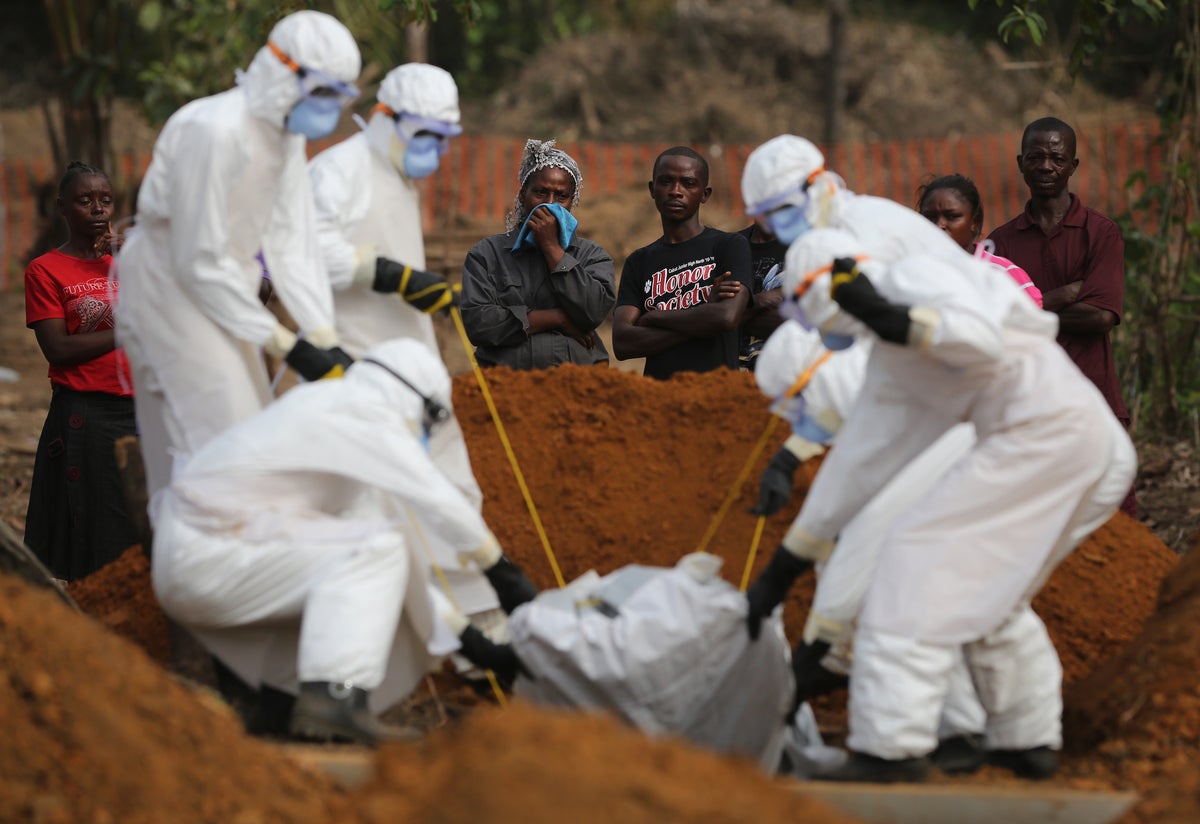
A year after Washington completely dismantled the U.S. Agency for International Development, an aggressive Ebola outbreak in the Democratic Republic of the Congo has shattered the domestic political consensus surrounding isolationism. A definitive new poll from Echelon Insights reveals that 75 percent of Americans now demand the immediate restoration of global health aid to contain the epidemic. This overwhelming bipartisan majority, which includes a sudden shift among the administration’s core political base, demonstrates that voters view global infectious disease containment as a matter of national defense rather than charity. Washington miscalculated the public appetite for total withdrawal from the international stage.
The political fallout from the collapse of overseas health programs is hitting home much faster than policymakers anticipated. When the federal government eliminated thousands of global health programs and downsized foreign aid outlays to 47 billion dollars in 2025, the policy was marketed as a financial victory for domestic priorities. The current outbreak in Central Africa, now officially documented as the third-largest Ebola crisis in human history, has turned that calculation upside down.
[Image of Ebola virus structure]
The Reversal of the Isolationist Mandate
Voters are reacting directly to a rapidly deteriorating health crisis on the ground. The abrupt termination of overseas disease surveillance networks meant that early warning systems in Central Africa were dark when the first cluster of cases emerged. Without American personnel and logistics, regional containment lines collapsed within weeks. The public response inside the United States has been swift and pragmatically driven.
The data indicates a massive gap between previous legislative actions and current public sentiment. While initial support for foreign assistance appeared low, the Echelon Insights survey shows that 78 percent of Americans favor maintaining or expanding global health outlays once they realize how small the actual expenditures are relative to the total federal budget. Most citizens mistakenly believed that foreign assistance absorbed up to a fifth of federal spending. Discovering that it previously represented a mere one percent triggered an immediate reassessment across the political spectrum.
This reassessment is most visible among voters who heavily back the current administration. Initially skeptical of overseas spending, these voters recorded a 27-point shift toward supporting global intervention after analyzing the direct consequences of the funding freeze. More than half of self-described MAGA loyalists now openly support reversing the aid cuts to combat the Ebola surge. They do not see this as a retreat from nationalist principles. They see it as preventing a lethal pathogen from reaching American airports.
The True Operational Cost of the USAID Shutdown
The administrative erasure of America's primary development agency forced the immediate termination of over ten thousand personnel contracts and hundreds of vital field operations. The sudden institutional void destabilized long-term efforts to manage malaria, tuberculosis, and HIV across sub-Saharan Africa. Medical literature, including recent projections from The Lancet, indicates that these combined disruptions could cause up to 14 million preventable deaths by the end of the decade.
The immediate crisis is structural rather than philosophical. When a specialized agency is dissolved overnight, its accumulated intelligence, regional partnerships, and logistical pipelines vanish. Field hospitals cannot simply be turned back on with a new executive order. Supply chains for personal protective equipment, experimental therapeutics, and experimental vaccines require years to construct and mere days to destroy.
Local health workers in the Democratic Republic of the Congo are currently attempting to fight a highly contagious hemorrhagic fever without basic laboratory infrastructure that Washington previously financed. The lack of clean water systems, secure transport, and community outreach teams has allowed the virus to leap from isolated rural provinces into dense urban transport hubs. This structural failure is exactly what has alarmed the American electorate.
Geopolitical Vacuums and Competitor Influence
Beyond the immediate epidemiological threat, the withdrawal of American presence created an immediate national security vacuum that geopolitical rivals have moved quickly to exploit. Beijing and Moscow have actively deployed medical teams, equipment, and financial infrastructure to fill the spaces vacated by Western personnel. The Echelon Insights research shows that 68 percent of Americans recognize that abandoning international development programs actively damages the ability of the United States to compete for global influence.
The strategic loss is clear to defense analysts. When American aid workers leave a region, the diplomatic leverage goes with them. Foreign governments facing existential health crises will naturally align with whichever global power provides the tools for their survival. By treating global health as an optional luxury rather than a strategic asset, Washington accidentally handed its chief adversaries a massive soft-power victory.
A Scramble for Emergency Funding in Congress
Faced with a massive shift in public opinion and a genuinely dangerous biological reality, the executive branch is shifting its strategy behind the scenes. The administration has quietly approached lawmakers to request over 1.4 billion dollars in emergency capital to combat the expanding outbreak. This constitutes a sharp tactical retreat from the policy of total defunding that defined the previous calendar year.
Securing these emergency funds will not be an effortless legislative process. Lawmakers who spent the last year praising the elimination of international development spending must now explain to their constituents why billions are suddenly required to rebuild a fraction of what was dismantled. The process of distributing emergency funds without the established infrastructure of a dedicated agency like USAID will be chaotic, inefficient, and highly prone to waste.
The Emerging Strategy of Conditional Assistance
The path forward demanded by the electorate is not a simple return to the old ways of doing business. The data demonstrates that 81 percent of Americans demand that future global health expenditures feature much stricter safeguards, transparent tracking mechanisms, and clear links to domestic security objectives. The public rejects total abandonment, but they equally reject unaccountable spending.
Any successful push to stabilize the Central African outbreak will require a brand-new model of foreign assistance. This model must focus strictly on measurable biological defense metrics, localized capacity building, and ironclad oversight. Funding will likely be tied to specific, verifiable milestones in outbreak containment rather than broad development goals.
Washington is discovering that oceans are no longer wide enough to serve as biosecurity barriers. Containment at the source is the only viable mechanism to protect the domestic population from global health threats. The administration must now execute a complex political pivot, convincing its base that spending money across the globe is the fastest way to keep America secure.