Global shipping is currently trapped in a pincer movement of climate change and geopolitical violence, forcing logistics giants to pay record-breaking sums just to keep cargo moving. While headlines focus on the eye-popping $4 million auction fees paid by tankers to skip the line at the Panama Canal, the real story is the breakdown of the world’s most critical maritime shortcuts. This is not a temporary spike in the cost of doing business. It is a fundamental shift in how global trade functions when the two most important gateways on the planet—the Panama Canal and the Suez Canal—are throttled simultaneously.
The Panama Canal Authority has been forced to slash daily vessel crossings because of a historic drought in Gatun Lake. At the same time, the Suez Canal has become a no-go zone for many after Houthi rebels began targeting commercial ships in the Red Sea. This dual-sided crisis has turned maritime transit into a high-stakes gambling hall. Shipping companies are no longer just managing fleets; they are bidding in desperate auctions to secure "slots" that allow them to bypass weeks of waiting. If they don't pay, their cargo sits. If they do pay, the cost is passed directly to the consumer. Read more on a connected subject: this related article.
The Auction Room Architecture
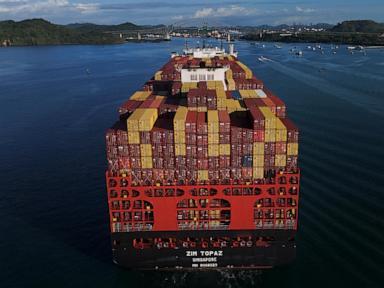
The Panama Canal operates on a reservation system, but when the waiting list grows to dozens of ships deep, the "extra" slots go to the highest bidder. We are seeing numbers that would have been unthinkable five years ago. A single VLGC (Very Large Gas Carrier) recently paid roughly $4 million on top of standard transit fees just to jump the queue. This is pure arbitrage.
The math for a ship captain is cold. A detour around the Cape of Good Hope or the Strait of Magellan adds thousands of miles and weeks of travel time. Fuel costs for those extra miles can easily hit seven figures. When you factor in the daily charter rate of the vessel—which can range from $50,000 to $150,000—paying a $4 million "bypass fee" starts to look like a rational, albeit painful, business decision. It is a premium paid for the only commodity shipping companies cannot manufacture: time. Additional analysis by Forbes highlights related views on this issue.
Why the Strait of Hormuz Tension Amplifies the Pain
While the Panama Canal suffers from a lack of water, the Middle East is suffering from a lack of security. The Strait of Hormuz remains the world's most sensitive oil chokepoint. Any friction there sends shockwaves through the energy markets, but the current crisis in the Red Sea is what truly breaks the system.
When ships avoid the Suez Canal due to missile threats, they naturally look for alternatives. Normally, they might pivot toward other routes, but with the Panama Canal operating at roughly 60% capacity, there is nowhere for the excess volume to go. The global supply chain is built on the assumption that these shortcuts are always open. We are now seeing what happens when the shortcuts fail. The result is a massive "vessel crunch" where the world's fleet is effectively shrunk because ships are spending more time at sea and less time at the dock.
The Hidden Cost of the Gatun Lake Drought
The Panama Canal is a freshwater bridge. Every time a ship passes through, millions of gallons of water from Gatun Lake are flushed into the sea. Because Panama is experiencing its driest period in decades, the lake level is dropping toward a critical "dead pool" stage.
The Canal Authority has responded by limiting the draft of ships. This means vessels must carry less cargo to sit higher in the water. For a container ship, a one-foot reduction in draft can mean leaving 300 to 400 containers behind on the pier. This creates a hidden tax on every voyage. Even if a ship secures a slot, it is moving less goods for the same amount of fuel.
The Illusion of Alternative Routes
Logistics consultants often point to the "Land Bridge" across the United States—unloading ships in Los Angeles and putting containers on trains to New York—as the solution. This is a fantasy for bulk commodities. You cannot easily put a hundred thousand tons of liquefied natural gas (LNG) or grain on a train and expect it to be cost-effective.
The world relies on the economy of scale that only massive ships provide. When those ships are blocked, the entire mechanism of "Just-in-Time" manufacturing collapses. We are seeing a return to "Just-in-Case" inventory management, where companies hoard stock because they can no longer trust the arrival dates of their shipments. This hoarding consumes capital and drives up inflation in ways that a simple interest rate hike cannot fix.
Winners and Losers in the Transit War
The clear winners are the Canal Authorities and the few ship owners who have "grandfathered" slots. The Panama Canal is generating record revenues from these auctions even as total volume drops. However, this is a dangerous game. If the fees stay this high for too long, shippers will permanently reconfigure their supply chains to avoid the canal entirely, investing in larger port facilities elsewhere or shifting manufacturing closer to the end consumer (near-shoring).
The losers are the small and mid-sized players. A massive energy conglomerate can absorb a $4 million fee as a rounding error on a massive LNG contract. A mid-sized exporter of seasonal fruit or perishable goods cannot. They are effectively priced out of the market. This consolidation of the shipping industry is an overlooked side effect of the crisis; only the giants can afford to play in the auction room.
The Myth of the Quick Fix
There is a temptation to believe that a few heavy rainstorms in Panama or a diplomatic breakthrough in the Middle East will return us to the status quo. That is a dangerous misunderstanding of the current era. The Panama drought is part of a long-term shift in Caribbean weather patterns. The instability in the Red Sea and the Strait of Hormuz is rooted in deep-seated regional conflicts that show no sign of resolution.
We are entering an era of "Chokepoint Capitalism." In this environment, the ability to move goods through a narrow strip of water is the ultimate leverage. Governments are beginning to realize that maritime security is not just a military concern but a fundamental requirement for domestic economic stability.
Tactical Realities for Global Trade
Companies are now forced to employ "routing specialists" whose sole job is to monitor water levels in Panama and drone activity in the Gulf of Aden in real-time. The traditional "set it and forget it" approach to maritime logistics is dead.
If you are a business leader, the takeaway is clear. The $4 million fee is not an anomaly; it is a warning. Relying on a single transit point is a recipe for bankruptcy. Diversification of routes, even if they are more expensive in the short term, is the only way to mitigate the risk of being held hostage by a dried-up lake or a stray missile.
The Breakdown of Maritime Law
There is also a growing legal crisis regarding who pays these auction fees. Standard shipping contracts did not envision a world where a $4 million "bribe" to the Canal Authority was a standard operating expense. Insurance companies, charterers, and cargo owners are currently locked in legal battles over these costs. This litigation will likely drag on for years, creating a secondary layer of financial instability for the industry.
The "Force Majeure" clauses in many contracts are being tested like never before. Is a predictable drought an "act of God"? Is a known regional conflict a valid excuse for non-performance? These are not just academic questions for lawyers. They determine who stays solvent and who goes under in the next twelve months.
A Systemic Failure of Foresight
The maritime industry has been remarkably slow to adapt to the reality of a changing planet. We have built larger and larger ships that require deeper and deeper water, all while the sources of that water become less reliable. We have focused on efficiency at the expense of resilience.
The current bottleneck is a stress test that the global economy is failing. The $4 million shortcut is a symptom of a much larger disease: a world that has outgrown its infrastructure and its diplomatic guardrails. As long as we continue to ignore the fragility of these maritime veins, the cost of transit will continue to climb, and the reliability of the global market will continue to erode.
Every dollar paid in an auction at the Panama Canal is a dollar stolen from the efficiency of the global economy. It is a friction tax that benefits no one but the gatekeeper. To survive this, businesses must stop looking for the next shortcut and start building supply chains that don't rely on the luck of the weather or the whim of a regional militia.
The era of cheap, easy transit through the world's great canals has ended. What replaces it will be more expensive, more fragmented, and significantly more volatile. Adjust your balance sheets accordingly.