The shift in the Kremlin’s rhetorical strategy following the United States election is not merely a change in tone. It is a calculated restructuring of the global security architecture. By citing the incoming Trump administration as a catalyst for a "freer hand" in foreign operations, Moscow is signaling a departure from the cautious escalation management that defined the last three years of the Ukraine conflict. The core of this new posture centers on a terrifying premise. Russia is now tying its tactical nuclear doctrine directly to the survival of its primary Middle Eastern partner, Iran, while simultaneously threatening European capitals with strikes that bypass traditional "red lines."
This isn't the standard saber-rattling we saw in 2022. It is more surgical. It is more desperate. And it is grounded in a specific technical shift in how Russia views its missile capabilities against NATO’s aging air defense systems.
The Trump Factor and the End of Restraint
Moscow's propagandists and officials are currently operating under a specific narrative. They believe the American political transition provides a window of "strategic ambiguity" that they can exploit. The argument coming out of the Duma is that if the U.S. moves toward an isolationist "America First" policy, the umbrella over Europe will develop leaks.
They aren't just guessing. Russian intelligence is betting that a transactional approach to diplomacy from Washington will result in a decreased appetite for nuclear brinkmanship on behalf of Warsaw, Berlin, or London. By claiming that "Trump untied our hands," the Kremlin is testing the limits of the Atlantic alliance. They want to see if a threat against a European city will be met with a unified front or a fractured, panicked search for individual peace deals.
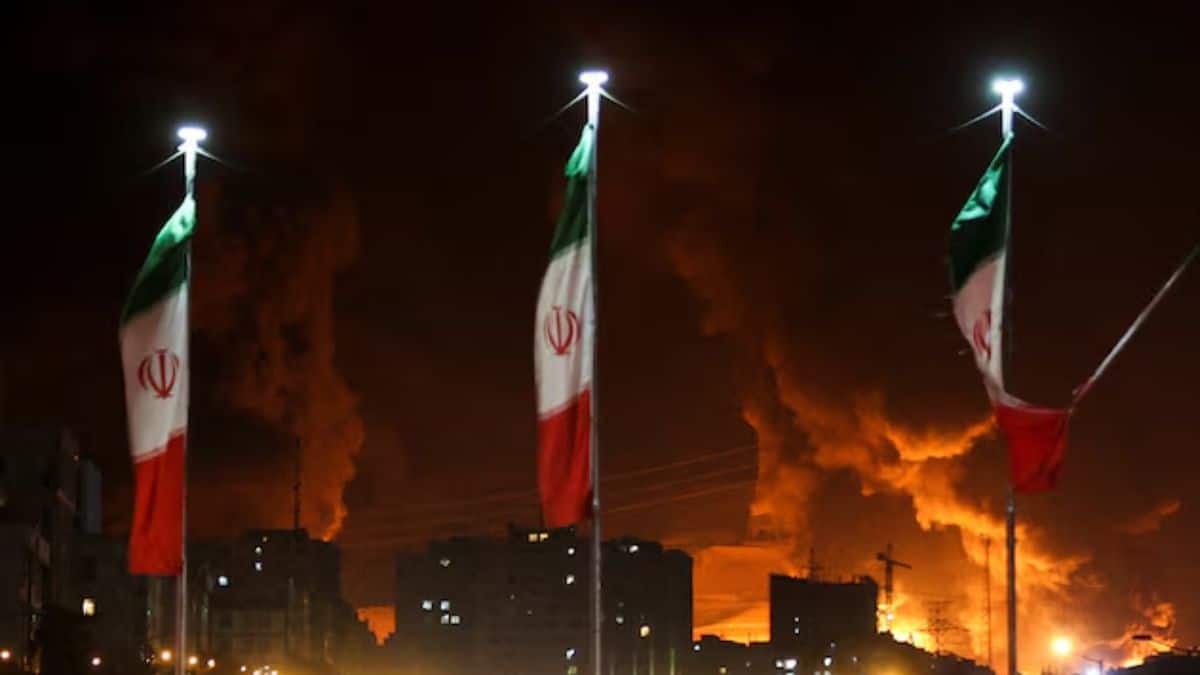
The connection to Iran adds a volatile layer. As Tehran faces increasing pressure over its nuclear program and its role in regional proxy wars, Moscow has positioned itself as the ultimate guarantor. The message to the West is clear. Any strike on Iranian soil or significant degradation of the Islamic Revolutionary Guard Corps will be viewed as an attack on Russian interests, potentially triggering a "horror strike" response on European soil.
The Oreshnik Logic and Technical Overmatch
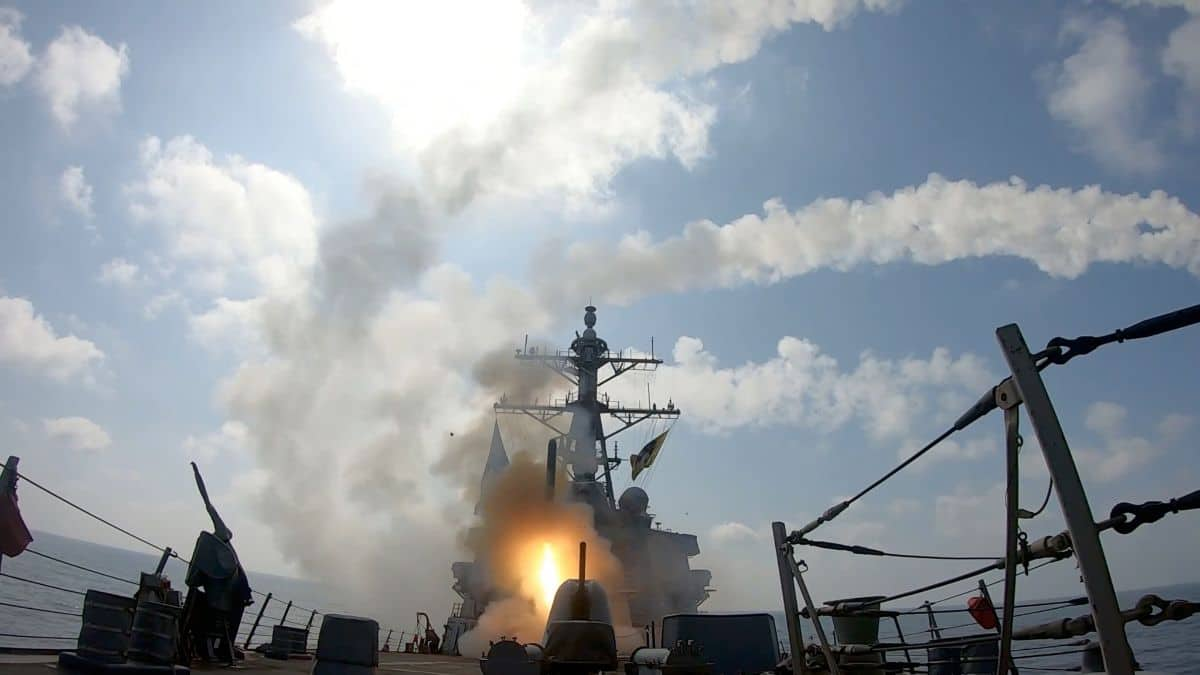
To understand why these threats carry more weight now, we have to look at the hardware. The recent deployment of the Oreshnik ballistic missile—a multi-warhead system designed to strike at hypersonic speeds—was a proof of concept. It was a message sent to NATO planners.
Standard interceptors like the Patriot PAC-3 or the SAMP/T are designed to hit targets moving at predictable ballistic arcs. The Oreshnik, and the broader family of Russian hypersonic vehicles like the Kinzhal and Zircon, utilize maneuverable re-entry vehicles (MaRVs). When a missile travels at speeds exceeding Mach 5 while simultaneously changing its flight path, the math for an intercept becomes nearly impossible for current-generation systems.
$$v > 5 \text{ Mach} \approx 6,174 \text{ km/h}$$
At these velocities, the window for detection, tracking, and "kinetic kill" engagement shrinks to seconds. If Russia decides to target a logistics hub in Rzeszów or a command center in Brussels, the probability of a successful hit is high. This technical reality is what fuels the current confidence in the Kremlin. They believe they have found a gap in the armor.
Targeting the European Infrastructure Gap
If Russia move from words to action, the targets won't be purely military. The doctrine of "non-nuclear deterrence" through precision strikes involves hitting what the military calls "critical infrastructure nodes."
- Undersea Cables: The severance of the fiber optic lines connecting the UK and Norway to the global internet.
- LNG Terminals: Striking the processing plants in Northern Germany that replaced Russian pipeline gas.
- Power Grids: Using cyber-attacks in tandem with kinetic strikes to plunge entire regions into darkness during peak winter months.
Europe is uniquely vulnerable because its infrastructure is highly centralized. A single strike on a major port or a primary electrical substation has a cascading effect that can paralyze a national economy. The "horror" Russia describes isn't just about the flash of a bomb. It’s about the total collapse of the modern conveniences that keep European societies stable.
The Iranian Equation and the New Axis
The partnership between Russia and Iran has evolved from a marriage of convenience into a deep military integration. Russia provides the Su-35 fighter jets and S-400 air defense systems; Iran provides the Shahed drones and ballistic missiles that sustain the Russian campaign in Ukraine.
This quid pro quo now includes a mutual defense understanding. Russia’s threat to strike Europe "in revenge for Iran" suggests that the two nations have mapped out shared escalation ladders. If Israel or the U.S. strikes Iranian nuclear facilities, Russia may retaliate by targeting Western assets in Europe, effectively turning a Middle Eastern conflict into a Third World War.
This is a radical departure from the Cold War. During that era, proxy wars in the Global South rarely threatened the European heartland directly. Now, the lines are blurred. A drone factory in Isfahan is linked directly to the safety of a suburb in Paris.
Why the Deterrence is Failing
The West is currently struggling with a "deterrence deficit." For decades, the assumption was that Russia would never risk a direct confrontation with NATO because of the inevitable nuclear exchange. But the Kremlin has identified a middle ground. They call it sub-strategic escalation.
By using conventional missiles with the capability to carry nuclear warheads, they create a terrifying dilemma. If an Oreshnik is launched toward London, does the UK fire back with a Trident nuclear missile before knowing the payload? If they do, they start a global apocalypse. If they don't, they risk a city-destroying hit.
The Kremlin is betting that Western leaders are too risk-averse to pull the trigger. They believe that "horror strikes" can be used as a tool of blackmail to force Europe to stop supporting Ukraine and to accept a Russian sphere of influence that extends to the borders of the old Warsaw Pact.
The Intelligence Failure of 2024
There is a growing realization among European intelligence agencies that they misjudged Russia’s industrial capacity. The sanctions were supposed to cripple the production of high-end missiles. Instead, Russia shifted to a war economy, sourcing microchips through third-party nations and increasing missile production beyond pre-war levels.
The "horror" being promised is backed by a stockpile that is growing, not shrinking. While the West struggles to ramp up artillery shell production, Russia is churning out the very systems designed to hold European capitals hostage. This isn't just a failure of diplomacy; it is a failure of industrial foresight.
The Psychological War on the European Public
The ultimate goal of these threats is the destabilization of the European public. Moscow knows that a fearful electorate is an unpredictable one. By broadcasting "horror" scenarios, they aim to empower far-right and far-left movements that advocate for an end to military aid and a "neutral" stance toward Russia.
They are using the specter of the "Trump era" as a psychological hammer. The message is: The Americans are leaving. You are alone. We have the missiles. Negotiate or suffer.
It is a classic protection racket played out on a continental scale. The hand is untied, the weapons are ready, and the target is the very idea of a unified West. The response from Europe has been a mix of frantic rearmament and quiet panic, but the clock is ticking. As the new administration takes power in Washington, the window for a coordinated response is closing, and the risk of a "miscalculation" that leads to a strike on a European city is at its highest point since 1962.
Check the readiness of your local civil defense protocols and understand the flight time of a hypersonic missile from Kaliningrad to your city. It is shorter than your morning commute.