The American electric vehicle transition has hit a wall, and the revised forecasts cutting 2030 adoption targets down to a sobering 17 percent are merely a symptom of a deeper structural rot. For years, automotive executives and policy speechwriters promised a smooth, exponential curve toward electrification. That math was wrong. The initial wave of enthusiastic, affluent early adopters has been exhausted, leaving automakers facing a mainstream public that is not just hesitant, but actively resistant to the current value proposition of electric vehicles (EVs).
This is not a temporary blip or a minor supply chain hiccup. It is a fundamental disconnect between ambitious regulatory mandates and the harsh realities of American infrastructure, consumer finance, and industrial capacity.
The Myth of the Affordable Electric Car
Automakers chased margins instead of scale. When the modern EV push began in earnest, legacy Detroit giants and new entrants alike rushed to build high-end, heavy, six-figure flagship trucks and luxury SUVs. They assumed the technology costs would plummet fast enough to subsidize cheaper models later.
They miscalculated. Battery raw material costs remained volatile, and the complex software architectures required for these vehicles proved notoriously difficult to debug, delaying launches and driving up development costs.
Today, the average price of a new electric vehicle remains well out of reach for the median American household, especially in an era of persistent inflation and elevated interest rates. Dealership lots are swelling with unsold electric inventory because the vehicles being produced do not match the financial reality of the buyers. The industry built rolling tech showcases for Silicon Valley executives when it needed to build practical workhorses for middle-class families.
The entry-level market is virtually nonexistent. While international competitors, particularly in China, focused on perfecting low-cost lithium iron phosphate (LFP) battery packs and scaling down-market hatchbacks, American domestic policy protected local manufacturing with tariffs while doing little to force the production of truly affordable vehicles. The result is a stagnant domestic market where the cheapest viable EVs still require significant financial sacrifice or complex leasing arrangements to make sense on a monthly budget.
The Charging Network Mirage
Public charging infrastructure in the United States is broken. It is a chaotic patchwork of competing networks, broken plugs, and confusing payment apps that turns a simple road trip into an exercise in anxiety.
The federal government allocated billions through the National Electric Vehicle Infrastructure (NEVI) program to build out a reliable network along major highways. The rollout has been agonizingly slow, bogged down by bureaucratic red tape, local utility delays, and engineering bottlenecks.
The Reliability Crisis
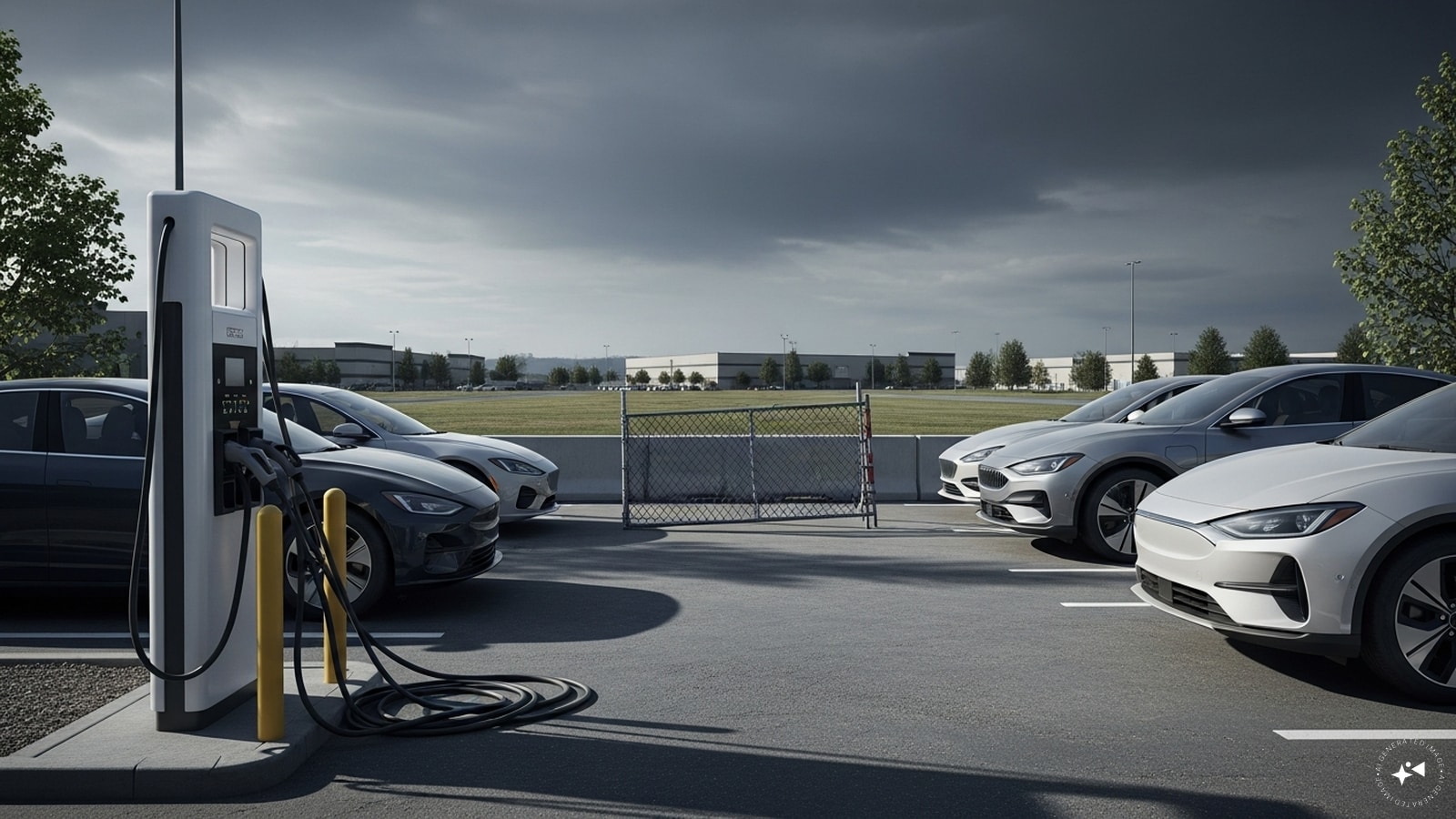
Go to any public fast-charging station today and the odds are high that at least one stall is dark, displaying an error code, or delivering a fraction of its promised power. Legacy automakers outsourced the refueling experience to third-party charging networks that operate on razor-thin margins and lack the field technicians required to maintain equipment.
- Software handshakes between diverse vehicle architectures and different charging stations frequently fail, leaving drivers stranded.
- Payment terminals are routinely broken, exposed to harsh weather without adequate shielding.
- Vandalism and copper theft have gutted charging sites in suburban and urban areas alike.
Tesla open-sourced its North American Charging Standard (NACS), forcing the rest of the industry to adapt to its hardware. While this shift promises better compatibility in the future, the immediate transition has created a messy interim period of adapters, software updates, and overcrowded stations. A functional refueling network requires standardisation and near-perfect uptime. Right now, America has neither.
The Grid Reality
The problem goes deeper than just the physical plugs. The local electrical grids across vast swaths of the American heartland are fundamentally unprepared for the concentrated demand of multi-stall DC fast-charging hubs.
Pulling 350 kilowatts from a single dispenser is the equivalent of powering an entire neighborhood for the duration of that charge. When eight or ten vehicles attempt to do this simultaneously, the local substation faces immense stress. Upgrading these grid connections requires years of planning, environmental reviews, and massive capital expenditure from regulated utilities that are notoriously slow to move. Automakers sold the cars before the grid could support them.
The Hybrid Counter Revolution
Consumers are voting with their wallets, and they are choosing hybrids. While pure battery-electric sales growth flatlines, sales of traditional hybrids and plug-in hybrid electric vehicles (PHEVs) are surging.
This is a rational response to an irrational market. Hybrids offer the immediate benefits of reduced fuel costs and lower emissions without demanding that the buyer alter their lifestyle or gamble on public charging infrastructure.
Legacy manufacturers that resisted the total shift to pure EVs, notably Toyota, are now looking prophetic. Their strategy recognized that a diverse portfolio of powertrains was necessary to navigate a messy transition period. A driver living in an apartment complex without a dedicated garage plug cannot reasonably own a pure EV without facing immense weekly friction. A hybrid fits their life perfectly today.
The Resale Value Death Spiral
The hidden crisis threatening the entire EV ecosystem is the collapse of the used electric vehicle market. Depreciation has hit electric cars with brutal force, far outpacing the historical depreciation curves of internal combustion engine vehicles.
Wholesale values for used EVs have plummeted over the last two years. Rental car giants that made high-profile bets on massive electric fleets are systematically dumping those vehicles at steep losses and returning to gas-powered fleets. Their justification is simple: astronomical repair costs, weak consumer demand on the secondary market, and unpredictable residual values.
Typical EV Depreciation vs. Traditional Internal Combustion
===========================================================
Year 1: EV drops up to 30-40% | Gas drops 15-20%
Year 3: EV battery warranty anxieties suppress secondary buyers
Result: Fleet operators and leasing companies take massive financial hits
This structural collapse destroys the economics of vehicle leasing and corporate fleet purchasing. When a leasing company calculates a monthly payment, that figure is directly tied to the expected residual value of the car at the end of the term. If the car is expected to be worth next to nothing in three years, the monthly lease price must skyrocket to cover the difference. This effectively prices out corporate fleets, which traditionally account for a massive percentage of new vehicle volume in the United States.
Policy Whiplash and the Election Cycle
Industrial planning requires decades of stability. The automotive industry operates on five-to-seven-year product development cycles, meaning billions of dollars must be committed to vehicle architectures long before a single assembly line starts moving.
American climate and industrial policy operates on a volatile four-year pendulum. One administration implements aggressive corporate average fuel economy (CAFE) standards and multi-billion-dollar subsidy frameworks like the Inflation Reduction Act to force electrification. The next administration threatens to tear those exact frameworks down, creating an environment of intense regulatory uncertainty.
Faced with this whiplash, boards of directors are blinking. They are scaling back battery plant investments, delaying vehicle rollouts, and reallocating capital back to internal combustion engine programs that guarantee immediate cash flow. They cannot risk the survival of their companies on a political consensus that can be undone by a single election cycle.
The reduction of the 2030 adoption forecast to 17 percent is a recognition that the market cannot be forced by executive decree alone. Without a radical restructuring of the domestic supply chain to produce cheap batteries, a massive mobilization to rebuild the electrical grid, and a binding commitment to standardizing public charging infrastructure, the electric vehicle transition in America will remain stalled in the slow lane. The industry must stop designing for a theoretical green future and start building for the economic reality of the present day.


