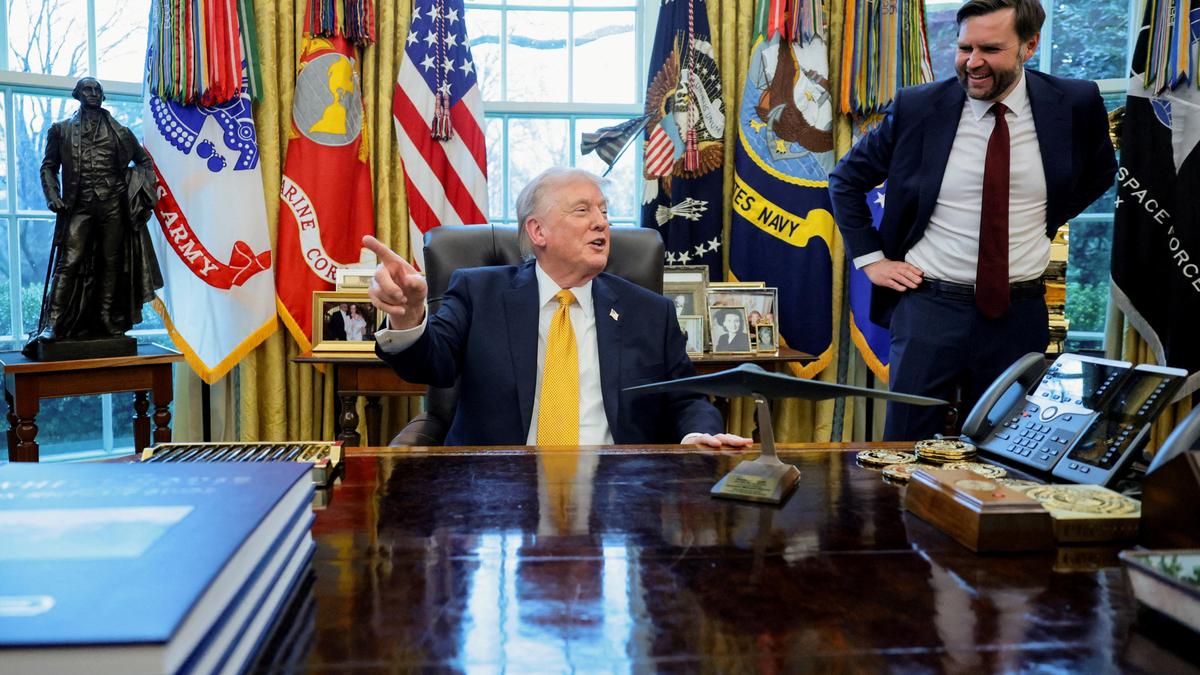
The lights went out across Havana on Monday, not because of a simple mechanical failure, but because the fuel pipes have finally run dry. For the first time since the 1962 missile crisis, the United States has successfully enacted a functional, airtight blockade of the island, and the man behind the desk in the Oval Office is making it clear that he doesn't intend to stop until the current government in Havana is history. "I can do anything I want with it," Donald Trump told reporters yesterday, a statement that effectively tears up sixty years of cautious, back-channel diplomacy in favor of a raw exercise of regional power.
This isn't just rhetoric. By leveraging the recent capture of Nicolás Maduro in Venezuela and threatening massive tariffs on any nation—including Mexico—that dares to send a tanker of crude to Cuban ports, the administration has created a "zero hour" scenario. The island is currently operating on fumes, and the White House is betting that a total economic collapse will force a "friendly takeover" before the year is out.
The Oil Noose and the Collapse of the Grid
For decades, Cuba survived on a steady drip of subsidized oil from Caracas. When the Trump administration moved into Venezuela earlier this year, that lifeline was severed. But the strategy went deeper. In late January, Executive Order 14380 declared a national emergency regarding Cuba, authorizing the U.S. to impose ad valorem duties on goods from any country that facilitates oil shipments to the island.
The impact was immediate. Mexico’s state-owned Pemex, once a reliable secondary supplier, halted shipments almost overnight after being threatened with a tariff regime that would have decimated its trade with the north. On Monday, the Cuban energy ministry reported a "total disconnection" of the national electric system. While solar and natural gas provide a small fraction of the island's needs, they cannot sustain a modern state. Without diesel and fuel oil to run the aging thermoelectric plants, the country has ground to a halt.
This is a calculated strangulation. The goal is to make the cost of maintaining the status quo so high that the Cuban military—the true power brokers on the island—decides that the survival of the institution is more important than the survival of President Miguel Díaz-Canel.
The Secret Negotiations in the Shadow of War
Despite the public threats, the administration is not just shouting from the sidelines. Secretary of State Marco Rubio has been leading high-level, clandestine talks with Cuban officials. These discussions are happening against a backdrop of a broader regional realignment following the U.S.-led intervention in Venezuela and the ongoing conflict in Iran.
The American demand is blunt: Díaz-Canel must go.
While the Cuban leadership has historically viewed any interference in their internal political structure as a deal-breaker, their leverage has evaporated. They have no money, no fuel, and their traditional allies in the Kremlin are too bogged down elsewhere to offer more than symbolic support. In a desperate move to find a vent for the pressure, Havana announced this week that it would allow the Cuban diaspora—the very people the regime once branded as "scum"—to invest in and own small businesses on the island. It is a massive ideological retreat, but it may be too little, too late.
The Risk of the Zero Hour
Washington is currently operating on the theory of a "bloodless takeover." The idea is to maintain enough pressure to collapse the economy but keep the communication lines open to manage the aftermath. However, seasoned analysts in the region worry that this approach ignores the chaotic reality of a failing state.
If the water and sewage systems fail alongside the grid, the resulting humanitarian crisis won't stay contained within the island's borders. A mass migration event—one that would dwarf the Mariel boatlift—is a distinct possibility. The U.S. Coast Guard is already reporting increased activity, and a recent deadly skirmish involving a Florida-registered vessel in Cuban waters suggests that the Florida Straits are becoming a powder keg.
The administration believes it can control the descent. They are gambling that the "deal" Trump frequently mentions will be signed by a desperate successor to Díaz-Canel who is willing to trade political sovereignty for the restoration of the power grid.
A New Era of Monroe Doctrine Realism
This policy marks the definitive end of the "thaw" attempted during the Obama years. It is a return to a hardline interpretation of the Monroe Doctrine, where the Caribbean is treated as an American lake and foreign ideologies are tolerated only as long as they don't interfere with U.S. interests.
The legal basis for this is shaky—the Supreme Court recently questioned the use of the International Emergency Economic Powers Act (IEEPA) to impose broad tariffs—but the administration isn't waiting for a final ruling. They have found that the mere threat of these measures is enough to scare off global shipping firms and state-owned oil companies.
The "anything I want" stance isn't just about Cuba. It's a message to the rest of the hemisphere: the era of balancing between Washington, Beijing, and Moscow is over. In the coming months, the administration is expected to push for even stricter limits on remittances and a total suspension of commercial flights, further isolating the island until the "friendly takeover" becomes the only exit strategy left for a starving regime.
The strategy is high-stakes, ruthless, and entirely consistent with a White House that views international relations as a series of hostile acquisitions. Whether it results in a democratic transition or a failed state ninety miles from Key West remains the most dangerous question in the Western Hemisphere.
Monitor the flow of "humanitarian" shipments from Mexico and the rhetoric from the Cuban military command for the first signs of a crack in the regime's resolve.