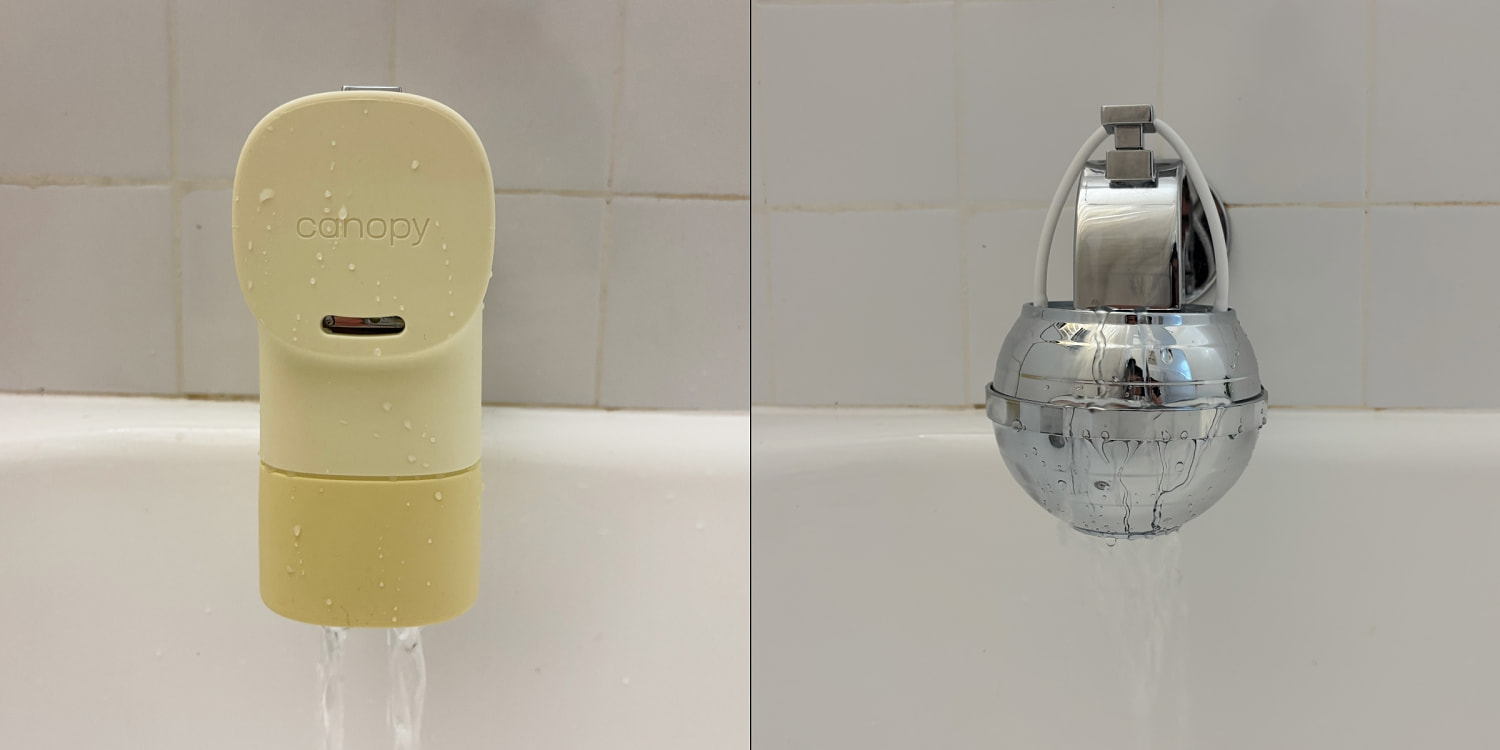
Bath filters promise to transform harsh tap water into a gentle, skin-soothing soak, but most fall short because they use the wrong technology for the job. While shower filters deal with high water pressure and lower volume, bath filters must treat tens of gallons of hot water pouring out of a tub spout in just a few minutes. Most hanging ball filters and faucet-mounted units simply cannot handle the flow rate required to absorb chlorine, chloramines, and heavy metals at high temperatures. The result is often little more than a false sense of security.
If your primary goal is removing chemical additives and irritating minerals from a deep soak, standard point-of-use bath accessories rarely deliver. True water treatment at the bathtub level requires an understanding of water chemistry, contact time, and the stark difference between free chlorine and chloramines.
The Chemical Reality of Tap Water Treatment
Municipal water treatment facilities rely heavily on disinfectants to kill pathogens before water reaches household taps. Historically, free chlorine was the standard agent. Today, a growing number of water utilities across North America have switched to chloramines, a compound formed by mixing chlorine with ammonia.
This distinction matters because most consumer bath filters rely on Activated Carbon or Kinetic Degradation Fluxion (KDF) media.
- Activated Carbon: Highly effective at trapping free chlorine molecules through adsorption. However, carbon requires significant contact time to work. When seventy gallons of water blast through a small carbon-filled pouch at full spout velocity, the contact time is fractions of a second. The water simply moves too fast for effective filtration.
- KDF-55 Media: Uses an oxidation-reduction (redox) process to convert free chlorine into harmless soluble chloride ions. KDF works remarkably well in hot water, making it popular in shower heads. However, KDF requires sustained flow through a tight copper-zinc matrix, which severely restricts water flow when scaled down for a high-volume bath spout.
- Chloramines: Unlike free chlorine, chloramines do not gas off easily and require vast amounts of specialized Catalytic Carbon or ascorbic acid (Vitamin C) to neutralize. Standard bath filters containing basic carbon or KDF barely touch chloramines.
Technical Note: Consider a standard household bath spout flowing at 4 to 5 gallons per minute. A filter housing containing less than half a pound of media cannot reliably process water traveling at that velocity. The chemistry fails not because the media is ineffective, but because the physical contact time is insufficient.
Why Shower Filters and Bath Filters Are Not Interchangeable
Consumers frequently purchase a shower filter, unscrew the housing, and attempt to adapt it to a bathtub spout. This strategy almost always fails due to fluid dynamics.
+------------------+-----------------------+------------------------+
| Feature          | Shower Filtration     | Bath Filtration        |
+------------------+-----------------------+------------------------+
| Typical Flow Rate| 1.5 - 2.5 GPM         | 4.0 - 7.0 GPM          |
| Contact Time     | Moderate (1-2 sec)    | Extremely Low (<0.5s)  |
| Primary Media    | KDF-55 / Sulfite      | Vitamin C / Carbon     |
| Main Bottleneck  | Restricted Spray      | Massive Flow Volume    |
+------------------+-----------------------+------------------------+
A shower head operates at restricted flow rates, typically capped at 1.8 to 2.5 gallons per minute. This restricted speed gives the water enough exposure time to interact with internal KDF media.
A bathtub spout, by design, flows at up to 7 gallons per minute to fill a tub before the water cools down. Forcing that volume through a restrictive filter matrix results in one of two outcomes: either the fill time triples while the water goes cold, or the water bypasses the media entirely via pressure overflow pathways.
The Mechanics of Vitamin C Neutralization
For individuals dealing with severe dry skin, eczema, or sensitivity to public water additives, hanging mesh balls filled with Ascorbic Acid (Vitamin C) offer the most scientifically sound workaround for the tub.
Vitamin C does not filter water in the traditional sense. It does not trap sediment, heavy metals, or microplastics. Instead, it acts as a chemical neutralizing agent.
When ascorbic acid dissolves in water, it donates electrons to free chlorine and chloramines, instantly converting them into harmless inorganic salts.
$$\text{C}_6\text{H}_8\text{O}_6 + \text{HOCl} \rightarrow \text{C}_6\text{H}_6\text{O}_6 + \text{HCl} + \text{H}_2\text{O}$$
This reaction occurs almost instantaneously. Because it depends on chemical stoichiometry rather than mechanical contact time, a Vitamin C tablet or powder dropped directly into the bath water neutralizes disinfectants far more reliably than any spout-mounted attachment.
Navigating Heavy Metals and Hard Water Minerals
Chlorine is only one piece of the puzzle. Many homeowners invest in bath filters hoping to soften hard water or eliminate heavy metals like lead, iron, and copper.
Here, the limitations of point-of-use attachments become absolute.
The Hard Water Myth
No spout attachment or bath ball can soften water. True water softening requires an ion exchange resin that replaces calcium and magnesium ions with sodium or potassium ions. This process demands a large brine tank, dedicated backwashing cycles, and substantial media volume. Bath attachments claiming to "soften" water usually rely on ceramic balls or tourmaline, which do not alter the grain hardness or mineral content of the water in any measurable laboratory metric.
Heavy Metal Removal
Removing lead or dissolved iron requires specialized filtration like Reverse Osmosis (RO) or high-capacity sub-micron solid block carbon. These technologies reduce water flow to a slow trickle—producing perhaps half a gallon per minute. Using an RO system to fill an 80-gallon soaking tub is entirely impractical.
Workable Solutions for Clean Bathing Water
Achieving genuinely clean water in the bathtub requires choosing an approach that matches the underlying chemistry and physical constraints of high-volume water flow.
Option 1: De-chlorination via Dissolution
Skip the spout attachments entirely. Purchase pure, food-grade sodium ascorbate or ascorbic acid powder. Adding roughly one teaspoon (approximately 1,000 milligrams) of Vitamin C powder directly to a full tub neutralizes both free chlorine and chloramines within 30 seconds, without restricting fill speed or lowering water temperature.
Option 2: Whole-House Carbon Filtration
For total removal of chlorine, heavy metals, sediment, and volatile organic compounds across every faucet, install a central whole-house system. Positioned at the main water line entry point, a dual-tank media system filled with Catalytic Carbon provides the massive surface area and contact time necessary to clean water before it ever reaches the bathroom plumbing.
Option 3: High-Flow Bath Spout Diverters
If a whole-house system is out of reach and you prefer a physical filter, look for units utilizing Calcium Sulfite or concentrated KDF-85 configured in large-diameter housings. Expect fill times to double, but the chemical reduction will be substantially higher than what lower-tier hanging mesh balls achieve.
The point-of-use bath filter market relies heavily on visual reassurance—water passing through a neat plastic fixture—rather than measurable chemistry. Acknowledging the physical limitations of high-speed water filtration is the only way to avoid wasting money on ineffective attachments. Neutralize the chemicals directly in the basin with proven additives, or treat the water at the main inlet before it reaches the tub.