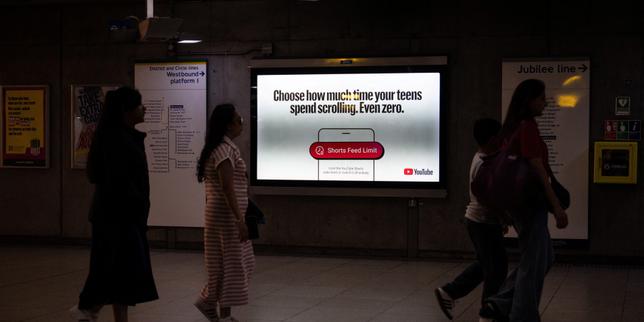
The British government's aggressive plan to enforce a digital curfew on teenagers—shutting down access to platforms like TikTok, Instagram, and Snapchat during late-night hours—is a desperate political gambit hiding behind child protection. It addresses a real crisis of adolescent sleep deprivation and deteriorating mental health, but the proposed mechanics of enforcement are a disaster waiting to happen. Whitehall's blueprint demands that tech companies block users under the age of sixteen from accessing their feeds between 10 PM and 6 AM. While parents might cheer this intervention, the reality of implementing a state-mandated bedtime for the internet reveals a staggering gap between legislative intent and technological capability.
This is not merely a debate about screen time. It is a fundamental clash between sovereign law and borderless technology, with millions of young citizens caught in the middle.
The Anatomy of the Digital Lockout
Under the proposed framework, social media platforms must integrate strict, verified off-hours for underage accounts. The state is no longer asking parents to police their children's bedrooms. Instead, it is deputizing Silicon Valley to act as a digital warden.
To make this work, platforms must accurately identify who is a teenager. This requirement moves the battleground to age verification. For years, social media networks operated on an honor system where a user could simply input a fake birth year. That era is over. The British regulator, Ofcom, is pushing for mandatory biometric age estimation, where artificial intelligence analyzes a user's facial features through their camera to estimate their age, alongside database checks against passport and driving records.
The technical friction this introduces is immense. Imagine a teenager trying to log in at 9:55 PM to finish a group project discussion, only to be prompted for a facial scan that fails because of poor lighting. If the system errs on the side of caution, it locks out legitimate users. If it is too lenient, the curfew becomes entirely toothless.
Furthermore, the data privacy implications are staggering. Parents are being asked to trust that platforms with notorious track records of data harvesting will securely manage the biometric data of their children. The government insists that third-party verification companies will handle this data without storing it. History suggests that where valuable personal data exists, leaks and exploits inevitably follow.
Why Westminster is Panicking
To understand why British politicians are willing to cross this digital Rubicon, one must look at the quiet collapse of adolescent mental health services in the United Kingdom. The National Health Service is buckling under the weight of referrals for youth anxiety, depression, and self-harm.
Wait times for Child and Adolescent Mental Health Services now stretch into months, sometimes years.
Politicians are desperate for a scapegoat. Blaming social media algorithms is politically convenient. It diverts attention from a decade of underfunding in youth clubs, mental health clinics, and public school counseling. By framing the crisis as a battle against foreign tech giants, the government can project strength and decisiveness without spending the billions of pounds required to repair the physical social safety net.
There is also a mounting body of sleep research that the government uses as its scientific shield. Study after study confirms that blue light exposure and late-night algorithmic stimulation disrupt melatonin production. The result is a generation of chronically exhausted students. Teachers across the UK report classrooms filled with exhausted children who lack the attention span to learn. The curfew is, in essence, a public health emergency measure dressed up as tech regulation.
The Enforcement Illusion
The greatest flaw in the government's plan is the assumption that teenagers will simply accept the lockout. They will not.
The youth of today are highly tech-literate. They possess an innate ability to bypass digital barriers.
Virtual Private Networks can bypass geo-restrictions with a single tap. A teenager in London can easily spoof their location to Paris or New York, instantly evading the UK-specific curfew. While the government suggests banning free VPN apps or forcing app stores to restrict them, doing so would require an authoritarian level of internet censorship akin to the Great Firewall of China. It is a path that a democratic nation cannot easily tread without dismantling civil liberties.
Beyond VPNs, there is the simple workaround of account sharing. Older siblings or friends can create unrestricted adult accounts and share the credentials. The secondary market for "verified adult" accounts is already a thriving ecosystem on gaming forums and messaging apps. By imposing a hard curfew, the government will inadvertently drive teenagers into these unregulated, grey-market spaces, exposing them to far greater digital dangers than a late-night TikTok scroll.
Who Wins and Who Loses in the Digital Shadows
The debate surrounding the curfew frequently ignores the teenagers who rely on these networks for survival.
For many marginalized youth, the internet is not a luxury. It is a lifeline.
LGBTQ+ teenagers in hostile households, neurodivergent children seeking communities of peers, and young people experiencing domestic stress often find their only support systems online during the quiet hours of the night. A blanket, state-mandated lockout cuts off these crucial support networks. The government's policy assumes a universal, stable middle-class household where a teenager can simply turn off their phone and sleep peacefully in a safe room.
The reality of modern Britain is far more complex.
Moreover, this policy will widen the divide between tech-savvy households and those without digital literacy. Wealthier parents will invest in premium router-level parental controls and alternative devices, while poorer households will bear the brunt of clumsy, state-level blocks that disrupt basic communication and educational access.
The Real Alternative to Top-Down Bans
If the British government truly wants to protect young people, it must move away from the theatricality of curfews and address the structural design of these platforms.
The core issue is not when teenagers are online, but how platforms exploit their psychology.
Instead of a crude time-based lockout, regulators should target the predatory features engineered to keep users scrolling. This means banning infinite scroll, disabling auto-play by default for minors, and outlawing push notifications sent after 9 PM. If a platform cannot actively pull a teenager back in with personalized notifications, the urge to check the phone in the middle of the night drops dramatically.
This approach targets the business model of attention extraction rather than the behavior of the child. It forces tech companies to build safer, less addictive interfaces. It respects the autonomy of families to set their own rules while ensuring that the digital environment they enter is not intentionally designed to override human willpower.
The current push for a national internet curfew is a dramatic show of force that will ultimately collapse under the weight of its own technical impracticality. It offers a simple, authoritarian solution to a complex, systemic societal failure. Until the government is willing to invest in real mental health resources and regulate the actual design of addictive algorithms, these curfews will remain nothing more than a digital illusion of safety.