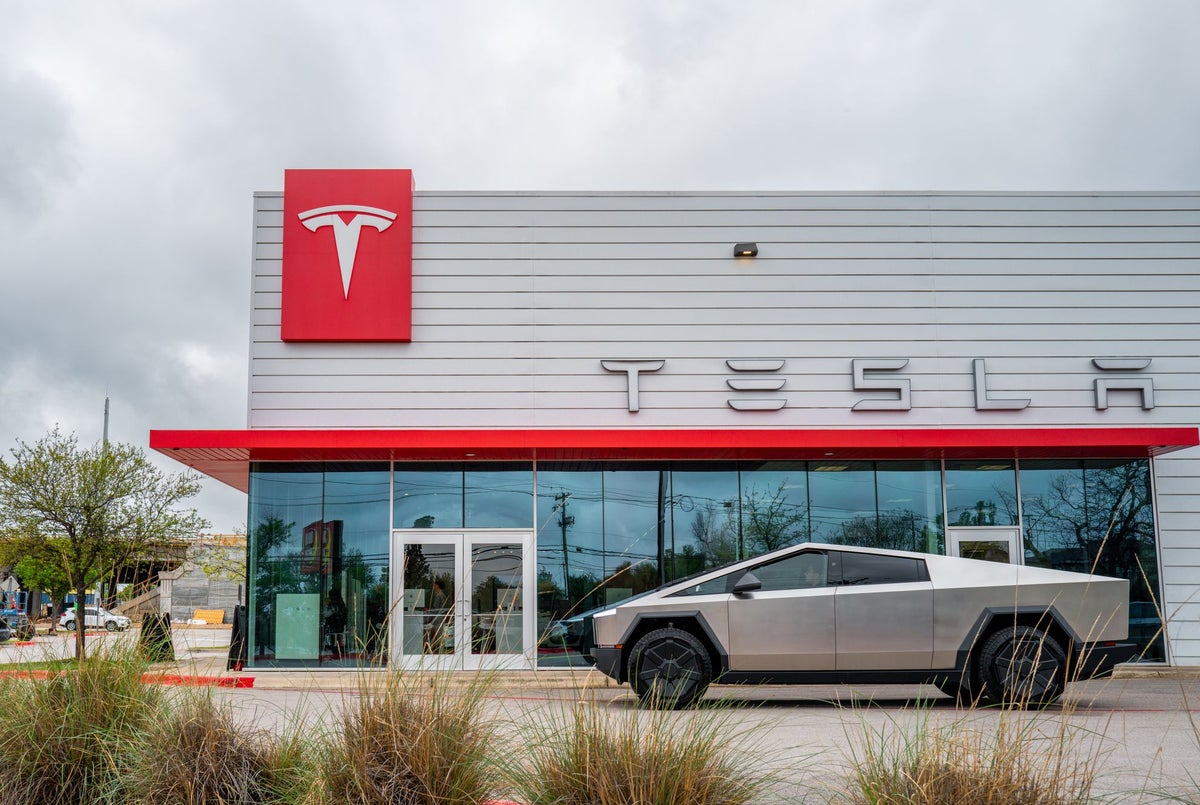
Tesla has issued a recall for a select group of Cybertrucks because their wheels could literally separate from the vehicle while in motion. While the raw number of affected units—exactly 173 trucks—suggests a minor logistical hiccup, the forensic reality of the failure points to a much deeper "change management error" within Tesla’s rapidly evolving manufacturing pipeline.
The recall specifically targets 2024 through 2026 model year Cybertrucks equipped with 18-inch steel wheels. According to filings with the National Highway Traffic Safety Administration (NHTSA), the core of the problem lies in the brake rotors. Under the stress of cornering or traversing rough terrain, the stud holes in the wheel rotors can develop stress fractures. If these cracks propagate, the wheel studs—the threaded bolts that actually hold the wheel to the car—can snap or pull through the hub entirely.
The Engineering Oversight
In the world of heavy-duty pickups, the wheel-to-hub interface is sacred. The Cybertruck, weighing in at over 6,600 pounds, exerts massive lateral forces on its hardware. Investigative documents reveal that Tesla engineers had actually identified rotor cracking during pre-production testing.
They had a fix ready: a more durable rotor and hub assembly designed to handle the specific harmonics of the 18-inch steel wheel configuration. However, that updated design was never implemented on the assembly line for this specific batch. Tesla’s internal report characterizes this as a "change management error." In plain English, the factory kept bolting on the old, compromised parts even after the engineering team flagged them as insufficient.
The first sign of trouble for owners isn't a catastrophic snap, but rather a subtle vibration or an audible "braking pulsation." One owner reported these symptoms in October 2025, leading to a service visit where technicians discovered the rotor faces were already spider-webbing with cracks.
The RWD Ghost in the Machine
The low number of affected vehicles (173) tells a secondary story about the Cybertruck’s market reality. These 18-inch steel wheels were the hallmark of the budget-tier Rear-Wheel Drive (RWD) variant. Originally promised at a much lower price point to entice the "work truck" demographic, this model launched in April 2025 but was unceremoniously discontinued by the end of that same year.
The recall serves as a post-mortem for that trim level. If only 173 vehicles are being recalled for a part that was standard on the RWD build, it indicates that demand for the "affordable" Cybertruck was virtually non-existent, or that Tesla pivoted away from the configuration so quickly that almost none made it into the wild.
A Mounting Logistics Headache
This is not an isolated incident. By mid-2026, the Cybertruck has become one of the most recalled vehicles in recent memory. The "wheels falling off" narrative is just the latest entry in a ledger that includes:
- Accelerator Pedals: Metal covers that could slip and wedge the pedal at full throttle.
- Wiper Motors: Failures of the massive, 4-foot single blade during heavy rain.
- Trim Adhesion: Exterior "sail panels" flying off at highway speeds.
- Light Bar Intensity: Software updates required to dim headlights that were blinding oncoming traffic.
Unlike the headlight issues, which Tesla fixed with a "seamless" over-the-air update, the wheel stud failure requires a physical hardware replacement. Tesla service centers must swap out the front and rear brake rotors, hubs, and lug nuts.
Why Quality Control is Lagging
The recurring theme in these recalls is the tension between Tesla’s "move fast" software culture and the unforgiving physics of automotive hardware. When a software bug occurs, you push a patch. When a "change management error" happens on a casting or a rotor assembly, you have a multi-ton kinetic hazard on the road.
The stainless steel exoskeleton and unconventional geometry of the truck mean that standard stress models often don't apply. The vehicle’s rigidity, while a selling point, transfers more vibration directly to the unsprung components—the wheels and suspension—than a traditional body-on-frame truck like a Ford F-150. If the rotors aren't over-engineered to compensate for that lack of "give," the metal eventually reaches its fatigue limit.
Owners of the affected 173 units will receive notification letters in June 2026. If you are driving a Cybertruck with the 18-inch steel wheel package, the immediate directive is to listen for any rhythmic clicking or steering wheel shimmy.
Check your VIN on the NHTSA portal immediately.