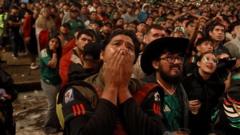
Football matches involving the English national team no longer exist solely within the geographical boundaries of Europe or the localized confines of traditional host cities. When England plays a major tournament match, the cultural ripple effect triggers massive, highly commercialized watch parties across the globe, most notably in major tourism hubs like Mexico. While surface-level travelogues paint these events as organic, cross-cultural celebrations where locals and expatriates mingle in utopian harmony, the reality is far more transactional. These massive street gatherings are carefully engineered commercial operations designed to capitalize on Western sports culture while masking deep economic disparities and shifting social dynamics within the host communities.
To understand why thousands of people gather in a Mexican public square or beachside avenue to watch a European football match, you have to look past the superficial spectacle of waving flags and spilled beer. It is a calculated convergence of corporate sponsorship, the hospitality industry's desperate thirst for off-season revenue, and a highly specific demographic of affluent expat consumers.
The Illusion of Spontaneous Celebration
The mainstream travel narrative loves a heartwarming story. A lonely British traveler wanders into a vibrant town square in Mexico, discovers a massive screen broadcasting the Three Lions, and is instantly embraced by a crowd of weeping, chanting locals who have suddenly adopted Southgate's tactics as their own life philosophy.
It makes for great copy. It is also largely a myth.
The mega watch parties seen in major Mexican hubs—ranging from Mexico City’s packed cantinas to the sprawling beachfront venues of the Riviera Maya—are highly coordinated logistical feats. Brands like Modelo, Tecate, and global broadcasting networks pour millions into securing public screening rights and setting up premium audio-visual infrastructure. They do not do this out of a altruistic desire to spread the joy of English football. They do it because the purchasing power of a football tourist or an affluent expat during a ninety-minute match exceeds the average daily spend of a local worker by a factor of ten.
Step away from the primary camera angle and the economic friction becomes obvious. Local residents are frequently priced out of the very venues hosting these events. A single imported beer at a high-end tourist watch party can cost what a local laborer earns in half a day. The "speechless" interactions reported by casual observers are often just the basic mechanics of the service economy operating under intense pressure. Local staff work grueling shifts in suffocating heat to serve an audience that demands British-style pub efficiency in a Latin American climate.
How Global Sports Culture Displaces Local Identity
When a specific location becomes designated as an unofficial embassy for foreign football fans, the immediate environment undergoes a rapid transformation. This is not a gentle blending of cultures. It is an aggressive, temporary colonization of public space.
The Pricing Out of Public Squares
Public spaces in Mexico have historically served as the epicenter of community life, political protest, and regional music. When massive screens are erected to show European matches, these spaces are effectively privatized.
Security barriers go up. Local street vendors, who rely on these high-traffic areas to sell traditional foods and crafts, are routinely pushed outside the perimeter to make way for official corporate sponsors. The local family that usually sits on a park bench on a Tuesday afternoon is replaced by shirtless, sunburned men singing songs about 1966.
The Content Machine and the Tourist Gaze
There is a distinct power dynamic at play when Western media covers these events. The focus remains resolutely narcissistic. The local population is treated as a colorful backdrop, a collection of smiling faces meant to validate the global importance of English football.
This transactional relationship serves a specific purpose for the tourism industry. By showcasing images of locals cheering for England, travel agencies and hospitality groups create a sanitized, hyper-welcoming image of the destination. It reassures anxious Western travelers that no matter where they go, the local population exists to accommodate their cultural preferences and celebrate their pastimes.
The Economic Reality Behind the Fan Zone
The financial architecture of these international fan zones reveals who actually profits from globalized sports fandom. Hint: It is rarely the community hosting the party.
| Stakeholder | Primary Revenue Source | Long-Term Local Benefit |
|---|---|---|
| International Beer Brands | Premium-priced alcohol sales and brand placement | None; profits are expatriated to corporate headquarters |
| Boutique Hotels & Resorts | Surge-priced accommodation and exclusive VIP packages | Minimal; relies on low-wage seasonal hospitality labor |
| Local Municipalities | Permits, licensing fees, and short-term tourism taxes | Moderate; offset by cleanup costs and security overhead |
| Independent Neighborhood Businesses | Secondary foot traffic and spillover patrons | Low; frequently marginalized by official event zones |
The numbers tell a stark story. While a weekend of high-profile matches can generate millions of pesos in economic activity, that capital remains highly concentrated. The wealth flows upward to multi-national hotel chains and major beverage conglomerates. The local economy is left with the structural hangover: strained municipal waste systems, increased wear and tear on historic infrastructure, and the social resentment that builds when public spaces are commodified for foreign consumption.
Changing Dynamics of Expat Enclaves
The phenomenon of the massive Mexican football watch party is intimately tied to the shifting demographics of North American and European migration. Mexico is no longer just a destination for retirees looking for cheap real estate and warm weather. It has become a premier hub for digital nomads, remote corporate workers, and long-term geographic arbitrageurs.
This new wave of residents brings different expectations. They do not want to assimilate into the local sporting culture; they want their domestic sporting culture delivered to them with high-definition clarity and reliable Wi-Fi.
The proliferation of these events is a direct response to this demand. It represents the creation of a cultural bubble. Within this bubble, an English fan can experience all the tribalism, anxiety, and euphoria of the Premier League or the national team while enjoying the geographic advantages of the tropics. The local environment becomes entirely secondary, reduced to a pleasant climate and a cheaper cost of living.
This creates a paradox. The very charm that draws outsiders to these vibrant communities—the distinct local identity, the slower pace of life, the rich cultural traditions—is systematically eroded by the demand for familiar, standardized Western entertainment. The street party is not an integration of the traveler into Mexico. It is the forced integration of Mexico into the global sports entertainment complex.
The True Nature of Cross Cultural Exchange
Genuine cultural exchange requires reciprocity. It demands that the visitor step outside their comfort zone and engage with the host country on its own terms.
The commercialized street party accomplishes the exact opposite. It creates an environment where the host must adapt to the visitor. The local bartender must learn the lyrics to football anthems. The local restaurant must add fry-ups to the breakfast menu. The local authorities must manage the distinct, often volatile security challenges that accompany heavy alcohol consumption and sporting tribalism.
When a traveler claims that the locals left them "speechless" with their warmth during a foreign sporting event, they are often misinterpreting professional hospitality and cultural politeness as deep personal alignment. The Mexican service industry is world-renowned for its resilience and grace under pressure. Smiling through a chaotic rush of foreign fans who are demanding immediate service in a language that is not native to the land is a survival strategy, not an endorsement of the team's midfield selection.
True respect for a destination means recognizing the boundaries of its hospitality. It involves understanding that public spaces belong fundamentally to the people who build their lives in those communities year-round, not to the temporary demographic chasing a kickoff time across time zones.
The globalization of football has made the sport accessible to every corner of the planet, but it has also flattened the unique characteristics of the places it touches. The next time a major tournament rolls around and the cameras pan across a crowded beach or a historic plaza thousands of miles from Wembley, look past the corporate logos and the engineered euphoria. Observe the people standing on the edges of the frame, watching their neighborhood get packaged and sold to the highest bidder for ninety minutes plus stoppage time.