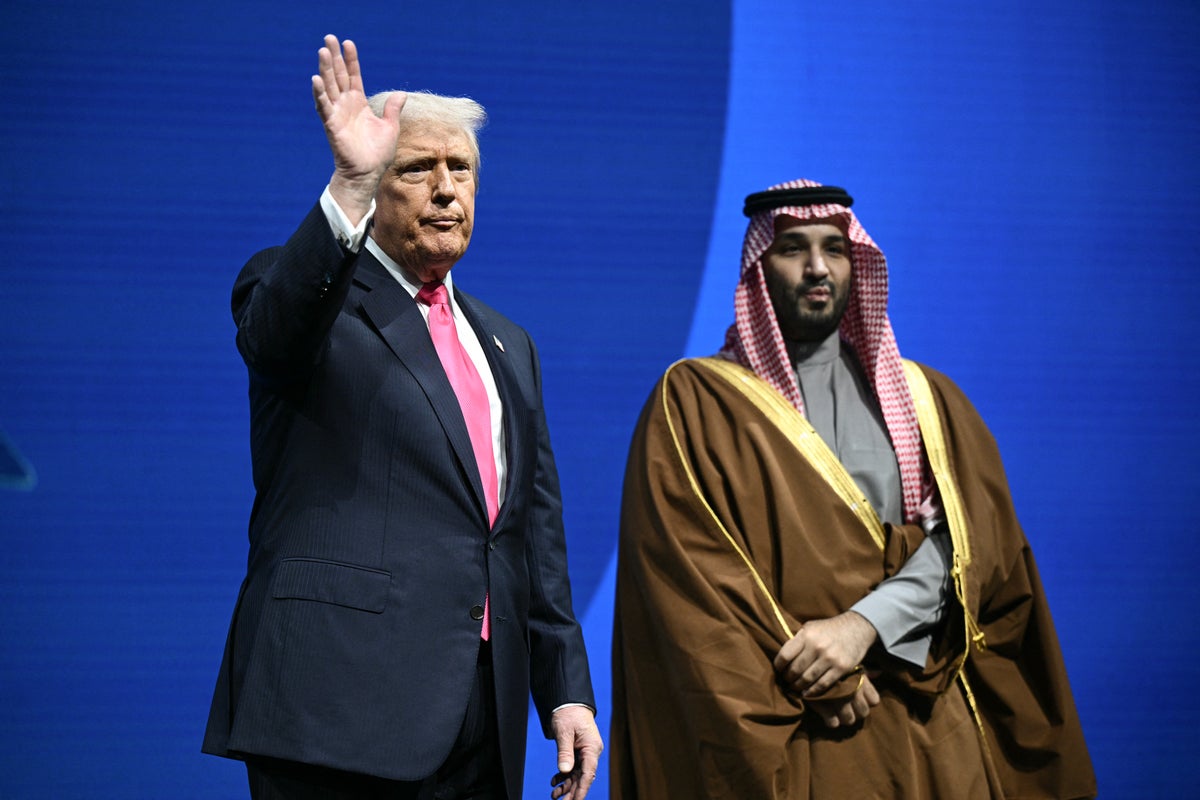
The multi-decade alliance between Washington and Riyadh has reached a breaking point over the military campaign against Iran. Behind the public assurances of a functional partnership, a deep strategic split has emerged between President Donald Trump and Saudi Crown Prince Mohammed bin Salman. The flashpoint was Operation Project Freedom, a high-stakes U.S. naval and air initiative designed to break Iran's blockade of the Strait of Hormuz. When Riyadh denied the U.S. military the use of its airspace and bases, an angry White House threatened to cut off critical missile defense systems, exposing a fundamental clash of national survival strategies that could permanently alter the balance of power.
The friction is not born out of sudden ideological shifts. It is the direct consequence of cold, hard geography and competing national goals. For Washington, the conflict with Iran is a geopolitical chess match aimed at destroying Tehran’s nuclear ambitions and establishing absolute control over global energy channels. For Riyadh, the war is an immediate existential threat to its infrastructure and its economic future. The assumption that the Saudi kingdom would serve as a launchpad for American operations has collided with the reality of a sovereign state protecting its own survival. For a deeper dive into similar topics, we recommend: this related article.
The Night the War Stalled
The breaking point arrived with sudden clarity during the opening phases of Operation Project Freedom. More than one hundred American fighter jets, drones, and support aircraft sat on runways and carrier decks across the region, engines running, waiting for the final green light to execute a massive sweep of the Persian Gulf. Their objective was to clear the Strait of Hormuz of Iranian anti-ship batteries and naval mines. The entire operation relied heavily on access to Saudi airspace and the extensive facilities at Prince Sultan Air Base.
The clearance never came. For additional context on the matter, comprehensive reporting is available on The Guardian.
Mohammed bin Salman issued a direct refusal to the White House. The Crown Prince made it clear that Saudi territory could not be used to launch an offensive that would inevitably draw Iranian fire onto Saudi soil. The decision stunned the Trump administration, which had assumed the kingdom would willingly support an operation intended to suppress their shared regional rival. The refusal forced the Pentagon to abort the mission within forty-eight hours, bringing the American offensive to an embarrassing, unexpected halt.
The response from Washington was immediate and furious. In a series of tense phone calls, Trump warned the Crown Prince that a refusal to cooperate would carry immediate consequences for Saudi security. White House officials threatened to delay the delivery of Patriot missile interceptors and other advanced defensive systems that the kingdom relies on to shoot down incoming ballistic missiles. The threat was transactional, direct, and deeply damaging to the core premise of the U.S.-Saudi alliance, which has historically exchanged American military protection for stable oil production and strategic alignment.
The Panic Over Retaliation
Riyadh’s defiance was driven by a clear understanding of its own vulnerability. While Washington can fight a war from thousands of miles away, Saudi Arabia lives in the immediate strike zone of Iran’s sophisticated arsenal of low-altitude drones and precision-guided cruise missiles. The memory of previous strikes on energy infrastructure remains fresh in the minds of Saudi planners. They knew that any large-scale American strike launched from Saudi territory would result in immediate, asymmetric retaliation against the kingdom's crown jewels.
Those fears were validated during the early weeks of the current conflict. Iranian counter-strikes successfully hit strategic energy nodes across the region, including the UAE’s bunkering hub at Fujairah and Qatar’s massive natural gas facilities at Ras Laffan. Most alarmingly for Riyadh, Iranian projectiles struck the Ras Tanura petroleum complex, the world's largest crude oil stabilization and shipping facility.
The economic stakes are too high for the Crown Prince to ignore. The ambitious domestic transformation plan, Saudi Vision 2030, depends entirely on hundreds of billions of dollars in foreign investment and a completely stable regional environment. Tourism projects, mega-city construction, and economic diversification efforts cannot survive a prolonged, hot war that turns the Arabian Peninsula into a combat zone. If the Strait of Hormuz is closed for months and Saudi oil fields are set ablaze, the economic foundation of the modern kingdom vanishes.
A History of Broken Assumptions
The current rift exposes a structural flaw in how Washington views its partners in the Gulf. For decades, American policymakers treated Saudi Arabia as a dependent state that would automatically fall in line during a crisis. This calculation failed to account for a younger, more nationalistic leadership in Riyadh that is willing to break with Washington when domestic interests are threatened.
The relationship had shown signs of strain long before the current military crisis. While the Trump administration highlighted a major state visit as proof of an unshakeable bond, the reality on the ground was changing. The Crown Prince had already begun diversifying his international relationships, deepening economic ties with China and maintaining a delicate diplomatic track with Moscow. When the war began, Riyadh did not see an opportunity to eliminate an enemy; it saw a dangerous American entanglement that threatened to destroy decades of domestic economic progress.
To protect its assets, Saudi Arabia has quietly accelerated its own independent diplomatic efforts. While Washington pushed for a military conclusion to the conflict, Saudi intelligence officials were engaged in back-channel communications with Tehran. Utilizing diplomatic routes through Pakistan, Riyadh sought and received assurances that its core economic infrastructure would be spared from sustained bombardment, provided the kingdom did not allow its territory to become a platform for American aggression. This parallel diplomacy directly undermined the unified front that Washington attempted to project to the world.
Snubs and Empty Chairs
The diplomatic fallout from this military disagreement has rapidly spilled into the open. The signs of anger are visible in the travel itineraries of top officials and the attendance lists of international summits. The carefully maintained facade of complete agreement has eroded.
Secretary of State Marco Rubio recently concluded a high-profile diplomatic tour of the Gulf, visiting key capitals to coordinate strategy and shore up regional support for the war effort. His itinerary included stops in Bahrain, Kuwait, and the United Arab Emirates. He skipped Riyadh entirely. Saudi officials interpreted the omission as a deliberate, calculated insult from a White House frustrated by their lack of compliance. While the State Department issued formal statements denying any intentional slight, the message to the region was unmistakable.
Diplomatic Fractures: Recent Structural Deviations
┌───────────────────────────┬─────────────────────────────────────────────────┐
│ Event                     │ Consequence / Action                            │
├───────────────────────────┼─────────────────────────────────────────────────┤
│ Operation Project Freedom │ Saudi Arabia denies airspace; mission aborted   │
│ White House Response      │ Threatened to withhold Patriot interceptors     │
│ Rubio Gulf Tour           │ Visited UAE, Bahrain, Kuwait; bypassed Riyadh   │
│ G7 Summit in France       │ Crown Prince MBS declined formal invitation     │
└───────────────────────────┴─────────────────────────────────────────────────┘
The Crown Prince delivered his own public message shortly thereafter. He declined a direct invitation to attend the G7 summit in France, an event where Trump intended to showcase global unity against Iran. Instead of traveling to Europe, the Saudi leader remained in Riyadh, sending a clear signal that he would not stand as a passive prop for an American foreign policy he considered reckless and poorly planned. The empty chair at the summit spoke louder than any official press release.
Moving the American Security Anchor
The long-term consequence of this dispute is a fundamental reassessment of American military planning in the Middle East. Pentagon strategists have concluded that relying on large, fixed bases in Gulf Arab states that can veto operations during a crisis is a major strategic liability. A quiet but determined effort is now underway to shift the center of gravity of American military power in the region.
The primary beneficiaries of this shift are nations that Washington views as more reliable and politically aligned during times of high-intensity conflict. Planners are discussing the relocation of advanced military hardware, personnel, and logistical hubs out of the Gulf and into Israel and Jordan. Israel’s military performance and its direct confrontation with Iranian forces have convinced Washington that Jerusalem is a more dependable partner for projecting power. Jordan offers a stable, geographically secure alternative for staging operations without the immediate vulnerability to maritime blockades that plagues the Gulf states.
This shifting architecture will leave Saudi Arabia increasingly isolated from the American security umbrella. While Riyadh did eventually offer limited concessions on airspace after the White House threatened to withhold defensive interceptors, the damage to the underlying trust is done. The Pentagon is unlikely to forget that when the order was given to launch a critical operation, their oldest ally in the region closed the gates.
The transition will not happen overnight, but the trajectory is set. The U.S. military footprint in the kingdom will likely shrink to minimal defensive positions, leaving Riyadh to defend its vast borders with a dwindling supply of American goodwill. The Crown Prince has gambled that his independent diplomacy and economic wealth can protect the kingdom without an absolute reliance on Washington. The coming months will prove whether that calculation can withstand the hard realities of a volatile region.