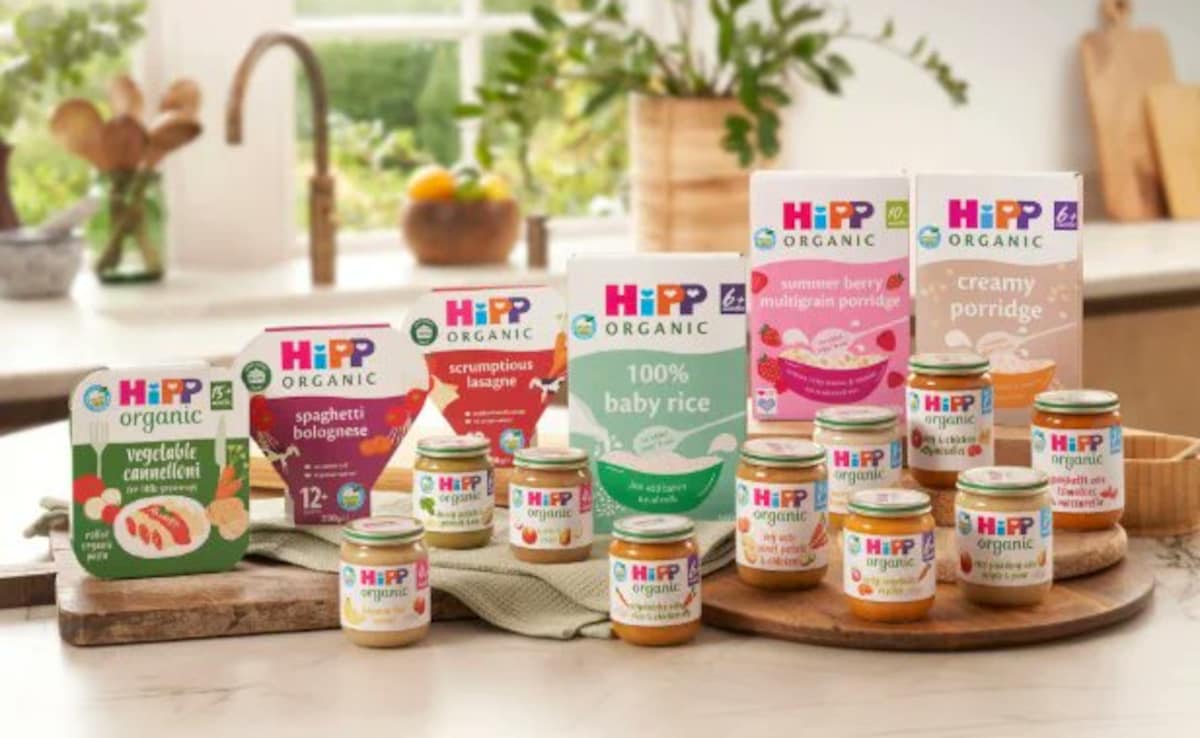
The recent discovery of rat poison in HiPP baby food jars in Austria is not merely a localized manufacturing error. It is a terrifying breakdown in the global food safety chain that exposes the fragility of premium organic branding. When a customer in a Lower Austrian supermarket opened a jar of HiPP "Früh-Karotten mit Kartoffeln" (Early Carrots with Potatoes) and found suspicious blue pellets, the immediate recall of batch number L07431 was the only logical response. However, the presence of brodifacoum—a highly potent anticoagulant rodenticide—inside a sealed glass container suggests something far more sinister than a dusty warehouse or a stray pest.
This isn't just about one bad batch. It is about the illusion of total security in the "organic" and "premium" sectors. Parents pay a significant markup for the HiPP name, trusting that the "HiPP Organic Seal" guarantees a level of purity that exceeds standard government regulations. When that seal is breached by lethal toxins, the fallout threatens to dismantle decades of consumer trust.
The Anatomy of a Contamination Event
The specifics of the Austria recall are chilling. The contaminated product was identified as 125g jars with an expiration date of July 24, 2026. While HiPP and the Austrian Agency for Health and Food Safety (AGES) acted quickly to pull the specific lot from shelves, the investigation into how rodenticide entered the production line remains shrouded in corporate caution.
In industrial food processing, "accidental" contamination of this nature is statistically improbable. Modern bottling plants use high-speed cameras, magnetic sorters, and rigorous filtration systems designed to catch foreign objects. Rat poison pellets are intentionally dyed bright blue or green specifically so they can be spotted against organic matter. For these pellets to survive the washing, pureeing, cooking, and sealing stages of production indicates a failure at a foundational level.
We are looking at three distinct possibilities, none of which reflect well on the industry leader:
- Upstream Agricultural Failure: The poison was introduced during the harvesting of carrots or potatoes, surviving the initial cleaning processes.
- Facility Malfunction: A localized pest control effort within the packing plant went catastrophically wrong, allowing bait to enter the hopper.
- Intentional Sabotage: A disgruntled employee or a bad actor in the supply chain bypassed security protocols to plant the material.
If it was an accident, the systems failed. If it was intentional, the security failed. Either way, the "HiPP Guarantee" was silenced by a handful of blue pellets.
The Organic Paradox
HiPP has built an empire on the philosophy of "the best from nature." Their marketing focuses on biodiversity, soil health, and the avoidance of chemical pesticides. This creates a psychological buffer for the consumer; they believe they are buying into a closed, protected loop.
However, the organic supply chain is often more vulnerable to certain types of contamination than conventional farming. Because organic standards strictly limit the use of synthetic deterrents, facilities often rely more heavily on physical traps and targeted rodenticides in non-production areas. The irony is sharp: in the quest to keep synthetic sprays off the carrots, the facility may have brought a far more concentrated toxin into the building.
Furthermore, the concentration of production creates a massive "blast radius" when things go wrong. A single contaminated vat can fill thousands of jars, which are then dispersed across entire regions. In this case, the recall focused on Austria, but the logistical reality of European food distribution means that batches are frequently rerouted or sold across borders through third-party wholesalers. The "local" problem is rarely as local as the press releases suggest.
Brodifacoum and the Pediatric Risk
To understand the severity, one must look at the science of the contaminant. Brodifacoum is a second-generation anticoagulant. It works by inhibiting the enzyme vitamin K epoxide reductase, which is essential for blood clotting. In an adult, a tiny amount might cause bruising or nosebleeds. In an infant, whose body mass is a fraction of an adult’s and whose developmental systems are still calibrating, the risk of internal hemorrhaging is extreme.
The medical reality is that symptoms of such poisoning do not appear immediately. There is a lag time of two to three days as the body’s existing clotting factors are depleted. This creates a dangerous window where a parent might feed their child a contaminated jar and see no immediate distress, only for a medical emergency to manifest 48 hours later.
Why the Recall System is Flawed
The current recall mechanism relies on the "informed consumer." Once AGES and HiPP issued the alert, the responsibility shifted to the parents to check their pantries.
- Information Asymmetry: Not every parent follows food safety news daily.
- Secondary Markets: Small "mom and pop" grocers or independent gas stations often lag behind major chains in pulling recalled stock.
- Visual Trust: Because the pellets were found inside the jar, any parent who didn't look closely at the puree before spooning it into their child's mouth could have easily missed the danger.
The system is reactive, not proactive. By the time the blue pellets were reported, the batch had likely been on shelves for weeks. The industry prides itself on "traceability," yet we are still relying on a customer finding a toxin and calling a hotline to trigger the safety net.
The Financial Fallout and Corporate Responsibility
For HiPP, a family-owned company that has navigated the food industry since 1899, this is a reputational nightmare. Stefan Hipp, the current face of the brand, has long leaned into his personal involvement in the quality control process. When the face of the company is the one promising safety, a failure of this magnitude becomes personal for the consumer.
The business implications are massive. Beyond the immediate cost of the recall—logistics, disposal, and loss of stock—there is the long-term impact on the "Organic" premium. If a parent concludes that a €1.50 jar of premium organic food is less safe than a €0.80 generic brand, the entire value proposition of the HiPP brand collapses.
We have seen this pattern before. When the baby food industry was rocked by reports of heavy metals (lead, arsenic, and cadmium) in 2021, brands scrambled to point at "naturally occurring soil elements." But you cannot claim rat poison is naturally occurring. This is a "man-made" failure that bypasses the usual excuses regarding environmental runoff or soil composition.
Beyond the Press Release
As of this moment, HiPP maintains that no other batches are affected. This is the standard corporate line, but it ignores the systemic question: if the protocols allowed this to happen in one batch, what stopped it from happening in others that simply haven't been "caught" by a vigilant consumer?
Regulatory bodies like AGES are often underfunded and overstretched, relying on "self-monitoring" by the companies themselves. This creates a conflict of interest where the fox is guarding the organic hen house. True safety would require independent, third-party testing of finished goods at the point of distribution, not just at the point of manufacture.
Immediate Actions for Consumers
If you have baby food in your pantry, regardless of the brand, the Austria incident should change your preparation habits. The days of blind trust in a premium label are over.
- Visual Inspection: Always empty the contents of a jar into a separate bowl rather than feeding directly from the glass. This allows you to spot foreign objects or discoloration.
- Batch Verification: Register for automated food safety alerts from your national health authority. Do not wait for the news to find you.
- Demand Transparency: Contact manufacturers and ask for their specific protocols regarding "Physical Contaminant Detection" in their plants.
The presence of rodenticide in a baby's meal is an indictment of a global food system that has prioritized scale and speed over the absolute safety of its most vulnerable consumers. The "Early Carrots and Potatoes" recall is a warning shot. If the industry doesn't overhaul its internal security and pest management integration, the next discovery might not be made by a customer who happens to look before they feed.
Empty the jar. Check the bottom. Trust nothing but your own eyes.