Friday afternoon at Ronald Reagan National Airport (DCA) is usually a study in controlled desperation. On February 27, 2026, that desperation turned into a collective sigh of resignation as a thick blanket of fog rolled over the Potomac, triggering a ground stop that froze American Airlines’ Terminal D. But the real story wasn't the weather. It was the man sitting in the third row of a regional jet’s first-class cabin, clutching a newspaper and waiting for the same updates as the salesperson in 12B.
Joe Biden, the 46th President of the United States, was flying commercial. And like everyone else, he was going nowhere fast.
The sight of a former world leader navigating the indignities of modern air travel—the plastic armrests, the shared air, the inevitable delays—shatters the illusion of the "ex-presidential" lifestyle. We expect motorcades and private Gulfstreams. Instead, the public saw a 83-year-old man dealing with a system he spent four years trying to fix, proving that in the American aviation infrastructure, not even a legacy can outrun a fog bank.
The Myth of the Imperial Post Presidency
There is a persistent misconception that once you hold the nuclear codes, you never have to worry about a middle seat or a canceled connection again. The reality is governed by the Former Presidents Act of 1958. While it provides a pension, a staffed office, and lifetime Secret Service protection, it does not hand over the keys to a private fleet.
Unless a former president is wealthy enough to maintain their own aircraft—or has a foundation willing to foot the bill—they are essentially high-value cargo in the eyes of the FAA. When Biden boarded that flight to Columbia, South Carolina, for a Democratic Party event, he wasn't just "Amtrak Joe" playing a part. He was a private citizen subject to the same Federal Aviation Administration (FAA) ground stops and gate changes as a spring breaker.
The logistics are a nightmare. A Secret Service detail doesn't just sit next to the protectee; they are "ensconced" throughout the cabin. They have to coordinate with airport police, TSA, and airline security leads weeks in advance. Yet, for all that muscle, they cannot make a plane take off in zero visibility.
The Infrastructure Irony
The irony of Biden’s delay at DCA is thick enough to cut with a knife. During his term, the Bipartisan Infrastructure Law funneled roughly $25 billion into modernizing airports and air traffic control. Billions went toward terminal upgrades and the regeneration of 1,600 ATC towers.
Yet, here was the architect of that spending, sitting in a "tiny" first-class cabin, victimized by the very system he sought to "de-clutter." It highlights a hard truth: money can buy new escalators and better bathrooms, but it hasn't yet conquered the localized congestion of the D.C. airspace or the technological lag in aging regional fleets.
DCA is particularly notorious. Its proximity to restricted P-56 airspace means pilots have very little room for error or rerouting during weather events. When fog hits the Potomac, the airport essentially chokes. No amount of legislative funding has changed the physical geography of the river or the rigid flight paths required for national security.
The Secret Service Commercial Protocol
People often ask why the Secret Service allows a former president to fly commercial at all. It seems like a security sieve.
In truth, the Service prefers commercial flights for certain low-profile movements because it’s easier to blend into the existing "noise" of a crowded terminal than to secure a private airfield that might lack the heavy perimeter fencing of a major hub like DCA. At Reagan National, Biden’s team utilized:
- Pre-boarding protocols: Entering before the "Group 1" calls to minimize aisle congestion.
- Buffer seating: Ensuring agents occupy the seats immediately surrounding the protectee.
- Local LEA integration: Uniformed local police often provide a "shell" around the gate area to manage the inevitable crowd of smartphone-wielding onlookers.
Despite these measures, the "human" element remains. One passenger reportedly spilled coffee on the shared armrest next to the former president. Biden simply steadied the cup. It’s a level of proximity that would be unthinkable for a sitting president, but for a former one, it's the price of a $400 ticket.
Why He Won't Just Charter
If you’ve been the leader of the free world, why subject yourself to American Airlines’ Terminal D?
For Biden, the choice is likely as much about branding as it is about budget. His entire political identity was forged on the rails of the Northeast Corridor. To suddenly pivot to a private jet lifestyle in his twilight years would be a betrayal of the "Middle Class Joe" persona that served as his North Star for five decades.
There is also the matter of the Department of Transportation (DOT) rules his administration enacted. He famously pushed for automatic cash refunds for significant delays and the elimination of "junk fees." Sitting in that cabin, experiencing an hour-long ground stop, he was effectively "eating his own dog food." He was testing the consumer protections he signed into law.
The Strategic Reality of the South Carolina Trip
The destination—Columbia, South Carolina—is not accidental. Biden was headed to an event for the South Carolina Democratic Party, the very group that resurrected his 2020 campaign.
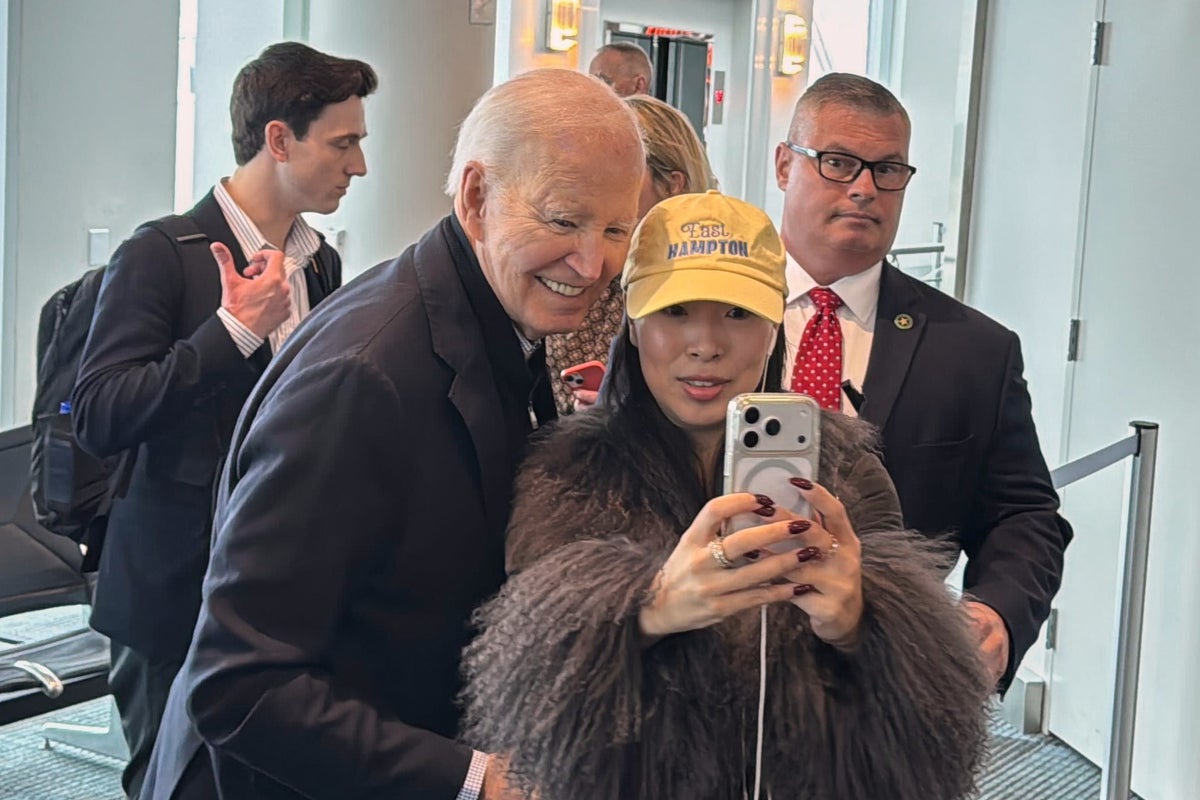
Flying commercial into a local hub allows a politician to land with a "man of the people" narrative already written. The images of him shaking hands with a woman who was "about to cry" in the next seat are worth more than any staged press conference. It’s retail politics at 30,000 feet.
But it also exposes the fragility of our transit. If a former president can't get a "priority departure" during a standard weather event, what hope does the average traveler have? It reinforces the fact that our aviation system is a giant equalizer—a place where social status is secondary to a flight dispatcher’s weather radar.
The fog eventually lifted, and the flight eventually left. Biden arrived in South Carolina, posed for more selfies, and moved on. But the hour he spent sitting at the gate in Terminal D remains a definitive portrait of the modern American presidency: powerful in memory, but perfectly ordinary in the face of a delayed connection.
Would you like me to investigate the specific FAA protocols that govern "VIP" commercial travel versus private charters for former government officials?