The global humanitarian machine is grinding to a halt. While the world watches the escalating military tension between Iran and its regional rivals, a more silent and lethal catastrophe is unfolding in the accounting offices of Western donor nations. The direct fallout from this conflict has created a triple-threat to foreign aid: skyrocketing logistics costs, the massive redirection of national budgets toward defense, and a hardening of political hearts. We are no longer looking at a simple funding gap. This is a total structural collapse of the international safety net that has kept millions alive for decades.
Foreign aid is the first casualty of regional instability. When oil prices fluctuate or shipping lanes in the Red Sea and the Persian Gulf become combat zones, the cost of delivering a single metric ton of grain to a hungry family in Sudan or Yemen doubles overnight. This isn't theoretical. It is a mathematical certainty that is currently bankrupting NGOs.
The High Price of War Risk Insurance
The mechanics of global aid rely on the same commercial infrastructure as the electronics or oil industries. Most food aid travels on chartered commercial vessels. When tensions with Iran spike, insurance premiums for "War Risk" coverage in the Middle East and surrounding waters don't just rise; they explode.
In many cases, shipping companies now demand a 300 percent increase in premiums to transit zones near the Bab el-Mandeb strait or the Strait of Hormuz. These costs are passed directly to the humanitarian organizations. A budget that was intended to feed 50,000 people for a month is suddenly drained just to pay the ship’s insurance. The grain is still there, sitting in silos or on decks, but it cannot move because the financial math no longer works.
Beyond insurance, the physical rerouting of ships around the Cape of Good Hope adds weeks to delivery times. For shelf-stable commodities, this is a nuisance. For specialized nutritional supplements used to treat acute childhood malnutrition, these delays are a death sentence. The global supply chain was already fragile after years of pandemic-related shocks and the war in Ukraine. This new layer of regional hostility is the breaking point.
Defense Spending and the Cannibalization of Budgets
The most profound threat isn't just the cost of shipping; it is the fundamental shift in how Western governments prioritize their tax dollars. For thirty years, there was a general consensus in the G7 that spending 0.7 percent of Gross National Income on foreign aid was both a moral imperative and a tool for long-term security. That consensus is dead.
As the threat of a direct confrontation with Iran looms, European and American lawmakers are facing immense pressure to rearm. Every billion dollars shifted into missile defense systems or naval procurement is a billion dollars stripped from the development and relief budgets. In the United Kingdom and Germany, we are already seeing "emergency" reallocations where money previously earmarked for African water projects is being shifted to bolster domestic military readiness.
This is a zero-sum game. Politicians find it much easier to justify a new fleet of drones to their voters than they do a long-term agricultural subsidy for a country half a world away. The "security first" mindset means that foreign aid is being viewed as a luxury we can no longer afford in a world at war. This shift ignores the reality that cutting aid creates the very instability that fuels further conflict, but political cycles rarely account for twenty-year feedback loops.
The Weaponization of the Red Sea
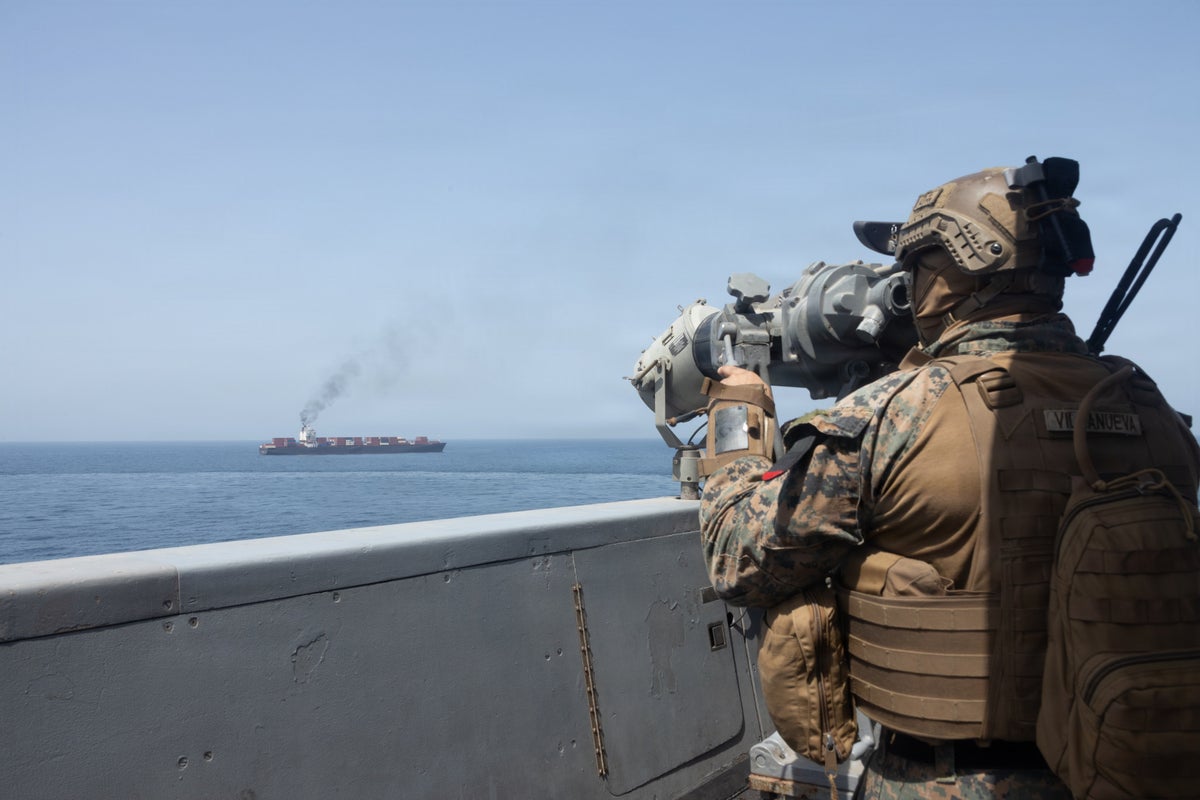
The geography of this conflict is uniquely devastating for humanitarian efforts. The Red Sea is the primary artery for aid reaching East Africa and the Middle East. With Iranian-backed groups targeting commercial shipping, the very act of delivering aid has become a geopolitical statement.
We are seeing a trend where aid convoys require military escorts. This destroys the principle of "humanitarian neutrality" that allows groups like the Red Cross or the World Food Programme to operate in dangerous areas. If a food shipment arrives under the protection of a Western destroyer, it is seen as a hostile delivery by opposing factions. This puts aid workers directly in the crosshairs.
The Breakdown of Logistics in Numbers
To understand the scale of the crisis, look at the Mediterranean-to-Indian Ocean transit. A standard cargo vessel moving aid from Europe to Ethiopia used to take approximately 20 days. By avoiding the Red Sea due to the threat of drone and missile attacks, that journey now takes 30 to 40 days.
- Fuel Consumption: An additional 10 to 15 days of steaming increases fuel costs by roughly $400,000 per voyage.
- Charter Rates: The limited pool of ships willing to enter high-risk zones has sent daily rental rates for vessels into the stratosphere.
- Spoilage: Increased time at sea in high temperatures leads to higher rates of infestation and spoilage for bulk grains.
The Political Hardening of the West
There is a psychological element to this crisis that the competitor's reports often miss. The "aid fatigue" that has been simmering in the West is turning into active hostility. When voters see constant conflict in the Middle East, there is a growing sentiment of "why bother?"
This isolationist drift is being exploited by populist movements across the globe. They argue that foreign aid is a waste of resources in a world that refuses to find peace. This makes it politically toxic for even the most well-meaning leaders to increase or even maintain aid levels. We are seeing a retreat into "Fortress West," where the focus is on border security and domestic protection rather than addressing the root causes of migration and poverty.
Iran knows this. By keeping the region in a state of "gray zone" conflict—not quite a full-scale war, but never at peace—they force the West to spend trillions on a defensive posture. The collateral damage of this strategy is the millions of people who rely on Western-funded programs for medicine, education, and food.
The Fragility of the African Dependency
Much of the discourse centers on the Middle East, but the true victims of an Iran-centered conflict are in sub-Saharan Africa. Countries like Somalia, South Sudan, and the Democratic Republic of Congo have no "Plan B." They are almost entirely dependent on the international aid system that is currently being defunded and diverted.
The irony is bitter. These nations have nothing to do with the rivalry between Tehran and Washington. They do not have a stake in the religious or territorial disputes of the Persian Gulf. Yet, they are the ones who will see their clinics close and their school lunches disappear because a drone was fired at a tanker in the Gulf of Oman.
Economic analysts are watching the sovereign debt of these nations. As aid dries up, these countries are forced to take on high-interest loans to cover basic services. This creates a debt trap that will stifle their development for generations. We are witnessing the reversal of thirty years of progress in global poverty reduction, all within the span of a few fiscal quarters.
The Failure of Private Philanthropy to Fill the Gap
There is a common misconception that private billionaires or corporate foundations can step in when governments retreat. This is a fantasy. The scale of the foreign aid requirement is in the hundreds of billions of dollars. All the private philanthropy in the world combined represents only a fraction of what G7 governments provide.
Furthermore, private foundations are often risk-averse. They want to see "measurable outcomes" and "clean data." They are not equipped to operate in the chaos of a region impacted by the fallout of an Iranian war. They lack the logistical muscle and the diplomatic immunity that state-sponsored aid programs carry. When the big government donors leave the room, the small players follow them out.
Rethinking the Humanitarian Model
If the old model of aid is being killed by regional conflict, what replaces it? The hard truth is that the current centralized, shipping-heavy model is obsolete in an era of constant proxy warfare.
The only path forward is a radical localization of aid. This means investing in local food production and regional manufacturing within the countries that need help, rather than shipping everything from North America or Europe. It means creating a system that is not dependent on the safety of the Strait of Hormuz.
However, this transition takes decades and requires massive upfront investment—exactly what is currently being cut to pay for missiles. We are stuck in a lethal paradox. We need to change the system because the old one is too vulnerable to war, but we are spending all our money on the war itself.
The intelligence community and defense analysts often talk about "kinetic" impacts—deaths from bombs and bullets. They rarely count the "non-kinetic" deaths caused by the collapse of aid pipelines. In the coming years, the number of people who die from lack of basic medicine and food because of the economic and logistical fallout of the Iran crisis will likely dwarf the number of people killed in the actual fighting.
The global aid system isn't just under threat. It is being dismantled by the financial and political realities of a world that has decided that arming for the next war is more important than preventing the next famine.
Donors must stop viewing foreign aid as a charitable line item that can be slashed during times of tension. It is a core component of global stability. If the West continues to treat aid as a secondary priority to military hardware, it will find that the resulting waves of migration, disease, and radicalization will cost far more to contain than any aid budget ever would. The math of the Middle East crisis is simple and cold: less aid means more chaos.