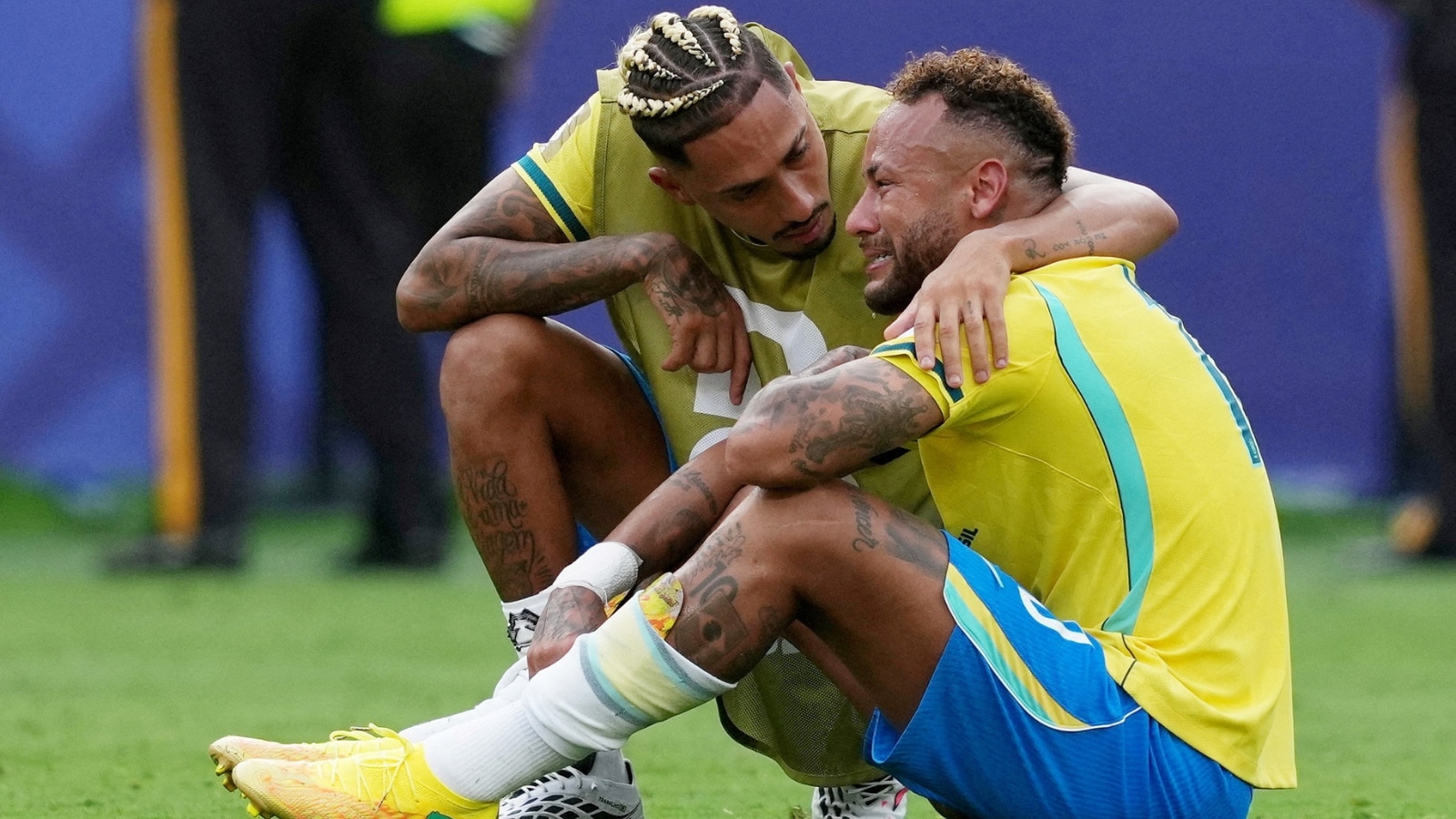
Neymar da Silva Santos Júnior has walked away from the Brazilian national team. The breaking point arrived not in a glamorous showdown against a traditional footballing superpower, but in a tactical suffocation at the hands of Norway during the World Cup knockout stages. While social media dissects the immediate aftermath of that defeat, the reality is that this exit has been years in the making. This is not just the story of a superstar retiring from international duty. It is the definitive collapse of a decades-long footballing philosophy under the weight of modern tactical evolution and corporate expectation.
The exit signals something far deeper than one man hanging up his yellow shirt. It exposes the structural decay within the Brazilian football ecosystem. Read more on a connected topic: this related article.
The Night Oslo Outsmarted Rio
To understand why Neymar quit, look at the pitch, not the press conference. Norway did not defeat Brazil through sheer individual talent. They did it through a relentless, hyper-disciplined mid-block that squeezed the space between Brazil's midfield and attacking lines.
For ninety minutes, Neymar dropped deeper and deeper, trying to choreograph an escape. He looked like a man trying to play chess while his opponents were playing rugby. The modern game has evolved into an exercise in spatial geometry and high-intensity pressing. Brazil, conversely, still relies on the myth of individual genius to rescue flawed structural setups. More reporting by CBS Sports highlights comparable views on this issue.
When the final whistle blew, the realization was stark. The individualistic joga bonito style is no longer enough to break down elite European defensive blocks. Neymar became a prisoner of his own archetype. He was expected to beat three defenders every time he touched the ball because the system offered him no alternative outlets.
The Weight of a Broken Federation
Behind the scenes, the Brazilian Football Confederation (CBF) has operated as a political soap opera for over a decade. Tracing the timeline of their managerial appointments reveals a staggering lack of long-term sporting vision.
- Constant shifts between pragmatists and romanticists.
- An over-reliance on domestic coaches who are tactically isolated from European trends.
- Commercial contracts that heavily influence squad selection and friendly match locations.
Neymar was drafted into this chaos as a teenager. He was marketed not just as a great player, but as the savior of a nation's identity. Every failure of governance, every tactical miscalculation by a succession of managers, and every structural deficiency in the domestic league was deflected onto his shoulders.
The pressure was unsustainable. Elite European nations build systems that protect and elevate their best assets. Brazil built an industry that consumed theirs.
The European Exile and Tactical Disconnect
The vast majority of Brazil's starting eleven plays their club football in Europe. They spend ten months a year learning the rigid, automated patterns of Pep Guardiola, Carlo Ancelotti, or Mikel Arteta. Then, they fly across the Atlantic for international breaks and are expected to revert to an intuitive, free-flowing style of play.
This disconnect creates a psychological friction. Players look lost because they are caught between two worlds. Neymar, as the focal point, suffered the most from this systemic identity crisis. He was trying to be the free-spirited street footballer within a squad that had been thoroughly Europeanized.
The Myth of the Missing Successor
The immediate panic in Brazilian media centers on a single question. Who replaces him?
This question itself is the core of the problem. France did not replace Zinedine Zidane with another Zidane; they built a system of athletic, high-pressing midfielders and rapid wingers that won a World Cup. Germany did not look for another Michael Ballack; they overhauled their entire academy infrastructure to prioritize technical passing and spatial awareness.
Brazil remains obsessed with finding the next chosen one. Whether it is Vinícius Júnior, Endrick, or any other emerging talent, the media machine immediately applies the same suffocating pressure that broke Neymar.
What the Numbers Actually Tell Us
An analysis of Brazil's performances against European opposition over the last three World Cup cycles reveals a damning trend.
| Metric vs European Teams | With Neymar | Without Neymar |
|---|---|---|
| Possession Percentage | 54% | 51% |
| Expected Goals (xG) | 1.8 | 1.2 |
| Goals Conceded Per 90 | 1.4 | 1.6 |
| Win Rate | 42% | 33% |
The data proves that while Neymar was essential to their offensive output, his presence could not mask the defensive frailties and structural gaps that elite European teams exploit. Brazil did not lose because Neymar failed. They lost because the team lacked a collective defensive identity when playing without the ball.
The Financial Reality of the Modern Icon
Football at this level is as much about asset management as it is about sport. Neymar’s career choices, particularly his move to Paris Saint-Germain and later to the Saudi Pro League, altered his physical longevity. The grueling nature of European club football, combined with the immense travel demands of South American qualifiers, shattered his ankles and knees over the years.
He chose to protect what remains of his career and his post-football brand. International football offers immense prestige but zero financial incentive compared to club contracts, while demanding an enormous physical toll. At this stage of his life, the calculation became simple. The emotional return of playing for Brazil no longer outweighed the physical and psychological cost.
Rebuilding From the Rubble
The post-Neymar era forces Brazil to confront a reality they have avoided since 2002. They are no longer the benchmark of world football. They are challengers, drifting behind the tactical sophistication of France, the developmental pipeline of Spain, and the sheer collective machine of modern European national teams.
To fix this, the CBF must dismantle the cult of personality that has dominated the national setup for twenty years.
First, they must integrate European-style tactical flexibility into their youth development sectors. Brazilian players possess natural technical superiority, but they must learn to deploy it within modern positional structures. Second, the federation must hire coaching staff based on modern tactical competency rather than national nostalgia or political convenience.
The loss against Norway was humiliating, but it was honest. It stripped away the illusion that individual brilliance can indefinitely postpone structural reform. Neymar's departure is the final curtain on an era that prioritized entertainment over efficacy. The future of Brazilian football depends entirely on their willingness to accept that the old ways are dead.