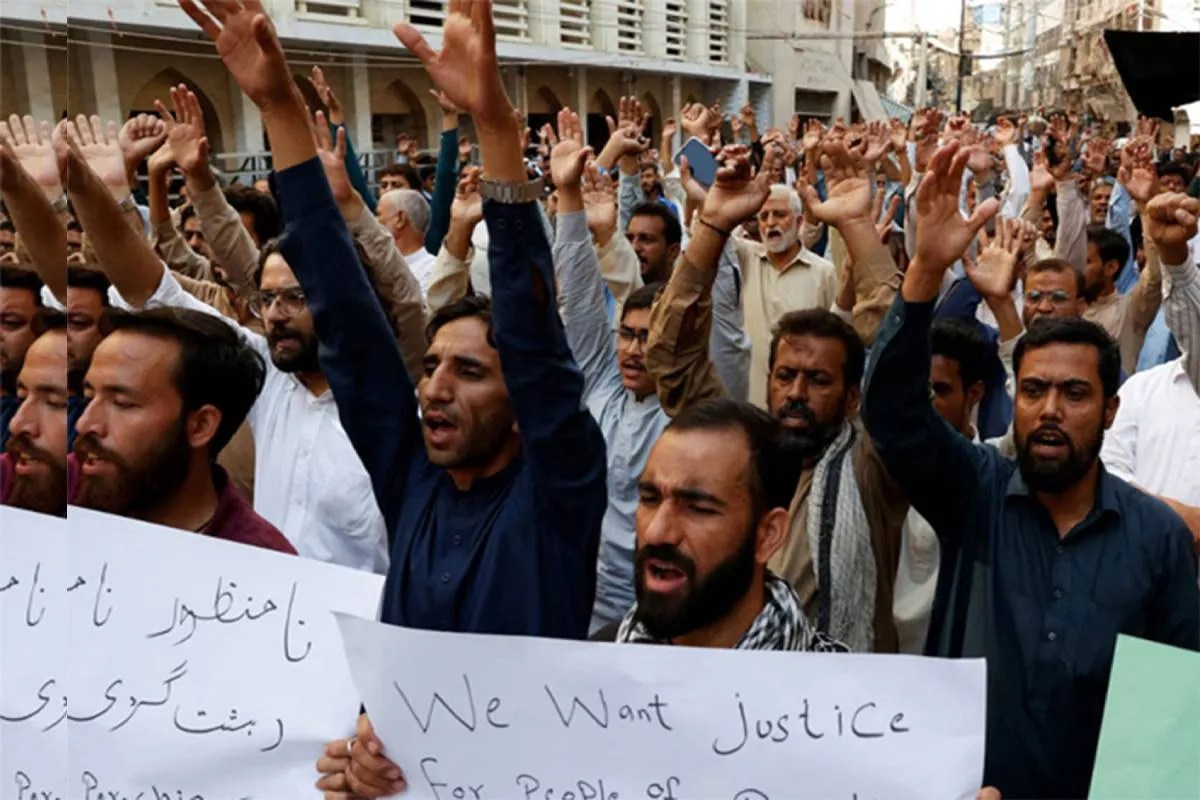
The tear gas has cleared from Constitution Avenue, but the underlying rot remains. When government employees marched toward Pakistan's Parliament House recently, demanding wage increases to match skyrocketing inflation, they were met with batons and riot shields. This clash was not an isolated labor dispute. It was the predictable explosion of a systemic fiscal failure. The state cannot afford its own bureaucracy, yet it refuses to cut top-heavy administrative costs while squeezing the working class. Pakistan is running out of money, and the choices being made in Islamabad show a government entirely disconnected from economic reality.
The Math That Does Not Work
At the heart of this crisis lies a simple, devastating reality. Pakistan spends vastly more than it generates. For decades, successive administrations have relied on short-term loans to plug structural deficits.
The primary driver of the current unrest is the sheer erosion of purchasing power. While official inflation figures hover at staggering heights, the street-level cost of fuel, electricity, and basic foodstuffs has doubled for the average citizen. Government clerks and mid-level bureaucrats saw their salaries effectively halved in real terms over a twenty-four month period.
When the state cuts deals with international lenders, the conditions usually mandate freezing public sector wages and slashing subsidies. The government complies because it must. Without the next loan tranche, default is certain. However, the administration consistently fails to curb its own luxury expenditures, creating a toxic contrast that drives workers to the streets.
Elite Capture of the National Purse
To understand why the police were ordered to charge government workers, one must look at where Pakistan actually spends its revenues. The national budget is rigid, dominated by three massive blocks: debt servicing, military expenditure, and a sprawling, inefficient federal bureaucracy.
+-----------------------------------------------------------------+
|                    PAKISTAN REVENUE ALLOCATION                  |
+-----------------------------------------------------------------+
| [XXXXXXXXXXXXXXX Debt Servicing (Largest Share)               ] |
| [XXXXXXXXX Defense Spending                                   ] |
| [XXXXXX Federal Bureaucracy & Pensions                        ] |
| [X Developmental Projects (Residual Smallest Share)           ] |
+-----------------------------------------------------------------+
What remains for developmental projects, education, and healthcare is a pathetic fraction. The state operates as an extraction mechanism. It collects taxes primarily through indirect measures like petroleum levies and sales taxes, which hit the poorest hardest. Meanwhile, the powerful agricultural lobby, real estate tycoons, and retail giants remain largely outside the tax net.
The protesting employees know this. They see senior bureaucrats receiving subsidized housing, free fuel, and luxury vehicles while lower-tier workers cannot afford electricity bills that frequently exceed their basic monthly rent. The state’s fiscal priorities are designed to protect the comfort of the ruling elite at the expense of operational staff.
The Illusion of Civil Service Reform
Every incoming administration promises to streamline the government. Committees are formed, reports are printed, and promises are made to right-size ministries that have long outlived their usefulness.
Nothing changes. The reason is political survival.
The massive public sector acts as a political patronage network. Postings, promotions, and jobs are handed out to secure loyalty or satisfy coalition partners. Firing redundant workers or shutting down dead-weight departments requires political capital that no prime minister in Islamabad currently possesses.
Instead of genuine reform, the state resorts to ad-hoc measures. They freeze recruitment, which leaves vital sectors like healthcare and education understaffed, while leaving the bloated, administrative top-heavy structures untouched. When the lower-tier staff revolts, the state uses force because it lacks the financial resources to pay them and the political courage to reform the system.
A Dangerous Pivot Toward Instability
Using violence against state employees marks a dangerous escalation in Pakistan's internal stability. These are not political partisans; they are the machinery of the state itself. When school teachers, clerks, and sanitation workers are beaten by police, the social contract dissolves completely.
This creates a severe governance vacuum. Strikes shut down ministries, tax collection offices halt, and municipal services ground to a halt. The government’s reliance on police power to solve an economic equation is a strategy of diminishing returns. Every baton charge alienates another segment of the population, pushing the country closer to widespread civil disobedience.
The international lenders watching this unfold are not blind to the instability. They demand fiscal discipline, but they also require political stability to ensure loans are repaid. A government at war with its own workforce cannot guarantee the implementation of long-term economic policies.
The Structural Changes Required Right Now
Fixing this requires a complete overhaul of how Islamabad views its financial responsibilities. The government must immediately implement a series of drastic fiscal adjustments that target the top, not the bottom.
- Abolish redundant federal ministries that duplicate functions already devolved to the provinces.
- Eliminate non-essential perks including free fuel quotas and luxury vehicle allocations for all high-ranking officials.
- Broaden the tax base by force-registering wholesale traders, real estate developers, and large agricultural landowners who currently evade their fair share.
- Restructure state-owned enterprises that lose billions annually, bleeding the national treasury dry.
The current strategy of treating the national budget as a tool for elite preservation while using police force to silence the hungry is unsustainable. If Islamabad refuses to tax its wealthy and cut its own lavish spending, the protests seen outside Parliament House will become a permanent fixture of the capital. The state cannot govern a country through the barrel of a tear-gas launcher when the treasury is empty.