Buying a plug-in hybrid car feels like a smart financial escape hatch. You look at the glossy brochures and see a vehicle promising electric silence for the morning school run alongside petrol freedom for weekend road trips. It feels like zero compromise. You believe you are entering the future without burning your bridges to the past.
Then reality hits you at a motorway service station in the pouring rain. You might also find this related article useful: The Iron Whale That Swallowed the Sky.
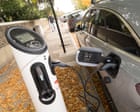
Recent industry analysis reveals a startling limitation in the UK market. Three-quarters of the most popular plug-in hybrid electric vehicle models cannot use rapid chargers. Only twenty-six percent of these top-selling plug-in models can even handle chargers with a power output of fifty kilowatts or more. When it comes to ultra-rapid chargers operating at one hundred and fifty kilowatts and above, the success rate drops straight to zero.
That convenience you paid extra for starts to evaporate. As extensively documented in latest reports by TechCrunch, the implications are notable.
If you own or plan to buy a plug-in hybrid, you need to understand why this hardware mismatch exists. The marketing machine wants you to believe these cars fit seamlessly into modern public charging infrastructure. They do not. Understanding the mechanical limitations of these vehicles exposes a massive gap between showroom promises and everyday driving.
The Engineering Reality Behind Small Battery Packs
To understand why most plug-in hybrids are locked out of rapid charging, you have to look at what lives beneath the floorboards. Pure electric cars carry massive battery packs ranging from sixty to over one hundred kilowatts. Those giant packs absorb heavy flows of direct current electricity because their cells distribute the load across thousands of individual channels.
Plug-in hybrids are entirely different beasts. They carry tiny battery packs, usually sitting between ten and twenty kilowatts. These compact packs exist primarily to shave emissions during short urban hops. They simply cannot physically absorb the massive energy spikes delivered by modern rapid chargers without overheating or destroying their internal chemistry.
Lithium-ion cells degrade rapidly when pushed beyond their thermal limits. Because a hybrid battery is small, pumping fifty or one hundred kilowatts of direct current into it would be like trying to fill a shot glass with a firehose. The cells would degrade within months.
Manufacturers bypass this issue by installing weak onboard alternating current chargers. Most popular plug-in models max out at slow charging speeds between three point six and seven point four kilowatts. A few recent models stretch to forty kilowatts, but that remains a rare exception. For the vast majority, public rapid charging is physically impossible. The hardware simply isn't built for it.
Public Infrastructure Chaos on the Road
This hardware gap creates daily friction across the public charging network. Drivers pull up to busy charging hubs expecting a quick top-up during a long journey, only to discover their car lacks the necessary hardware handshake to use the rapid cables.
When plug-in hybrid drivers do find older alternating current posts or slower destination chargers, they face another frustrating hurdle. These slow chargers take anywhere from two to four hours to squeeze a full charge into a hybrid pack. Sitting in a supermarket parking lot for three hours to gain twenty miles of electric range makes zero practical sense when a five-minute petrol refill accomplishes the same distance instantly.
Many drivers abandon public charging entirely. They treat their plug-in hybrid like a standard petrol car, plugging it in only when they happen to be parked at home overnight. If you live in an apartment or a terrace house without a driveway, owning a plug-in hybrid transforms into an exercise in pure frustration. You lug around a heavy, expensive petrol engine and an inert battery pack while paying higher upfront purchase prices for zero practical benefit.
Real World Emissions Versus Laboratory Dreams
Car manufacturers love promoting plug-in hybrids because they look incredible on paper. Official laboratory tests show staggeringly low carbon dioxide emissions, often under fifty grams per kilometer. These impressive figures help automakers meet strict government fleet regulations without having to build cars people actually want to buy.
Independent real-world data paints a much darker picture. Extensive studies from environmental groups and transport authorities show that real-world emissions for plug-in hybrids are frequently several times higher than laboratory ratings.
Why does this happen? Simple human behavior combined with bad hardware.
If a driver fails to charge the vehicle regularly—either because they lack home parking or because public chargers are too slow or incompatible—the car defaults to running entirely on its petrol engine. Hauling around an empty heavy battery drastically reduces fuel economy. You end up burning more fuel than you would in a standard, lighter petrol vehicle.
Governments are slowly waking up to this discrepancy. Tax incentives designed to encourage green driving are coming under intense scrutiny as regulators realize many plug-in hybrids never see a charging cable. The vehicle becomes a heavy fossil-fuel burner masquerading as an environmental savior.
How to Choose the Right Powertrain
Ignoring these realities leads to wasted money. Before stepping onto a forecourt, you need to brutally audit your daily driving habits.
If your daily commute stays under thirty miles and you possess a dedicated off-street parking space where you can install a home wall box, a plug-in hybrid can work. You will complete your daily routines on cheap electricity and use petrol strictly for annual holidays.
If you rent, rely on street parking, or drive long distances across the country on a regular schedule, skip the hybrid compromise altogether. Traditional full hybrids offer better fuel economy without the burden of charging cables. Pure electric vehicles provide access to the ultra-rapid charging networks you will genuinely need for long trips.
The industry tried to sell a bridge between two eras. Right now, that bridge has missing planks. Stop trusting the showroom badge and look closely at what your daily routine actually demands.


