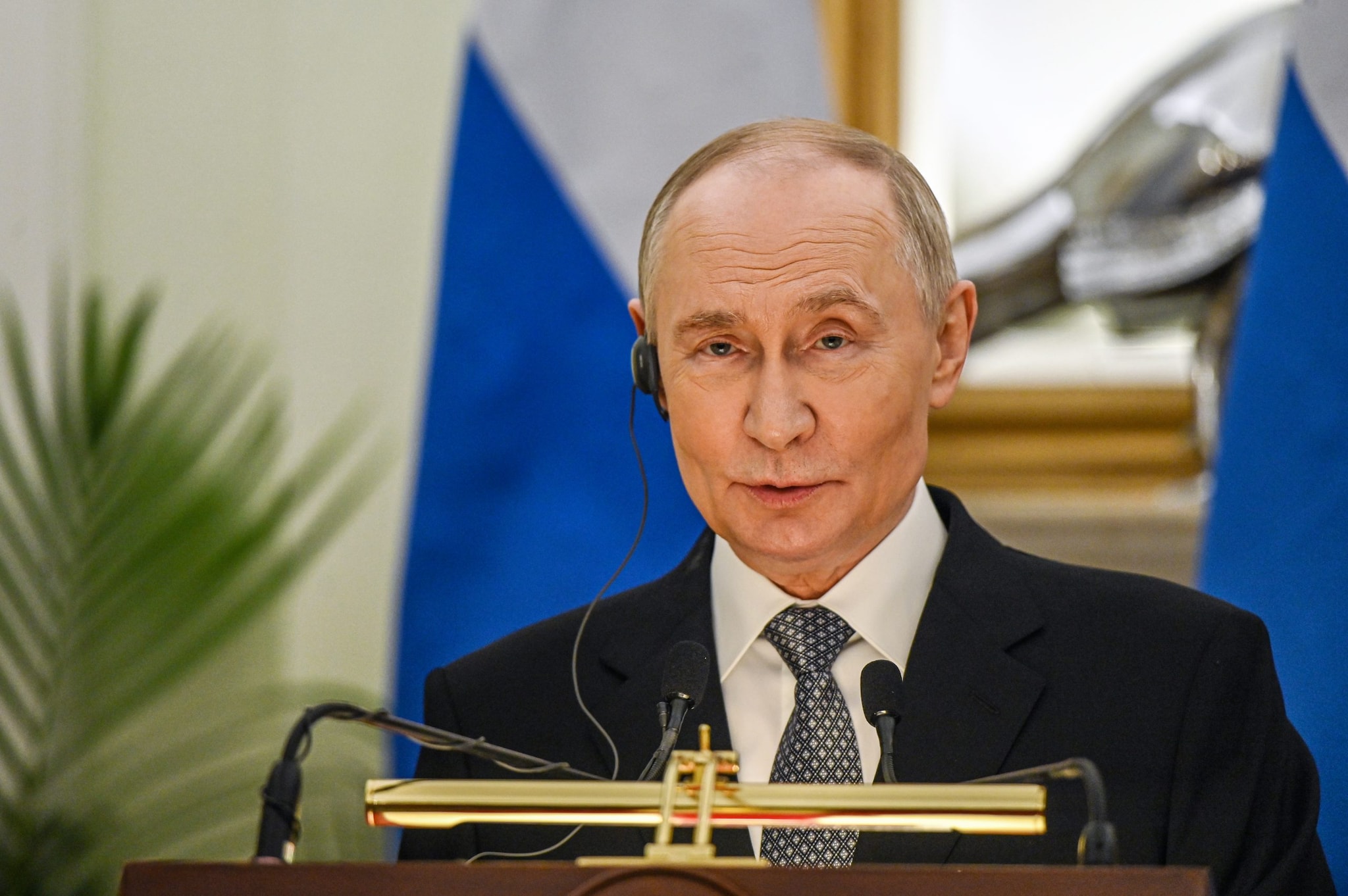
Vladimir Putin arrives in Beijing this week with a massive entourage, an economy under profound strain, and an urgent mission to rescue his state energy giant from irreversible decline. The Russian president wants to finalize a binding price agreement for the Power of Siberia 2 pipeline, a massive infrastructure project designed to divert 50 billion cubic meters of natural gas annually from the abandoned fields of western Siberia to the factories of northern China.
It is a desperate gambit. After four years of devastating conflict in Ukraine and the near-total loss of the lucrative European market, state-backed monopoly Gazprom is burning through cash. By attempting to use the recent geopolitical instability in the Middle East and the closure of the Strait of Hormuz as leverage, Moscow hopes a cornered Beijing will finally sign on the dotted line. But a closer look at the actual mechanics of the negotiation reveals that Russia is operating from a position of profound structural weakness, and China knows it.
The Illusion of Middle East Leverage
Moscow is banking heavily on the idea that the war in Iran and subsequent maritime blockades will scare Beijing into rapid submission. The logic appears sound on the surface. China currently imports roughly 18% of its liquefied natural gas (LNG) from Qatar and another 5% from the United Arab Emirates. Almost all of those shipments must pass through the vulnerable waters of the Persian Gulf. With regional shipping insurance premiums soaring to unprofitable levels, land-based pipelines crossing the Eurasian interior look safer than ever.
But this analysis ignores Beijing's carefully cultivated strategy of extreme diversification.
China does not make desperate moves during a crisis. It exploits them. While Kremlin foreign policy aide Yuri Ushakov insists that the pipeline project is on the agenda for detailed discussion, Chinese negotiators are playing a much longer game. Beijing has already locked in its near-term energy security through a series of less risky, highly specific alternatives.
The Quiet Expansion of the Far Eastern Route
While the massive Power of Siberia 2 project remains stalled in bureaucratic gridlock, a much smaller, highly strategic pipeline is nearing completion without the same level of global scrutiny. The Far Eastern route, running directly from Russia's Sakhalin Island to northeastern China, is on track to finish construction by the end of this year.
Russia-China Gas Pipeline Capacity (Current & Projected)
============================================================
Pipeline Corridor         Status             Annual Capacity
------------------------------------------------------------
Power of Siberia 1        Fully Operational  38.8 bcm
Far Eastern Route         Opens Jan 2027     12.0 bcm
Power of Siberia 2        Stalled/Negotiating 50.0 bcm
============================================================
This lesser-known corridor will begin pumping 12 billion cubic meters of gas per year starting in January 2027. Beijing quietly requested a 20% capacity increase on this specific route because it bypasses third-party nations entirely, avoiding the transit fees and geopolitical complications of the Mongolian territory required by Power of Siberia 2.
By securing these smaller, incremental victories, China ensures a steady baseline of imports while keeping Gazprom on the hook for the larger project. The existing Power of Siberia 1 pipeline is already operating at its maximum limit of 38.8 billion cubic meters annually. China is getting exactly what it needs right now, meaning it has no structural reason to accept Putin's pricing terms for a project that will take years to build.
The Brutal Math of the Price Dispute
The fundamental roadblock holding back the mega-pipeline is not political will. It is cash.
Gazprom is trapped in a classic monopsony. It has only one viable buyer for the gas fields of the Yamal peninsula, which previously supplied Germany, Italy, and France. When Europe was buying, Gazprom commanded premium prices. Today, Beijing holds a monopoly on Russian demand, and its price demands are punishingly low.
According to industry sources, Russia has made what it considers a highly competitive pricing offer to the China National Petroleum Corporation (CNPC). But China is demanding prices that match Russia's heavily subsidized domestic market.
- The Math: It costs Gazprom roughly $100 per thousand cubic meters just to extract and pump gas from the Yamal region to the Mongolian border.
- The Catch: If China demands prices near or below that production and transit threshold, Gazprom will be forced to operate the pipeline at a net loss, effectively subsidizing Chinese industrial growth with dwindling Russian state revenues.
Chinese planners are fully aware of Gazprom's internal distress. Total trade between the two nations reached $228 billion last year, a minor dip from previous highs but still demonstrating a deeply asymmetrical dependency. Central bank Governor Elvira Nabiullina is traveling with Putin to Beijing precisely because the financial mechanics of clearing these massive energy transactions under Western sanctions have become a logistical nightmare.
China Open-Ended Strategy
A distinct possibility for this week's summit is a diplomatic compromise that delivers headlines for Moscow but very little immediate cash. Beijing is considering a framework agreement that establishes the annual supply volumes and operational timelines for Power of Siberia 2, while intentionally leaving the actual pricing mechanism completely open-ended.
This allows President Xi Jinping to project an image of unwavering strategic partnership with Russia, satisfying long-term planning directives recently outlined in China's five-year economic blueprint. It also provides a domestic energy buffer for the 2030s, when Chinese researchers project national gas demand will peak near 670 billion cubic meters annually.
For Putin, an open-ended agreement is an empty victory. It provides a temporary propaganda boost for a domestic audience but does nothing to solve the immediate fiscal crisis. Without a fixed, profitable price locked in by September, Russia cannot secure the financing required to lay thousands of kilometers of steel through the Mongolian wilderness.
The Kremlin is discovering that in the harsh reality of Eurasian energy politics, a "no-limits" partnership has very clear boundaries. And they are all being drawn by Beijing.