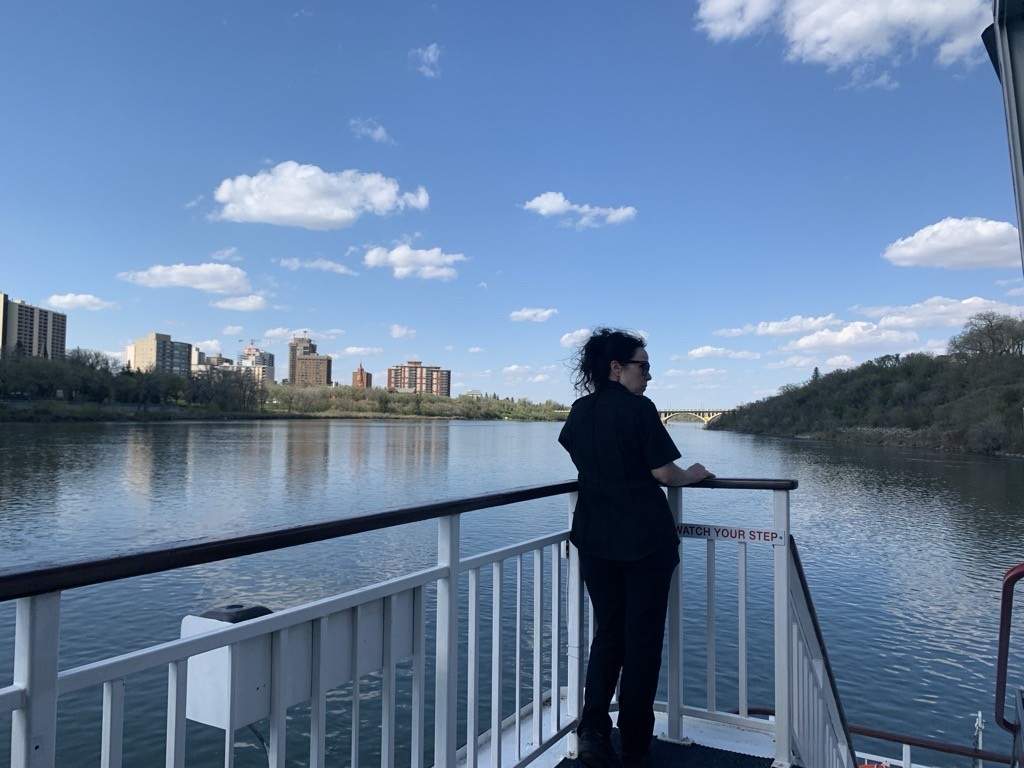
After eighteen months of forced exile at its dock, Saskatoon’s premier riverboat attraction is finally back on the South Saskatchewan River. Under the new ownership of local entrepreneur Stephanie Simonot, the Prairie Lily completed its initial voyage of the season with unprecedented water levels and heavy bookings. The immediate narrative surrounding the riverboat's return is one of triumph, a community icon rescued from the brink of permanent closure. Look past the shiny new paint and the packed passenger manifests, however, and a much more complicated reality comes to light.
The story of the Prairie Lily is not just a localized tale of business succession. It is a cautionary study of how environmental instability, regulatory barriers, and public infrastructure mismanagement can push a viable commercial enterprise to absolute zero. Read more on a connected subject: this related article.
The Mirage of Environmental Certainty
To understand why the 120-passenger riverboat was trapped at its moorings for the entire previous season, one must look west to the Rocky Mountains. The South Saskatchewan River relies heavily on alpine snowpack melt to maintain its depth and velocity. For five consecutive years, a punishing long-term regional drought throttled that supply.
By last summer, the river had deteriorated into an impassable obstacle course of massive sandbars. For a vessel like the Prairie Lily, which draws roughly three feet of water, navigating these shifting shoals became impossible. There was no deep channel left to traverse safely. The previous owners, Captain Mike and Joan Steckhan, were forced to ground operations completely, losing an entire year of revenue while fixed maintenance costs and insurance premiums continued to accrue. Additional analysis by MarketWatch highlights comparable perspectives on this issue.
This spring, the script flipped entirely. A massive, record-breaking winter snowpack in the Rockies has generated a sudden, aggressive deluge. The river is currently moving at a velocity not witnessed in half a decade, flushing out the built-up silt in the valley.
While the new ownership group is celebrating this sudden abundance of water, relying on the climate lottery is an unsustainable long-term strategy. The current high water levels are a temporary reprieve, not a permanent structural fix for a river system increasingly defined by volatile swings between extreme drought and rapid runoff.
The Eight Year Hydrological Standby
A glaring and frequently overlooked factor in the riverboat’s forced shutdown is the human element controlling the water supply. The South Saskatchewan River’s flow through Saskatoon is dictated almost exclusively by the Water Security Agency and its operations at the Gardiner Dam on Lake Diefenbaker.
During the height of last year's crisis, public pressure mounted on provincial authorities to release more water from the reservoir to save the local tourism asset. The request was flatly denied. The agency noted that the volume of water required to artificially raise the river enough to clear the sandbars was equivalent to an eight-year supply of clean drinking water for the entire city of Saskatoon.
This reality highlights the fundamental hierarchy of water rights in the province. Private tourism and recreation will always rank at the bottom of the list when stacked against the agricultural demands of regional irrigation, industrial cooling, and municipal drinking water infrastructure. Simonot’s new venture remains entirely at the mercy of bureaucratic gatekeepers who must manage a dwindling resource for competing, high-stakes interests.
The Transport Canada Wall
Stepping into the wheelhouse of a commercial passenger vessel involves a steep learning curve that derails many prospective buyers. The commercial maritime sector in Canada is governed by dense, unyielding Transport Canada safety regulations. It is a reality that almost prevented the sale of the business entirely.
Consider a hypothetical example of a standard retail business transition. If an entrepreneur buys a local coffee shop, they can generally assume management within a few weeks after reviewing inventory and point-of-sale systems.
A 107-gross-ton riverboat requires a completely different level of preparation. Every structural component, from the twin marine diesel engines to the onboard electrical generators, must pass rigorous, uncompromising federal inspections. Crew members cannot simply be hired off the street; they must undergo certified marine safety training, pass medical clearances, and log extensive hours under watchful eyes before they can be certified to handle a vessel with over one hundred lives on board.
Recognizing the sheer weight of these regulatory hurdles, the Steckhans chose not to simply hand over the keys and walk away. The retired founders are staying on board for the duration of the current season, acting as direct mentors to transition the new ownership team. Simonot’s nephew and son-in-law are currently embedded in an intensive captain-in-training program on the fast-moving river. Without this prolonged, unpaid knowledge transfer from the veterans, the business likely would have remained permanently dry-docked due to regulatory non-compliance.
Overhauling a Flat Hospitality Model
Surviving the South Saskatchewan River requires more than just high water and a licensed captain. It requires a fundamental evolution of the underlying revenue model. The traditional approach utilized since 2012 relied on standard sightseeing tours, dinner cruises, and private corporate bookings. It was a strategy that left the business highly vulnerable to mid-week lulls and seasonal weather cancellations.
To counter this vulnerability, the new management team is moving to monetize the vessel even when it is chained to the dock. The introduction of Harbor Coffee represents a distinct operational pivot. By transforming the ship into a stationary waterfront cafe during early morning hours, the business creates a steady, weather-resistant revenue stream that capitalizes on heavy foot traffic along the Meewasin Valley trails.
The early indicators for the season appear positive, with advance bookings already surpassing twelve percent of total capacity within days of the launch. Yet, the long-term viability of the enterprise rests on whether these new micro-revenues can offset the inevitable return of low water cycles. The riverboat has survived its eighteen-month crisis, but its future depends entirely on navigating the shifting political, regulatory, and environmental currents of Western Canada.
.png?width=1200&auto=webp&trim=0%2C0%2C0%2C0)

