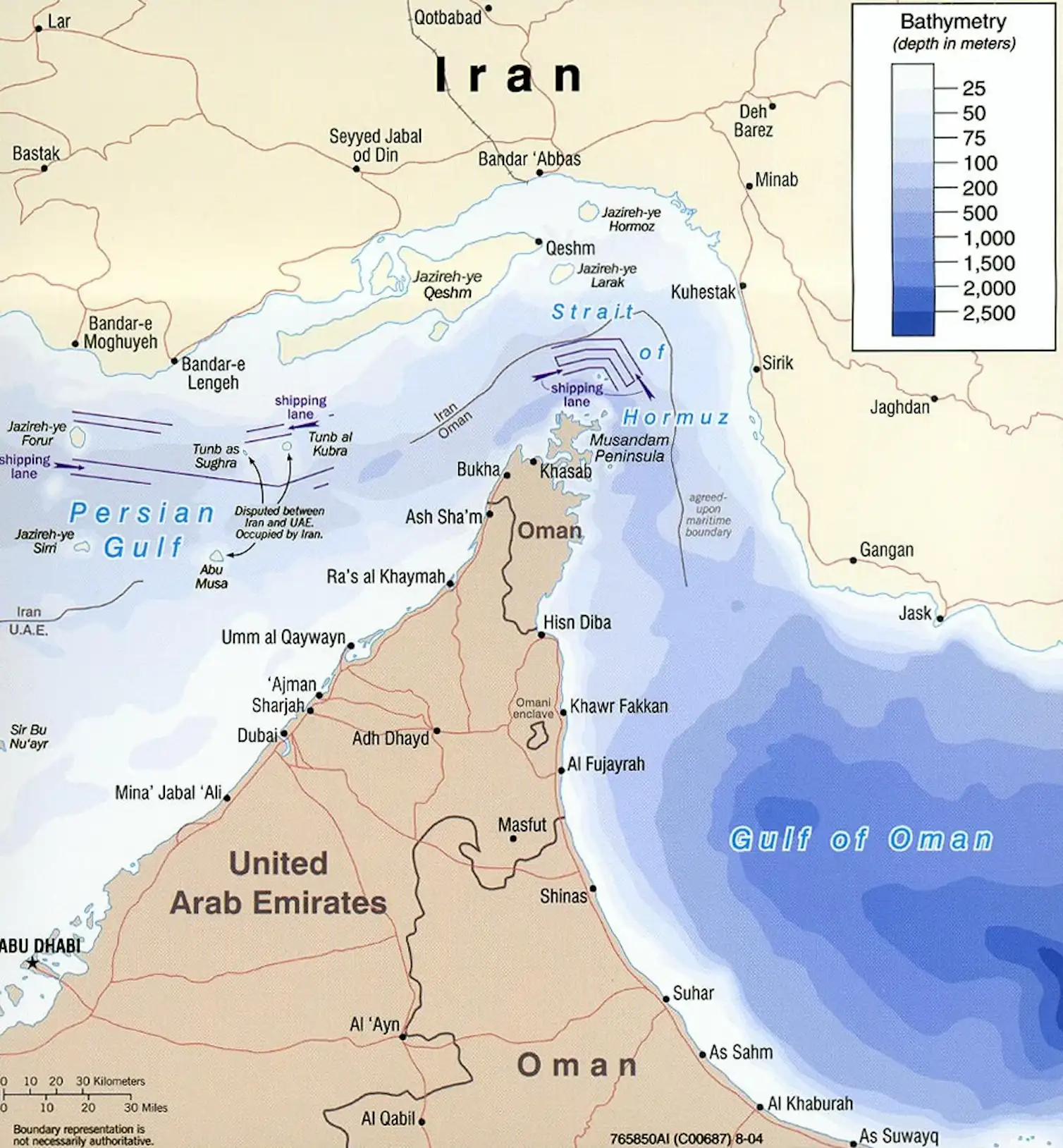
South Korea is currently walking a geopolitical tightrope that stretches from the Blue House in Seoul to the volatile waters of the Middle East. Following intense bilateral discussions with U.S. Secretary of Defense Pete Hegseth, South Korean Defense Minister Ahn Gyu-back recently confirmed that Seoul is weighing a "phased" role in the Strait of Hormuz. This is not a simple gesture of allied solidarity. It is a desperate balancing act designed to protect an economy that imports 81% of its energy while navigating a new era of transactional diplomacy under Washington’s "Project Freedom" initiative.
The decision to provide support—ranging from political statements to the potential dispatch of the 4,400-ton destroyer Wang Geon—comes at a moment when the Strait of Hormuz is effectively under a shadow blockade. Since February 2026, Iranian warnings have choked navigation in a waterway that handles 20% of the world's liquefied natural gas (LNG) and nearly 15 million barrels of oil per day. For a nation like South Korea, which ranks as the second most vulnerable country in the world to energy shocks at this chokepoint, doing nothing is no longer an option.
The High Cost of Neutrality
For decades, Seoul has successfully insulated its Middle East energy interests from its security alliance with the United States. That era has ended. The "phased" approach outlined by Minister Ahn is a tactical retreat from a previous policy of cautious avoidance. The proposal involves several escalatory steps:
- Political endorsements and public support for maritime security.
- Intelligence sharing and personnel dispatches to coalition headquarters.
- Deployment of military assets, specifically from the Cheonghae Unit.
The immediate trigger for this shift is the reality of the global energy market. In 2025, over 112 billion cubic meters of LNG passed through the Strait. South Korea is almost entirely reliant on these flows to power its industrial heartland. If the current friction in the Gulf leads to a prolonged closure, the price of crude could easily shatter the $130 per barrel mark, triggering a domestic inflationary spiral that would dwarf the 2008 financial crisis.
Strategic Leverage and the Defense Trade-Off
The United States has been blunt about its expectations. Under the current administration, the price of the American security umbrella is being renegotiated in real-time. By signaling a willingness to join the Hormuz mission, Seoul is likely attempting to buy leverage on other critical bilateral issues.
High on that list is the cost-sharing agreement for U.S. Forces Korea (USFK) and the recent maritime industrial partnerships. Just days ago, Washington and Seoul signed a Memorandum of Understanding establishing the Korea-U.S. Shipbuilding Partnership Initiative (KUSPI). This deal aims to revitalize American shipyards using South Korean technical expertise. In the eyes of Seoul’s strategists, a destroyer in the Gulf of Aden is a small price to pay if it secures favorable terms for South Korea’s massive shipbuilding and technology sectors back home.
However, the military math is brutal. The South Korean Navy currently operates only a handful of Aegis-class destroyers, most of which are tethered to the Korean Peninsula to monitor North Korean missile activity. Sending the Wang Geon or a similar vessel to the Middle East creates a security vacuum in the Gulf of Aden, where the Cheonghae Unit typically protects 1,000 ships annually from piracy.
The Iranian Entanglement
There is also the matter of Tehran. Unlike the United States, Iran is a significant trade partner for various South Korean industries, and Seoul has historically tried to remain a neutral arbiter in the region. A direct military presence in a U.S.-led coalition—especially one aimed at "extracting" ships or countering Iranian drones—places South Korean commercial assets in the direct line of fire.
The military has already begun reinforcing the "soft-kill" anti-drone systems on its departing vessels, including electronic jamming and hacking capabilities specifically tuned to counter Iranian-made hardware. This suggests that the "phased" approach is already moving past the political stage into hard tactical preparation.
Hidden Risks to the Global Supply Chain
The crisis in the Strait of Hormuz isn't just about the price at the pump; it is a direct threat to the silicon wafer processing that defines South Korean exports. High-purity sulphuric acid, essential for microchip production, relies on stable shipping routes through these waters. A 90% drop in tanker traffic, as seen in early March 2026, ripples through the semiconductor plants in Suwon and beyond.
The International Energy Agency (IEA) has already triggered the largest emergency reserve release in its history, providing a 26-day "time bridge" to prevent a total collapse. Seoul knows that bridge is short. By moving toward a phased military role, the South Korean government is betting that a show of force will stabilize the markets more effectively than words ever could.
This is a gamble. If the deployment leads to a direct confrontation with Iranian forces, South Korea may find itself embroiled in a conflict it has spent half a century trying to avoid. But with the global energy pulse thinning, the Blue House has decided that the risk of staying home is now greater than the risk of going to sea.
The Wang Geon is scheduled to arrive in the region by late May. Its presence will be a quiet reminder that in 2026, energy security and military alliance are no longer separate files on a minister's desk—they are the same survival instinct.