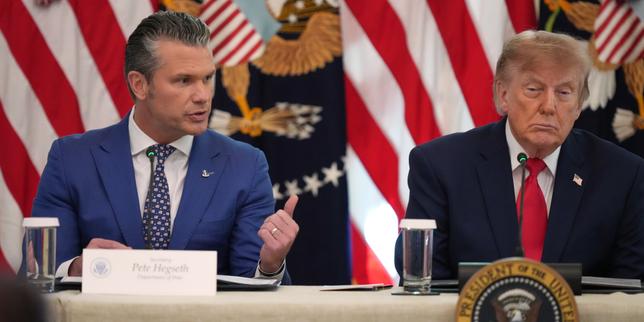
Donald Trump ordered the February 2026 military strikes against Iran to eliminate a regional threat so Washington could finally pull out of the Middle East, yet the campaign achieved the exact opposite result by locking American warships, troops, and billions of taxpayer dollars into an open-ended naval blockade and diplomatic quagmire. Nine months into a conflict that has already drained more than $48 billion from the Pentagon budget, the administration has deployed a third aircraft carrier strike group to the Persian Gulf, enforced a maritime siege around the Strait of Hormuz, and entangled itself in endless indirect negotiations mediated by Qatar and Pakistan. Rather than executing a clean surgical exit, the White House built a permanent military tripwire that guarantees American involvement in the region for the foreseeable future.
Wars rarely obey the timetables of politicians who promise quick victories. When U.S. and Israeli forces launched Operation Epic Fury on February 28, 2026, the strategic pitch from Washington was deceptively simple. Hit Iran hard, cripple its nuclear and ballistic missile infrastructure, deter its regional proxies, and pivot American resources toward the Indo-Pacific and domestic priorities.
It did not work out that way. By late November 2026, the conflict sits in a volatile state of suspended animation—neither a resolved peace nor a decisive triumph.
The Illusion of the Surgical Exit
Every American president since Barack Obama has promised to reduce the U.S. military footprint in the Middle East. Trump campaigned harder on ending "endless wars" than any of his predecessors, framing his "America First" doctrine as an antidote to the costly nation-building of the post-9/11 era.
Yet the mechanics of modern deterrence do not allow a superpower to simply drop bombs and walk away. Following the June 2025 strikes on Iranian nuclear facilities under Operation Midnight Hammer and the broader war launched in February 2026, Washington discovered a hard military reality. Airpower can collapse surface structures and destroy radar installations, as Trump boasted when claiming Iran's air force and air defenses were decimated, but bombs cannot eliminate buried stockpiles of enriched uranium or erase institutional knowledge.
More importantly, striking a regional power creates an immediate retaliatory radius that encompasses every American asset within a thousand miles. Once the first missiles flew in February, the Pentagon could not draw down its forces; it had to reinforce them. Protecting Gulf allies, shielding U.S. bases in Bahrain and Kuwait, and intercepting Iranian drones required a massive surge in air-defense batteries, destroyers, and carrier aviation.
The Carrier Trap
Consider the naval math alone. In January and February 2026, the administration dispatched the USS Abraham Lincoln and the USS Gerald R. Ford to the region to back up Trump’s ten-day ultimatum to Tehran. By November, with tensions flaring again over attacks in the Gulf and stalled talks in Doha, Washington ordered a third aircraft carrier to the Middle East.
Maintaining three carrier strike groups in or near the Persian Gulf is the exact opposite of disengagement. Each carrier group requires dozens of escort vessels, submarines, logistics ships, and tens of thousands of sailors. Every ship pulled into the Fifth Fleet's area of responsibility is a ship unavailable for deterrence in the South China Sea or training cycles at home. By trying to bomb its way out of the Middle East, the White House tied its premier naval assets to the Arabian Sea.
How the Strait of Hormuz Became an American Quagmire
The turning point from a short punitive campaign to a prolonged entanglement happened in April 2026. After a brief, two-week ceasefire brokered by Pakistan and nudged along by Beijing, Vice President JD Vance sat down in Islamabad with Iranian Parliament Speaker Mohammad Bagher Ghalibaf. It was the highest-level direct contact between Washington and Tehran since the 1979 revolution.
When those talks collapsed without a framework, Trump ordered the U.S. Navy to impose a naval blockade preventing ships from transiting through Iranian ports. On paper, a blockade looks like clean economic leverage. In practice, it is one of the most labor-intensive and escalatory military missions a navy can undertake.
Nearly a fifth of the world's petroleum passes through the Strait of Hormuz. Enforcing a selective blockade in a narrow, congested waterway where Iranian fast-attack craft, coastal missile batteries, and naval mines operate requires constant, round-the-clock policing.
- Daily friction is inevitable. In late August and again in early November, exchanges of fire erupted over damaged tankers and downed MQ-9 drones above the strait.
- Regional allies bear the blowback. Every time Washington tightens the maritime vice or strikes targets like Qeshm Island, Gulf states face immediate threats to their own shipping lanes and energy infrastructure.
- Lifting the blockade requires a deal. Washington cannot unilaterally end the maritime siege without handing Tehran a massive economic windfall and admitting the campaign failed to extract concessions.
Because the blockade is now Washington's primary bargaining chip, the U.S. Navy is effectively chained to the strait until a comprehensive diplomatic settlement is signed.
The Diplomatic Paradox in Doha and Islamabad
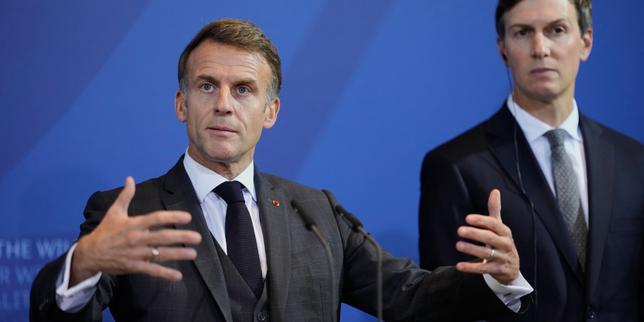
A sharp contradiction runs through the administration's public messaging. On one hand, Trump insists that American forces have already broken Iran's military back and that victory is within reach. On the other, his top envoys—including Vance, Secretary of State Marco Rubio, Steve Witkoff, and Jared Kushner—have spent months shuttling through Qatar, Egypt, Turkey, and Pakistan trying to coax Tehran into a deal.
You do not spend nine months begging mediators in Doha to pass notes to a defeated enemy. The diplomatic reality is that Iran's leadership, despite absorbing devastating infrastructure damage and domestic unrest earlier in the year, retains enough asymmetric capability to hold global energy markets hostage.
Tehran knows this. Foreign Minister Abbas Araghchi and Speaker Ghalibaf have refused to budge on their core demands. Before Iran will even entertain formal nuclear restrictions or reopen normal transit in the Strait of Hormuz, it demands the complete lifting of sanctions, the unfreezing of more than $6 billion in blocked assets, and an immediate end to the American naval blockade.
Meanwhile, Washington's preconditions remain non-starters in Tehran. The White House wants Iran to surrender 400 kilograms of enriched uranium, dismantle all but one nuclear facility, accept strict limits on ballistic missiles, and cut off regional proxies. Neither side can accept the other's terms without facing severe domestic political collapse.
Why Third-Party Mediators Hold the Cards
This deadlock has forced the United States to outsource its diplomacy to regional powers with their own agendas. Qatar hosts the indirect talks in Doha even after taking missile fire near its own LNG shipping. Pakistan brokered the initial April truce. China, which buys heavily discounted Iranian crude and opposes further military escalation that could spike global oil prices, quietly nudges Tehran behind the scenes.
Far from establishing unilateral American dominance and walking away, Washington has embedded itself inside a complex web of Gulf and Asian diplomacy where every small concession requires weeks of multi-party bargaining. Even when Trump publicly grew frustrated in late November and instructed Vance to pause negotiation efforts in favor of maximum economic pressure, Qatari and Pakistani channels remained active because neither side can afford an uncontrolled regional explosion.
The Domestic Price Tag and Congressional Pushback
At home, the financial and political costs of this entanglement are mounting fast. By mid-November 2026, the price tag for the military campaign against Iran had already crossed $48 billion. That figure covers munitions expended, carrier deployments, air-defense interceptors fired over Gulf bases, and continuous logistics operations—and it grows every single day the blockade holds.
For an administration that promised voters it would stop pouring American wealth into Middle Eastern sands, $48 billion with no exit date is a glaring political liability.
Congressional Democrats have seized on the open-ended nature of the conflict, moving to block additional war funding and demanding an end to unauthorized military operations. While Trump told the New York Post that existing Pentagon funds can sustain operations through the end of January, the looming arrival of a new Congress in early 2027 puts a hard political clock on the White House.
That deadline explains Trump's sudden threats to resume major airstrikes after the New Year—potentially targeting hardened underground sites like Pickaxe Mountain—if Tehran does not capitulate. It is a classic coercive gamble: threaten a massive escalation before Congress can cut the purse strings, hoping the fear of total ruin forces Iran to sign a piece of paper Trump can wave as a victory.
The Counter-Argument Why Some Strategists Defend the Gamble
To understand why the White House refuses to back down, it is worth examining the counter-argument made by hawks inside Washington and allied capitals. From their perspective, a clean exit from the Middle East was never possible while Iran sat on the threshold of a nuclear weapon and armed proxy networks across Lebanon, Iraq, and Yemen.
Supporters of Operation Epic Fury argue that prior administrations spent decades trying to buy regional calm through diplomacy, only to watch Tehran expand its enrichment capacity and regional reach. In their view, absorbing a $48 billion short-term cost and enduring nine months of naval friction is preferable to allowing a nuclear-armed Iran to permanently alter the Middle Eastern balance of power. They contend that crippling Iran's conventional air defenses and navy has bought Israel and Gulf Arab states years of breathing room, even if the diplomatic endgame remains messy.
Yet even that defense concedes the central point: the United States is not leaving. Whether you view the campaign as a necessary preventive war or a catastrophic strategic miscalculation, the operational outcome is identical. You cannot police a defeated adversary's coastline, guarantee the security of Gulf oil terminals, and enforce nuclear compliance from afar.
The Anatomy of Strategic Entanglement
History offers a grim warning about wars launched to achieve quick exits. In 1982, U.S. Marines deployed to Beirut as part of a multinational peacekeeping force meant to stabilize Lebanon quickly and withdraw; they stayed until a barracks bombing killed 241 American service members. In 2003, the invasion of Iraq was sold as a rapid decapitation strike that would pay for itself and allow troops to come home within months; American forces remain in the region more than two decades later.
The 2026 Iran conflict follows the exact same structural pattern, even without boots on the ground in Tehran.
- Destruction creates a vacuum, not a solution. Eliminating a regime's conventional defenses leaves behind asymmetric militias, ballistic missile remnants, and an entrenched security apparatus determined to prove it survived.
- Coercion requires continuous presence. Economic sanctions and naval blockades only work as long as warships remain on station to enforce them. The moment the U.S. Navy steams out of the Gulf, Iranian tankers resume sailing and the pressure evaporates.
- Allies demand permanent guarantees. Having drawn Gulf states into the crossfire—evidenced by strikes near Kuwait and Bahrain—Washington cannot abandon its regional partners without destroying American credibility worldwide.
Trump wanted a decisive knockout blow that would let him declare victory, bring the fleet home, and turn the page on the Middle East. Instead, every ultimatum issued from Mar-a-Lago, every drone shot down over Hormuz, and every billion dollars burned in the Gulf pulls the anchor deeper into the seabed. Washington did not solve its Middle East problem in February 2026; it simply moved back in.