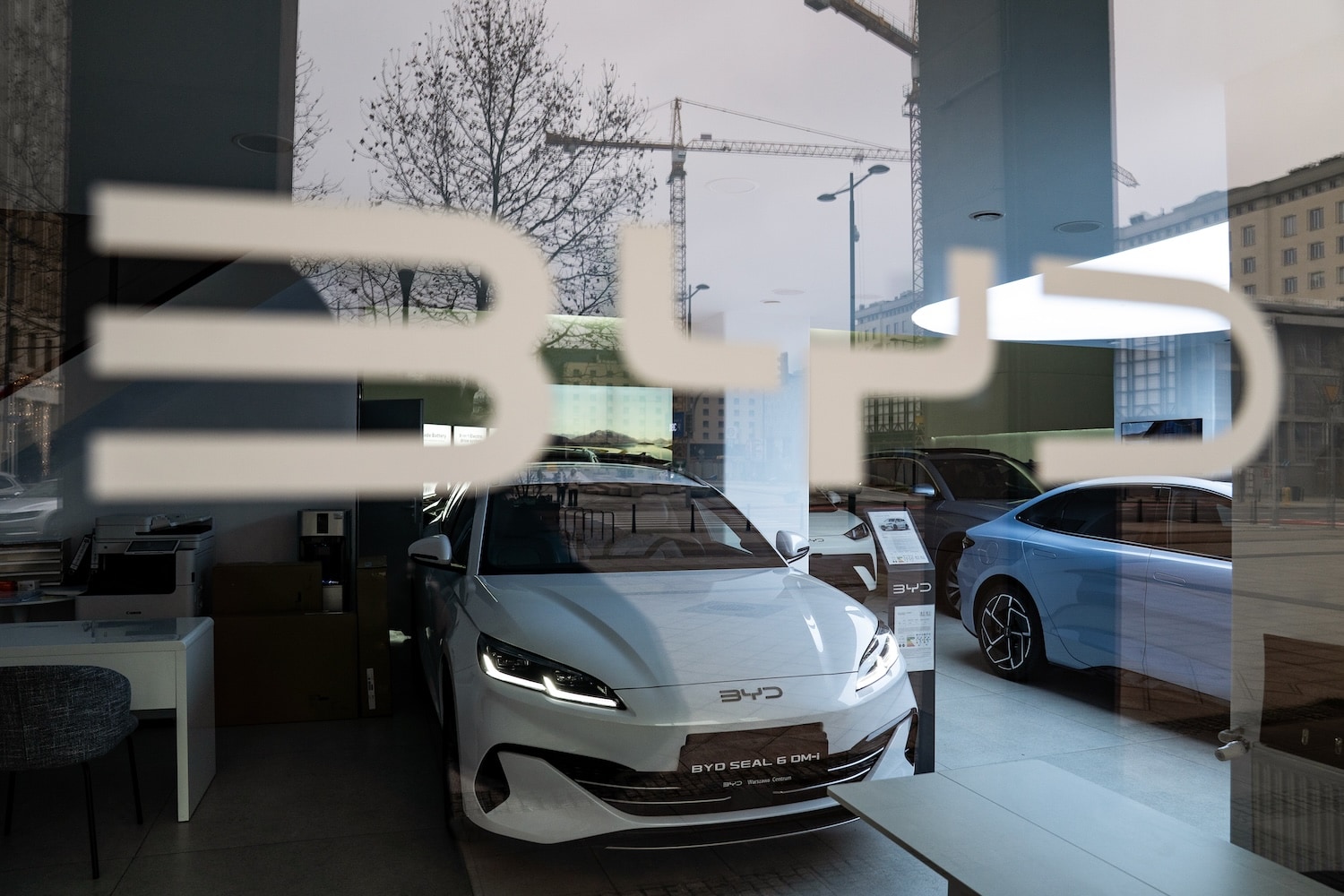
The global automotive industry is witnessing a controlled demolition. On paper, the news looks like a standard corporate maneuver: BYD, the Chinese titan that recently snatched the crown from Tesla, has slashed prices by another 10% across its international portfolio. But viewing this as a simple discount is a dangerous miscalculation. This is not a sale. It is a siege.
By systematically lowering the floor, BYD is forcing a confrontation that most Western manufacturers are fundamentally unequipped to survive. While Ford, Volkswagen, and Stellantis struggle with the legacy costs of internal combustion and fragmented supply chains, BYD is leveraging a decade of vertical integration to weaponize affordability. They aren't just selling cars; they are exporting a deflationary shockwave that threatens to turn storied European and American factories into expensive museums.
The Margin Squeeze No One Can Match
To understand why a 10% cut is devastating, you have to look at the math of manufacturing. Most legacy automakers operate on razor-thin margins for their entry-level electric vehicles (EVs). When BYD drops the price of a Dolphin or an Atto 3, they aren't just cutting into profit; they are moving the goalposts into a zone where Western competitors lose money on every unit sold.
BYD’s secret isn't magic. It is the fact that they started as a battery company in 1995. Today, they manufacture their own semiconductors, their own electric motors, and, most importantly, their own Blade Battery technology. While other companies are essentially assembly plants for parts bought from third-party suppliers, BYD owns the entire stack. This allows them to absorb price cuts that would trigger emergency board meetings at any other firm.
In 2025, BYD’s net profit fell by nearly 19% as they prioritized market share over immediate returns. This was a deliberate choice. By accepting lower margins now, they are starving the competition of the capital needed to develop next-generation platforms. It is a war of attrition, and BYD has the deepest bunkers.
Exploiting the Tariff Loophole
Western regulators have tried to stem the tide with aggressive tariffs. The European Union and the United States have erected trade barriers, some exceeding 45% for specific Chinese brands. However, BYD has already found the "back door" that analysts warned about years ago.
The current price offensive is heavily weighted toward Plug-in Hybrid Electric Vehicles (PHEVs). In the European Union, these models often dodge the most punishing battery-electric tariffs. By March 2026, PHEVs accounted for 41% of BYD’s European sales. This shift allows the company to maintain a visible presence on dealer lots while their massive new factories in Hungary and Turkey move toward completion.
Once those local plants are operational, the tariff argument vanishes. BYD will be a "local" European manufacturer, but one with a supply chain rooted in the ultra-efficient industrial hubs of Shenzhen and Xi’an. At that point, the price war moves from the docks to the heart of the continent.
The Logistics of Dominance
The scale of this expansion is physically visible on the high seas. BYD has commissioned its own fleet of "Ro-Ro" (Roll-on/Roll-off) carriers. Ships like the BYD Explorer No. 1 can transport 7,000 vehicles in a single voyage.
Owning the logistics chain means BYD is immune to the shipping bottlenecks and fluctuating freight rates that plague smaller exporters. They have transformed from a car manufacturer into a sovereign industrial power. When they decide to cut prices by 10% in Brazil, Israel, or Thailand—markets where they already lead—they aren't asking for permission from shipping conglomerates or parts suppliers. They just do it.
The Psychological War for the Consumer
For the average buyer in Sydney or Berlin, the geopolitical implications of a price war are secondary to the monthly payment. BYD is winning the "spec-sheet war" by offering premium features—360-degree cameras, heat pumps, and sophisticated driver-assistance systems—as standard equipment at prices that undercut the "base" models of domestic rivals.
There is a growing trust in Lithium Iron Phosphate (LFP) chemistry, which BYD championed while others chased high-nickel batteries. LFP cells are more durable, less prone to fire, and can be charged to 100% daily without significant degradation. This creates a long-term value proposition that resonates with used-car buyers, an area where early EVs have historically struggled.
The Implosion of the Middle Market
The most significant casualty of this price war won't be the luxury brands. Porsche and Mercedes-Benz will likely survive on brand prestige. The real carnage is happening in the middle market—the $25,000 to $40,000 segment that has been the bread and butter of the global automotive industry for a century.
Volkswagen, once the "people's car," is finding it impossible to produce a profitable EV that competes with the BYD Dolphin. In Japan, BYD is even making inroads into the rural "Kei car" market by partnering with local distributors to build mini-dealerships. They are surrounding the legacy players, cutting off their oxygen by making the price of entry into the EV lifestyle so low that sticking with gasoline becomes a luxury choice rather than a practical one.
The reality of 2026 is that the automotive "Big Three" no longer reside in Detroit. The power has shifted to a vertical fortress in China that is willing to lose billions in the short term to ensure there is no one left to compete with in the long term. This 10% price cut is a signal. It’s the sound of a trap snapping shut.