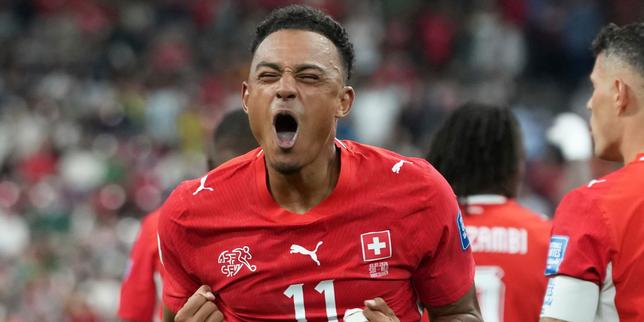
The cameras always find him first. When the final whistle blew and Portugal secured its critical World Cup victory, the global broadcasting feed did not linger on the tactical architects or the midfielders who covered twelve kilometers of grass. It locked onto Cristiano Ronaldo. His subsequent post-match dedication to the absent or sidelined Diogo Jota immediately flooded social media feeds, framed by the international press as a moment of pure, unadulterated sportsmanship that moved the footballing world to tears.
Look closer. Beneath the thick layer of sentimentality lies a masterful exercise in narrative control and squad politics executed by a veteran athlete who understands the machinery of modern sports media better than anyone alive. Meanwhile, you can explore similar events here: The Anatomy of Structural Deficits Why Algeria Collapsed Under Swiss Pressing Geometry.
Public emotion in elite football is rarely accidental. While casual observers saw a touching tribute to a teammate, seasoned analysts recognized a calculated pivot. Portugal is currently navigating a high-stakes tournament where internal friction, tactical evolutionary pressures, and the looming reality of a post-Ronaldo era threaten to destabilize the national team. By thrusting Diogo Jota into the spotlight, Ronaldo achieved something far more complex than simple camaraderie. He shifted the focus away from his own declining physical metrics, unified a fractured fan base, and asserted his enduring authority as the emotional patriarch of Portuguese football.
The Calculated Anatomy of a Dressing Room Gesture
International tournaments are pressure cookers where small grievances transform into existential crises. Before this recent victory, the whispered conversations around the Portuguese camp centered on squad selection, playing time, and whether the starting lineup was being compromised to accommodate an aging icon. The narrative was becoming dangerous. Media outlets were openly questioning whether younger, high-intensity forwards were being stifled to maintain the status quo. To explore the full picture, check out the recent analysis by Sky Sports.
Ronaldo changed the conversation with a single dedication. By publicly offering the triumph to Jota, he effectively disarmed his critics. A selfish player does not cede the spotlight to a teammate. A self-absorbed superstar does not use his peak media moment to highlight the value of another forward. This move was a masterclass in dressing room diplomacy. It signaled to the younger generation within the squad that compliance and loyalty to the collective identity—an identity still dictated by Ronaldo—would be rewarded with public validation.
The mechanism here is psychological. By positioning himself as the provider of emotional tributes, Ronaldo reinforces his status at the top of the squad hierarchy. He is not just a player among peers. He is the dispenser of credit, the moral compass of the team, and the shield protecting his teammates from external scrutiny. The younger elements of the Portuguese squad now find themselves in a position where challenging the established order feels ungrateful, even heretical.
Tactical Realities Behind the Sentiment
Football matches are won on the pitch, not in the flash zones. While the media feasted on the emotional weight of the dedication, the tactical framework of the match itself revealed why such a gesture was necessary in the first place. Portugal struggled through long stretches of the encounter, showing a distinct lack of verticality and pressing intensity in the final third.
The absence of a dynamic option like Diogo Jota—whether due to injury management or tactical omission—fundamentally alters how Portugal attacks. Jota provides the aggressive, off-the-ball running that creates space for others. Without that constant movement, the offensive structure becomes static, forced to rely on moments of individual brilliance rather than sustained tactical pressure.
Portugal Offensive Formations:
Standard Low-Intensity Setup:
[Midfield] -> [Static Passing] -> [Wide Crosses] -> [Contested Headers]

Dynamic High-Press Setup (Jota Variant):
[Midfield] -> [Vertical Runs] -> [Space Creation] -> [High-Probability Shots]
By focusing the post-match discourse on Jota, Ronaldo cleverly reframed a clear tactical deficiency as an emotional rallying cry. The narrative shifted from "Why is the Portuguese attack looking slow and predictable?" to "We are playing with a heavy heart for our missing brother." It is an effective diversionary tactic that protects the manager from difficult tactical questions during press conferences. Journalists spent their limited time asking about team spirit and emotional unity rather than grilling the coaching staff on the lack of central penetration against low defensive blocks.
The Weight of the Succession Plan
The transition of power in a national team is a messy business. For nearly two decades, Portuguese football has been synonymous with one name. That monopoly on identity cannot last forever, and the friction between the old guard and the emerging elite is palpable. Players like Jota, Bruno Fernandes, and Bernardo Silva are no longer youngsters grateful to share a pitch with their idol; they are established world-class performers in their prime who expect a system built around their specific strengths.
This creates a delicate balancing act for the team management. The federation understands the commercial power of the Ronaldo brand, which remains a massive revenue driver. Concurrently, the sporting department knows that a modern, high-pressing system requires attributes that a forward in his late thirties simply cannot sustain over a grueling tournament schedule.
The public dedication functions as a bridge over this generational chasm. By choosing Jota as the recipient of his praise, Ronaldo selected a player who represents the hard-working, tactically disciplined future of the national team. It was an endorsement of the future, but on the terms of the past. It tells the public that the transition will happen under his supervision, ensuring that his legacy remains untarnished even as his minutes on the pitch are naturally managed.
Managing the Media Machine
We live in an environment where social media algorithms dictate the value of sports journalism. A complex breakdown of a defensive transition or a deep analysis of a mid-block structure will never generate the engagement of a story about a crying superstar dedicating a win to a fallen comrade. The sports media ecosystem is hungry for human-interest narratives, and Ronaldo understands how to feed that beast better than anyone else in modern sports history.
Consider the immediate aftermath of the gesture. Within minutes, major sports networks dropped their tactical graphics and replaced them with slow-motion footage of the post-match interview. The debate shows shifted from analyzing Portugal's defensive vulnerabilities to debating the depth of Ronaldo's leadership qualities.
This is narrative laundering at its finest. Potential criticisms regarding a lack of mobility or low defensive work rates were completely erased from the public consciousness, replaced by a wall-to-wall celebration of character. It is an incredibly effective defensive strategy that ensures the player remains bulletproof in the eyes of the public, regardless of what the underlying data says about his performance on the field.
The numbers tell a story that the emotional coverage conveniently ignores. In high-stakes international football, matches are increasingly decided by physical metrics—high-intensity sprints, defensive interventions in the final third, and the ability to sustain a counter-press for ninety minutes.
When those metrics dip, alternative forms of value must be generated to justify a starting position. If a player can no longer guarantee two goals a game through sheer physical dominance, they must become indispensable in other ways. They must become the emotional heartbeat of the nation, the indispensable leader whose presence on the field is required for psychological reasons rather than purely athletic ones.
The dedication to Jota was a bravura performance in this ongoing campaign. It reminded everyone that some things cannot be measured by GPS trackers or expected goals metrics. It asserted that leadership, presence, and the ability to unite a nation under a single emotional banner are just as valuable as high-intensity running. It is a compelling argument, and one that the global footballing public is more than willing to accept.
The true test of this strategy will not come in the mixed zone or on social media platforms. It will come in the knockout rounds, when the emotional high of the group stages fades and Portugal faces teams capable of ruthlessly exploiting any structural weakness. When a match enters extra time and the tactical systems are stretched to their limits, sentimentality offers no protection against a well-drilled opponent. The unity forged through public declarations will need to translate into disciplined, selfless defensive work on the pitch, or the beautiful narrative will crumble under the weight of sporting reality.