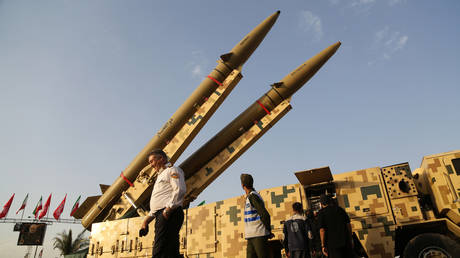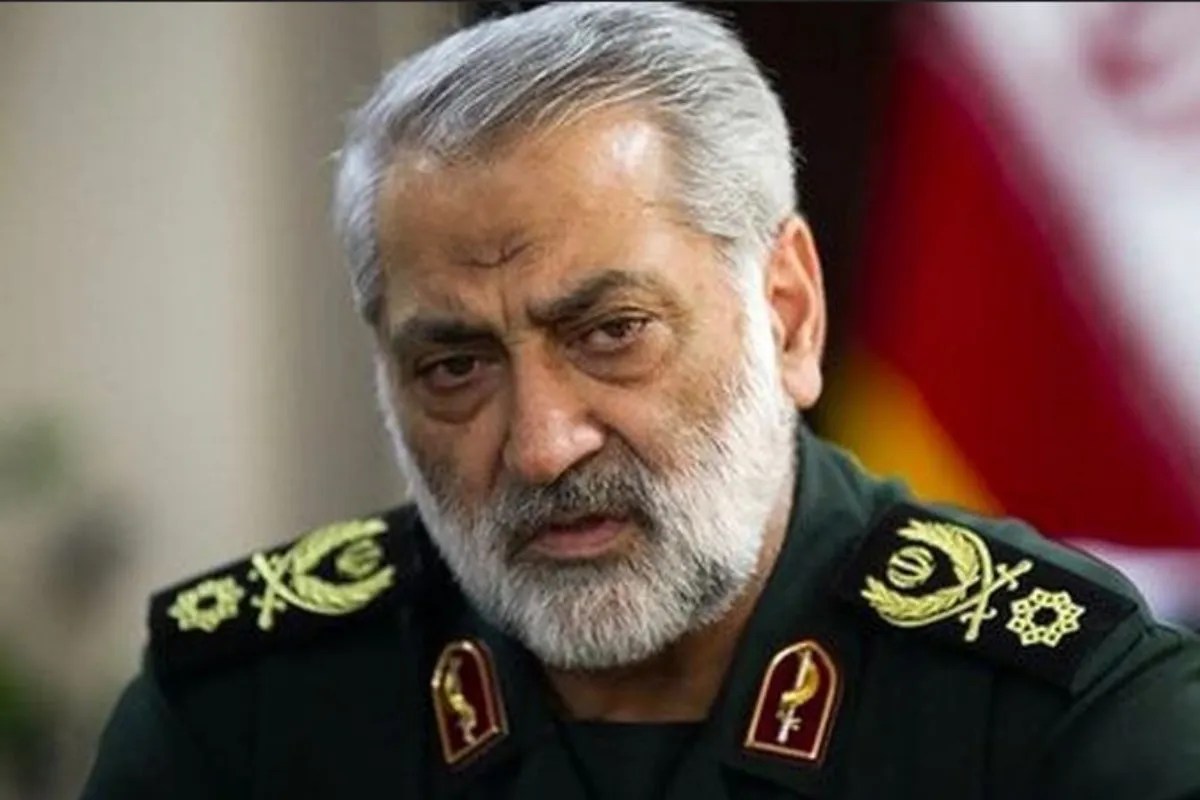
Deterrence in the Middle East operates on a fundamental asymmetry of cost tolerance rather than military parity. When Tehran issues explicit warnings that any American military strike will trigger a response "ten times more lethal," standard media coverage treats the statement as hyperbolic posturing. That interpretation misses the operational mechanics of modern geopolitical signaling. In strategic game theory, a tenfold retaliation threat is not a literal promise of ten-to-one kinetic destruction; it is a calculated effort to alter the adversary's expected utility equation by shifting the conflict from a localized tactical exchange to a theater-wide economic and political crisis.
Understanding this dynamic requires stripping away rhetorical theater and examining the structural realities of asymmetric warfare, escalation dominance, and the economic chokepoints that define US-Iranian friction.
The Mechanics of Strategic Signaling
In international relations, deterrence fails when an adversary doubts either the capability or the resolve of the defender. Because Iran cannot match the conventional strike capabilities, stealth aviation, or naval projection of the United States, its strategic doctrine relies entirely on raising the perceived cost of conflict to an unacceptable threshold before a single munition is fired.
This doctrine rests on three distinct operational pillars:
- Horizontal Escalation: Rather than absorbing a strike and responding directly against hardened American military installations, Iranian military planners design retaliatory architectures to expand the geographic footprint of the conflict. A localized strike on Iranian territory is met with distributed responses across multiple theaters, targeting allied infrastructure, regional energy facilities, and commercial transit corridors.
- Saturation Economics: Modern air defense systems, including Patriot and THAAD batteries, operate on an unfavorable cost-exchange ratio when confronting low-cost unmanned aerial vehicles and short-range ballistic missiles. Firing a multi-million-dollar interceptor to neutralize a drone costing tens of thousands of dollars depletes interceptor stockpiles rapidly. The threat of a tenfold response signals an intent to overwhelm defensive magazine depth through sheer volume rather than precision parity.
- Ambiguity of Attribution: By maintaining a network of regional proxy forces—ranging from Hezbollah in Lebanon to militia groups in Iraq, Syria, and Yemen—Tehran creates a buffer of plausible deniability. This network allows for sustained, low-grade attrition against US assets while complicating Washington’s decision-making matrix regarding direct retaliation against the Iranian homeland.
Standard reporting isolates the quote—the threat of tenfold lethality—without mapping the delivery systems required to execute it. The threat is credible precisely because it does not require Iran to defeat the United States Navy or Air Force in a conventional engagement. It only requires Iran to inflict sufficient disruption on global energy markets and regional stability to make the political cost of escalation untenable for an American administration.
The Cost Function of Escalation
To evaluate the validity of Tehran's warning, analysts must model the asymmetric cost functions of both actors. Military planners use cost-exchange models to determine whether an offensive operation achieves its strategic objectives without triggering self-defeating blowback.
For the United States, the cost function of a military strike against Iran is heavily weighted toward macroeconomic and political variables:
- Energy Market Volatility: Roughly one-fifth of the world's petroleum liquids consumption passes through the Strait of Hormuz. Even a temporary suspension of maritime traffic, achieved through naval mines, fast-attack craft, or coastal anti-ship cruise missiles, triggers immediate spikes in global crude prices. For a sitting US president, sustained inflation driven by energy shocks represents an acute domestic vulnerability.
- Force Protection Liabilities: Tens of thousands of US military personnel are stationed within range of Iranian medium- and short-range ballistic missiles across bases in Iraq, Kuwait, Qatar, Bahrain, and the United Arab Emirates. Hardening every facility against saturation attacks is logistically impossible, meaning any kinetic exchange carries a high probability of American casualties.
- Opportunity Cost of Entanglement: Committing naval carrier strike groups, strategic bombers, and intelligence assets to a protracted conflict in the Persian Gulf degrades American readiness in other primary theaters, specifically the Indo-Pacific and Eastern Europe.
Conversely, Iran's cost function is structured around regime survival and domestic cohesion. External military pressure often produces a rally-around-the-flag effect, allowing the state security apparatus to suppress internal dissent under the guise of wartime mobilization. While a US strike would inflict severe damage on Iranian military infrastructure, nuclear facilities, or energy terminals, the leadership in Tehran calculates that surviving a kinetic exchange while inflicting visible pain on the United States enhances its regional standing.
This divergence creates a structural imbalance. Washington seeks to avoid a war of attrition that disrupts the global economy, whereas Tehran views a controlled, high-cost crisis as a viable mechanism to extract diplomatic concessions or force a withdrawal of regional US forces.
Escalation Dominance and the Commitment Trap
A critical flaw in superficial geopolitical analysis is the assumption that escalation follows a linear, predictable ladder. In reality, brinkmanship introduces the commitment trap, a dynamic where public threats lock leaders into courses of action they might otherwise avoid to preserve domestic and international credibility.
When Iranian officials publicly quantify their retaliatory threshold—demanding a tenfold response—they intentionally burn their own bridges. Backing down after issuing an explicit, quantified threat damages the regime's deterrence posture not only against Washington, but also against regional rivals like Israel and Saudi Arabia, as well as domestic factions monitoring the leadership's resolve.
This public commitment forces American planners to account for three distinct escalation pathways:
- The Controlled Tit-for-Tat: Both sides exchange calibrated strikes designed to signal resolve without crossing into total war. The risk here lies in miscalculation; an Iranian missile intended to strike an empty tarmac could inadvertently hit a barracks, forcing an involuntary American escalation.
- The Proxy Saturation Campaign: Tehran avoids direct launches from Iranian soil, instead ordering simultaneous, high-volume attacks by allied militias across Iraq, Syria, and the Red Sea. This strains US regional air defenses and disrupts global shipping without providing a clean legal or political trigger for direct strikes on Tehran.
- The Maritime Chokepoint Closure: Iran targets commercial tankers and regional oil processing facilities, decoupling the military conflict from pure force-on-force metrics and turning it into a global economic crisis.
Recognizing the difference between confirmed capabilities and strategic hypotheses is essential here. It is a documented fact that Iran possesses the largest and most diverse ballistic missile arsenal in the Middle East, alongside thousands of one-way attack drones and sea mines. However, the assumption that Tehran could successfully close the Strait of Hormuz for an extended period remains a hypothesis. US naval countermeasures, minesweeping capabilities, and air superiority would likely reopen the waterway within weeks, though the interim economic shock would still be severe.
Operational Limitations of Asymmetric Deterrence
While asymmetric deterrence provides weaker states with significant defensive capabilities, the strategy suffers from severe operational limitations. Relying on threats of massive retaliation creates structural vulnerabilities that an agile adversary can exploit.
The first limitation is the loss of escalation control once proxy networks are activated. Decentralized militia groups operate with varying degrees of tactical autonomy. A local commander in Iraq or Yemen, acting under broad directives to retaliate, may execute an attack that exceeds Tehran's intended threshold, dragging Iran into a direct military confrontation it sought to deter.
The second limitation involves intelligence penetration and decapitation risks. Modern warfare heavily favors the actor with superior intelligence, surveillance, and reconnaissance (ISR) capabilities. When a state threatens massive retaliation, it prompts the adversary to prioritize the identification and neutralization of command-and-control nodes, mobile missile launchers, and senior military leadership. If the initial US strike degrades Iran's ability to coordinate a synchronized, multi-theater response, the threatened tenfold retaliation collapses into fragmented, easily intercepted launches.
The third limitation is economic exhaustion. Maintaining a posture of perpetual high-alert deterrence, funding regional proxy networks, and sustaining sanctions-hit domestic infrastructure drains financial reserves. Over time, the economic cost of maintaining the threat can erode the internal stability the deterrent is meant to protect.
Strategic Execution in High-Friction Environments
Navigating this environment requires moving away from reactive diplomacy and adopting a framework grounded in deterrence by denial rather than deterrence by punishment. Threatening massive counter-strikes against Iran only reinforces Tehran's domestic narrative and escalates the rhetorical cycle.
To neutralize the utility of Iran's asymmetric threat matrix, strategic planners must execute a multi-layered operational shift:
- Degrade the Cost-Exchange Asymmetry: Accelerate the deployment of directed-energy weapons, high-powered microwave systems, and kinetic counter-UAS platforms across regional bases. Shifting the cost of interception from millions of dollars per shot to pennies per engagement eliminates the economic advantage of Iranian drone saturation.
- Harden and Disperse Regional Assets: Transition from concentrating personnel and aircraft at a few massive, static airbases to an agile combat employment model. Dispersing assets across smaller, temporary austere locations complicates Iranian targeting solutions and reduces the lethality of ballistic missile salvos.
- Target the Logistics Pipeline, Not Just the Launchers: Interdicting the supply chains that move guidance components, microelectronics, and fuel precursors to regional proxies degrades their operational capacity before a crisis erupts, reducing Tehran's ability to execute horizontal escalation.
- Maintain Strategic Ambiguity: Avoid issuing rigid, public red lines that create domestic political pressure to escalate over minor provocations. Keep retaliatory options unannounced, forcing Iranian planners to allocate resources across every conceivable defense vector simultaneously.
The effectiveness of Tehran's warning depends entirely on Washington allowing the conflict to be fought on Iran's preferred terms—a prolonged, high-visibility war of attrition in the Persian Gulf. By shifting focus toward hardening defensive infrastructure, fixing the interceptor cost curve, and severing proxy supply lines, the United States can systematically strip away the strategic leverage behind the threat without firing a preemptive shot.