Hero worship is cheap. It costs an airline nothing to print a press release, hand out a plaque, and let religious leaders or PR agencies frame a terrifying workplace emergency as a spiritual triumph of the human spirit.
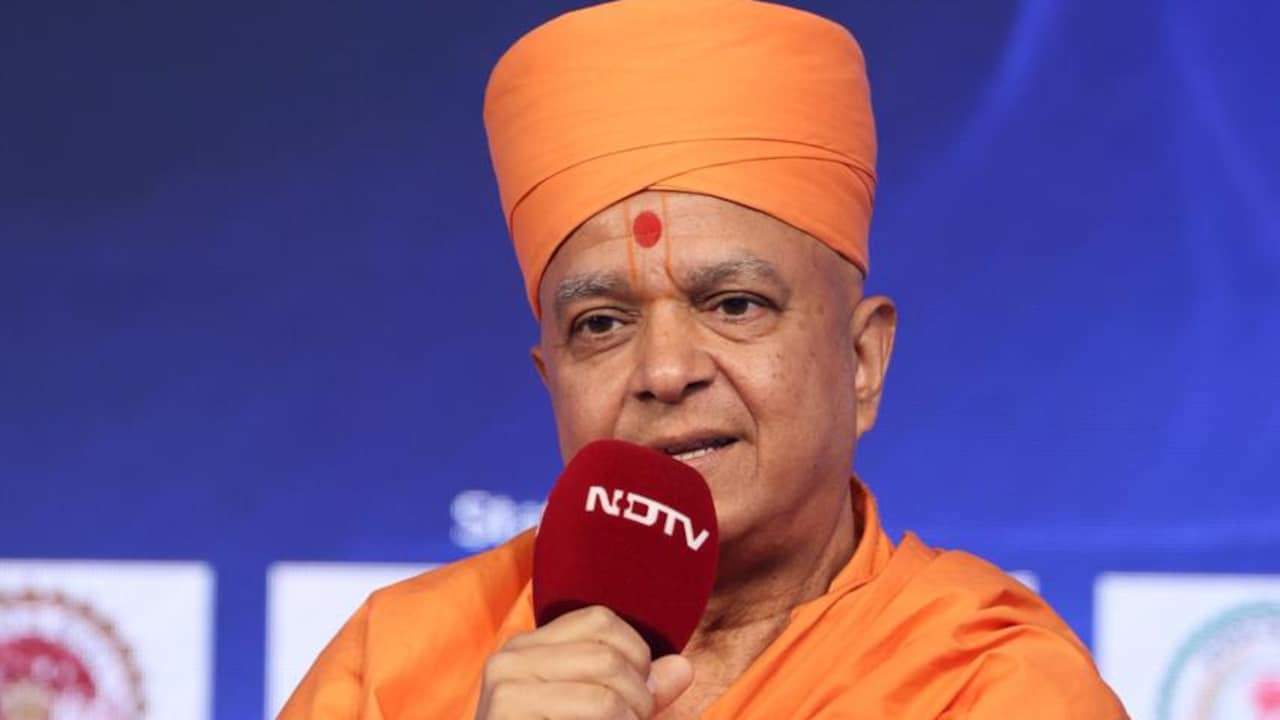
When flydubai crew member Smit Machchhar was praised by a BAPS Swaminarayan Sanstha monk as representing "the essence of humanity," the media lapped it up. It was heartwarming. It was clickable. It was also a textbook example of how the aviation industry and the public sanitize systemic operational risks into feel-good human-interest stories.
Let’s look at what actually happens when a flight goes sideways. When a passenger suffers a medical emergency, a cabin experiences rapid decompression, or an unruly traveler threatens safety at 35,000 feet, the person stepping into the breach is not acting out of spontaneous, angelic benevolence. They are executing federally mandated, gruelingly rehearsed emergency protocols. Calling them a "hero" reduces high-stakes technical competence to a personality trait. Worse, it absolves the industry from examining why that individual was placed in an impossible situation in the first place.
The Myth of the Spontaneous Savior
The lazy consensus in travel journalism is simple: bad things happen in the sky, and occasionally, an extraordinary individual rises to the occasion because they possess a rare, innate moral fiber. Spiritual endorsements amplify this narrative, turning standard—or even extraordinary—adherence to safety procedures into a parable about human goodness.
Here is the truth nobody in aviation PR wants to print. If your survival on a commercial airliner depends on the personal "humanity" of the person wearing the uniform, the safety system has already failed.
Commercial aviation does not run on virtue. It runs on Crew Resource Management (CRM), strict checklists, and regulatory compliance enforced by bodies like the International Civil Aviation Organization (ICAO) and the General Civil Aviation Authority (GCAA). Cabin crew are not glorified waitstaff who occasionally get possessed by the spirit of Mother Teresa. They are licensed safety professionals whose primary job—serving drinks and handing out blankets—is merely a cover for their actual function: evacuating a burning aluminum tube in under 90 seconds.
When we applaud Smit Machchhar or any other crew member for stepping up during a crisis, and we frame it purely through the lens of saintly compassion, we erase their training. We insult their professionalism. We treat a calculated, high-stress execution of emergency drills as if they just happened to be a really nice guy on a Tuesday.
Why Airlines Love the "Hero" Narrative
I have spent years watching corporate communications teams spin operational nightmares into brand equity. Whenever a crisis hits an airline—whether it is a severe medical diversion, a cabin fire, or a violent passenger altercation—the PR playbook is identical. Isolate the event. Find a photogenic employee. Crown them a hero.
Why does this work so well? Because a hero story stops people from asking uncomfortable questions about staffing ratios, fatigue management, and medical kit adequacy.
Consider what happens behind the curtain during an in-flight emergency:
- Minimum Crew Ratios: Airlines routinely lobby regulators to keep cabin crew-to-passenger ratios as lean as legally permissible—typically one flight attendant per 50 passenger seats. When one crew member is tied up managing a life-threatening crisis for two hours over an ocean, the remaining crew are stretched dangerously thin across hundreds of anxious passengers.
- Chronic Fatigue: Budget and hybrid carriers operate on razor-thin turnaround times. Long-haul and multi-sector regional flights push crew circadian rhythms to the brink. When a crisis hits at hour eleven of a duty day, performance isn't driven by "humanity"; it is driven by muscle memory fighting through cognitive exhaustion.
- Inadequate Ground Support: Telemedicine links to ground-based doctors frequently drop out over remote airspace, forcing cabin crew to make diagnostic and triage decisions far beyond their pay grade.
When a monk, a politician, or a news anchor calls a crew member the "essence of humanity," the airline executives breathe a sigh of relief. Nobody is asking why the flight was understaffed. Nobody is auditing the maintenance logs or questioning why a passenger in visible distress was cleared to board at the gate. The spotlight shifts entirely from institutional accountability to individual saintliness.
The Psychological Trap of Hero Worship
There is a darker, quieter consequence to labeling frontline workers as heroes. We saw it happen to nurses and doctors in 2020, and we see it constantly in aviation and emergency services.
Heroes don't ask for raises. Heroes don't complain about rostering. Heroes don't sue for PTSD.
Once society pins a medal on your chest and declares you a paragon of human virtue, you are trapped in a moral cage. If a flight attendant speaks up six months later about insomnia, panic attacks, or burnout stemming from that exact incident, the public loses interest. Victims and traumatized workers are messy; heroes are neat, inspiring, and silent.
Imagine a scenario where a crew member performs CPR for forty minutes on a passenger over the Arabian Sea, manages the panic of surrounding travelers, coordinates with the flight deck for an emergency diversion, and lands safely. The next day, they are hailed in the press as a selfless angel. Two weeks later, they are back on a red-eye flight, dealing with a passenger screaming about a missing vegetarian meal, while silently processing the trauma of having someone nearly die in their hands.
By romanticizing their actions as pure spiritual altruism, we deny them the right to be human beings experiencing an occupational hazard. Trauma is not cured by praise. Emotional labor is not compensated by headlines.
Dismantling the "Good Samaritan" Fallacy
If you search online for stories about airline emergencies, the "People Also Ask" sections are flooded with variations of the same naive questions: Do flight attendants get rewarded for saving lives? What happens when someone has a medical emergency on a plane? Are cabin crew trained doctors?
Let’s strip away the fantasy and answer these brutally honestly.
First, cabin crew are not medical professionals. They receive roughly four to six weeks of initial safety training, of which first aid and medical emergencies make up only a fraction of the curriculum. They know how to use an Automated External Defibrillator (AED), how to administer supplemental oxygen, how to manage basic airway obstructions, and how to recognize symptoms of stroke, cardiac arrest, or severe anaphylaxis. Anything beyond that requires a doctor who happens to be sitting in Row 14, or a voice on a satellite phone from a service like MedAire.
Second, they rarely receive meaningful financial compensation for saving a life. They might get a commendation letter in their personnel file, a mention in the company newsletter, or a PR photo-op. Meanwhile, their base pay remains modest, heavily reliant on flight-hour allowances that disappear the moment they are grounded for medical or psychological recovery.
Third, the "Good Samaritan" dynamic in the air is deeply flawed. When a crisis unfolds, passengers often freeze, film the event on their smartphones, or actively obstruct the aisles. The burden falls entirely on a handful of twenty- and thirty-somethings wearing polyester uniforms. Calling their response "humanity" implies that anyone with a good heart would do the same. In reality, 95% of the passengers on that plane would panic, vomit, or get in the way. The difference isn't moral superiority. It is conditioning.
What True Respect for Aviation Workers Looks Like
To be clear, acknowledging the systemic manipulation behind hero narratives does not diminish the actual deeds of individuals like Smit Machchhar. Stepping up when chaos erupts takes grit. Remaining calm when everyone else is losing their minds requires immense discipline. If you are the passenger whose life is saved, or the family waiting at the arrival gate, gratitude is the only natural response.
However, society owes frontline workers more than applause. If we actually want to honor the people who keep commercial aviation from descending into chaos, we need to abandon the spiritual platitudes and demand structural changes.
- Mandate Paid Psychological Decompression: Any crew member involved in a Category A medical emergency, a severe turbulence injury event, or a life-threatening security incident should receive mandatory, fully paid leave—not docked from their sick bank—paired with specialized trauma counseling before returning to the line.
- Overhaul Cabin Medical Equipment: Airlines should be legally required to carry advanced diagnostic tools, including pulse oximeters, blood glucose monitors, and automated blood pressure cuffs with digital telemetry that transmits directly to ground physicians, removing guesswork from the crew's shoulders.
- Enforce Zero-Tolerance Gate Screening: Gate agents are under immense pressure to close doors on time to protect On-Time Performance (OTP) metrics. This leads to visibly intoxicated, acutely ill, or agitated passengers being waved onto aircraft, turning the cabin crew's workspace into an airborne emergency room or jail cell. Airlines must empower gate staff to offload high-risk passengers without financial penalty to the station manager.
- Stop Using Employees as PR Shields: When an incident occurs, airlines should report the operational facts transparently rather than trotting out employees for religious or media endorsements that distract from root-cause analysis.
The Reality Check
The next time you board a commercial flight and glance at the crew standing by the galley, do not look at them as potential saints waiting to demonstrate the beauty of the human soul. Look at them as underpaid, overworked, hyper-trained safety technicians who are the only barrier between you and a catastrophic failure at 500 miles per hour.
They do not need a monk to validate their humanity. They need better rosters, sharper tools, stronger legal protections, and an industry that stops hiding its operational vulnerabilities behind their bravery.
Stop calling them heroes. Start treating them like professionals.