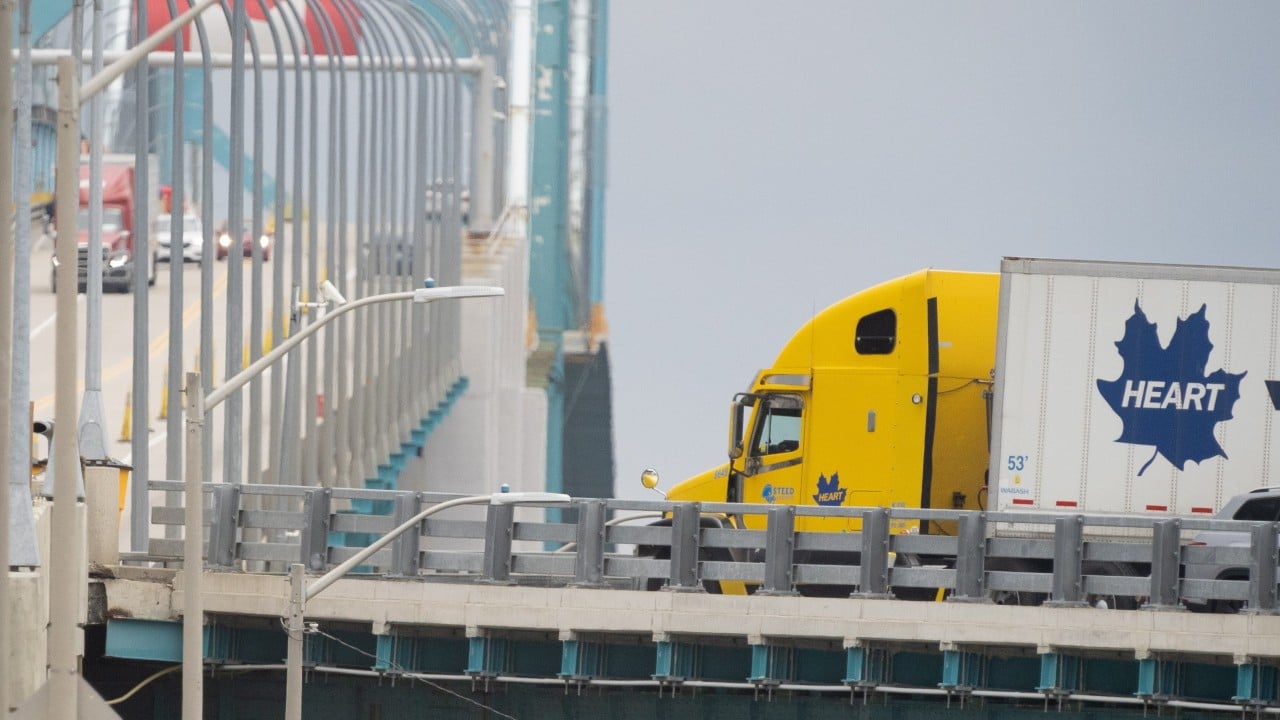
Trade talks between Ottawa and Washington just completely collapsed, and local companies are paying the price. When the White House pushed through crushing 50 per cent tariffs on billions of dollars worth of Canadian goods, it didn't just rattle the stock market. It sent a shockwave straight down to Main Street, leaving business owners staring at an impossible math problem.
If you run a manufacturing plant in Ontario, a distillery in Alberta, or a small candle studio in a quiet Ontario town, you aren't thinking about grand geopolitical strategy. You are trying to figure out if you should absorb a massive cost spike or pass it on to customers who are already tightening their wallets.
The Reality of Fifty Per Cent Tariffs
Let's look past the political posturing and talk about raw numbers. According to calculations by University of Calgary economics professor Trevor Tombe, roughly 87,000 Canadian jobs are sitting squarely in the danger zone because of these tariffs. Ontario, Quebec, and British Columbia are taking the brunt of the hit, especially in machinery, electronics, plastics, and rubber sectors.
Small exporters are getting squeezed from every direction. The Canadian Federation of Independent Business reports that roughly forty per cent of small exporters sell products caught directly on the tariff list. Even worse, a full third of those businesses expect their sales to plummet by half or more.
Take Ela Onisto, who runs Wick'ed Fragrance House in Innisfill, Ontario. She tries hard to keep her supply chain local. But her domestic suppliers rely on American raw materials. When costs go up at the border, the ripple effect reaches her workshop anyway. She faces shrinking margins because raising retail prices too high scares away everyday buyers.
Why Uncertainty Hurts More Than the Taxes
Taxes are annoying, but business leaders can usually plan around a predictable expense. What's paralyzing Canadian enterprise right now is total unpredictability.
Look at what happened to Rig Hand Craft Distillery in Alberta. Founder Geoff Stewart had to shut down a packaging facility in Texas because shifting tariff threats made long-term planning impossible. That single decision killed lucrative contracts in Arizona, Alaska, and Texas. While Stewart pivoted quickly by sending shipments to Japan, rewriting an entire export strategy overnight isn't an option for most local shops.
Business owners can't run operations when the rules change every single week. One day there is a glimmer of a deal, the next day a new penalty drops, and a week later everything shifts again. That kind of chaotic trade environment forces companies to freeze hiring, delay capital investments, and hold off on launching new products.
Prime Minister Mark Canada's government opted to walk away from what it called a bad deal, promising dollar-for-dollar retaliatory tariffs. While provincial leaders and industry groups generally support standing firm against economic coercion, the immediate fallout belongs to employers trying to make payroll.
Surviving the Downward Spiral
If your business relies on cross-border trade right now, waiting for Washington and Ottawa to kiss and make up is a losing strategy. The old continental trade consensus built over decades is effectively gone.
Diversification is no longer just a corporate buzzword; it is an absolute survival requirement. Companies that survived previous trade shocks are the ones that actively diversified their revenue streams toward domestic buyers or international markets outside the United States.
Audit your supply chain today. Map out every single tier of your vendors to find out where your raw materials genuinely originate. If your Canadian suppliers depend on American inputs, start looking for alternative domestic or European partners now before bottlenecks get worse.
Talk to your local chamber of commerce to see what government work-sharing programs or wage subsidies are opening up. Keep your core team intact through reduced hours if necessary, rather than cutting staff permanently and losing institutional knowledge you will desperately need when the market stabilizes.
Stop waiting for clarity that isn't coming this month. Protect your cash reserves, trim non-essential overhead, and look closely at alternative export markets while you still have the runway to do so.