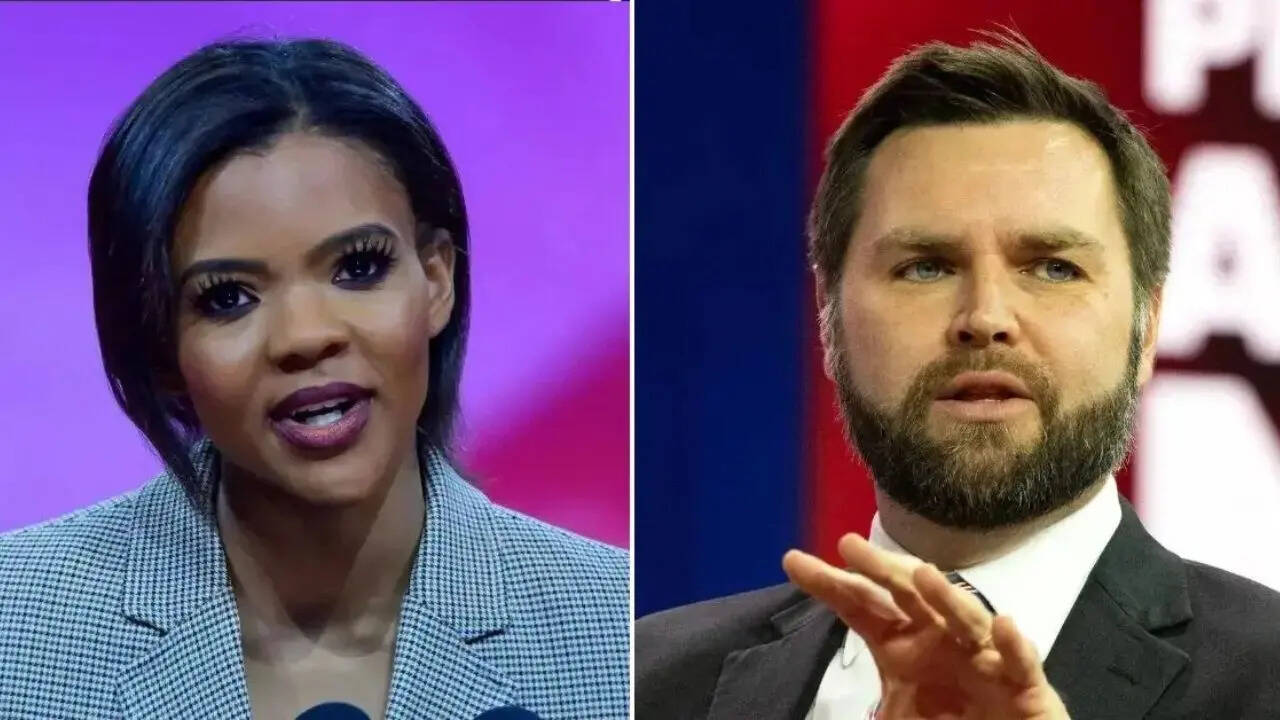
The Republican party’s internal divide just spilled over into a public, high-stakes shouting match. Candace Owens isn't holding back. She recently targeted JD Vance regarding a highly controversial strike on an Iranian school, and the fallout is messy. This isn't just about a single event. It’s a battle for the soul of the "America First" movement. You’ve got one side pushing for intervention and another calling out what they see as blatant war propaganda.
Owens essentially accused Vance of lying or, at the very least, pushing a narrative that doesn't align with the facts on the ground. When these two heavyweights clash, people listen. They’re both vying for the same audience. But when Owens uses phrases like "you lied about it," the gloves are off. It’s a level of public hostility we don't see often between figures who are theoretically on the same team.
The School Strike That Sparked the Fire
The tension centers on reports of a strike involving an Iranian educational facility. Vance leaned into the narrative that such strikes are necessary for national security. Owens sees it differently. She argues that the information being fed to the American public is sanitized or outright manipulated to justify more conflict in the Middle East.
Critics of Vance argue he’s pivoting. They say he’s moving away from his earlier isolationist rhetoric to sound more like a traditional Washington hawk. Owens, who has increasingly positioned herself as an anti-war firebrand, isn't letting him slide. She’s demanding receipts.
War is expensive. It’s also bloody. Owens is tapping into a growing exhaustion among voters who don’t want another "forever war" based on intelligence that might be shaky. You can feel the frustration in her delivery. She’s not just disagreeing with a policy; she’s attacking his integrity.
Why JD Vance is Under the Microscope
JD Vance is in a tough spot. As a VP candidate, he has to balance the MAGA base with the broader needs of a national campaign. That often means shifting tone. However, for purists like Owens, any shift looks like a betrayal.
Vance has claimed that the strike was targeted and justified. He’s stuck to the line that Iran is a primary provocateur in the region. But Owens is pulling apart the specific details of the incident. She’s questioning the civilian toll. She’s questioning the "imminent threat" logic that usually accompanies these reports.
If you look at the history of these conflicts, the first casualty is usually the truth. Owens knows this. She’s using her platform to highlight the discrepancies between official statements and independent reports. Vance, meanwhile, is trying to project strength and resolve. It’s a classic clash of ideologies. One is built on state-sanctioned security narratives, and the other is built on deep-seated skepticism of the military-industrial complex.
The Media Narratives and Where They Fail
Mainstream media usually picks a side. They either paint Owens as a conspiracy theorist or Vance as a warmonger. Both labels are too simple. The reality is that the "Iran school strike" controversy is a perfect example of how information is weaponized.
We see this pattern constantly.
- An event occurs in a high-conflict zone.
- Initial reports are vague and dominated by official government sources.
- Personalities with large followings interpret these reports through their own political lens.
- The actual facts get buried under a layer of partisan bickering.
Owens is right to be skeptical. History shows us that intelligence is often "fixed" around a desired policy. Think back to the early 2000s. We’ve been here before. Vance, however, argues that the world is more dangerous now and that 2026 requires a different kind of vigilance. He’s betting that voters want a leader who doesn't hesitate.
The Impact on the America First Movement
This isn't just a Twitter beef. This rift represents a genuine fracture. You have the "Nationalist" wing, which Vance is trying to lead, and the "Isolationist" wing, where Owens has set up shop.
The America First brand was built on the idea of stopping foreign entanglements. If Vance is seen as moving toward the "neoconservative" wing of the party, he loses a massive chunk of his credibility with the base. Owens is currently the loudest voice pointing out that perceived shift. She’s making it impossible for him to stay in the middle.
Vance has to decide if he’s going to double down on the interventionist rhetoric or try to bridge the gap with Owens and her supporters. So far, he’s doubling down. That’s a risky move. The base is tired of being told that every strike is "surgical" and "necessary" when the long-term results are more debt and more enemies.
Where the Facts Actually Stand
It's hard to get clear data out of Iran. That’s the problem. Most of the "information" we get is filtered through layers of intelligence agencies or state-controlled media.
When Owens says "you lied," she’s referring to the certainty Vance expresses despite the lack of transparent, verifiable evidence. Vance relies on classified briefings—information the rest of us can’t see. It’s an "appeal to authority" that doesn't work as well as it used to. People don't trust the "experts" or the "agencies" anymore.
The Problem With Official Briefings
Briefings are often one-sided. They present the best-case scenario for a specific action. They rarely highlight the risks or the potential for civilian casualties.
- They focus on tactical success.
- They ignore long-term geopolitical blowback.
- They rely on "vetted" sources that often have their own agendas.
Owens is forcing the conversation into the light. She’s asking the questions that politicians usually dodge. How many kids were in that school? Was the target actually there? Why are we involved in the first place?
What This Means for the Future of Political Discourse
The era of "polite disagreement" is dead. Owens and Vance are proving that. The tone is aggressive because the stakes are high. We’re talking about life and death, war and peace.
Expect more of this. As we head deeper into the 2026 election cycle, these internal battles will intensify. The GOP isn't a monolith. It’s a collection of factions that are currently at war with each other. Owens is a disruptor. She doesn't care about party unity if she thinks the party is wrong.
Vance's response to this criticism will define his career. If he can’t handle Owens, he’ll have a hard time handling world leaders who are far more hostile. He needs to provide more than just talking points. He needs to provide proof.
Stop taking every headline at face value. Whether it’s coming from JD Vance or a news outlet, do your own digging. Look for independent reports from the ground. Compare the narratives. The truth usually lies somewhere in the messy middle, but you won't find it if you're only listening to one side. The "Iran school strike" is just the latest chapter in a very long book of political theatre. Don't be an extra in someone else's play. Read the reports, look at the satellite imagery where available, and don't let a "jaw-dropping rant" distract you from the actual policy decisions being made in your name.