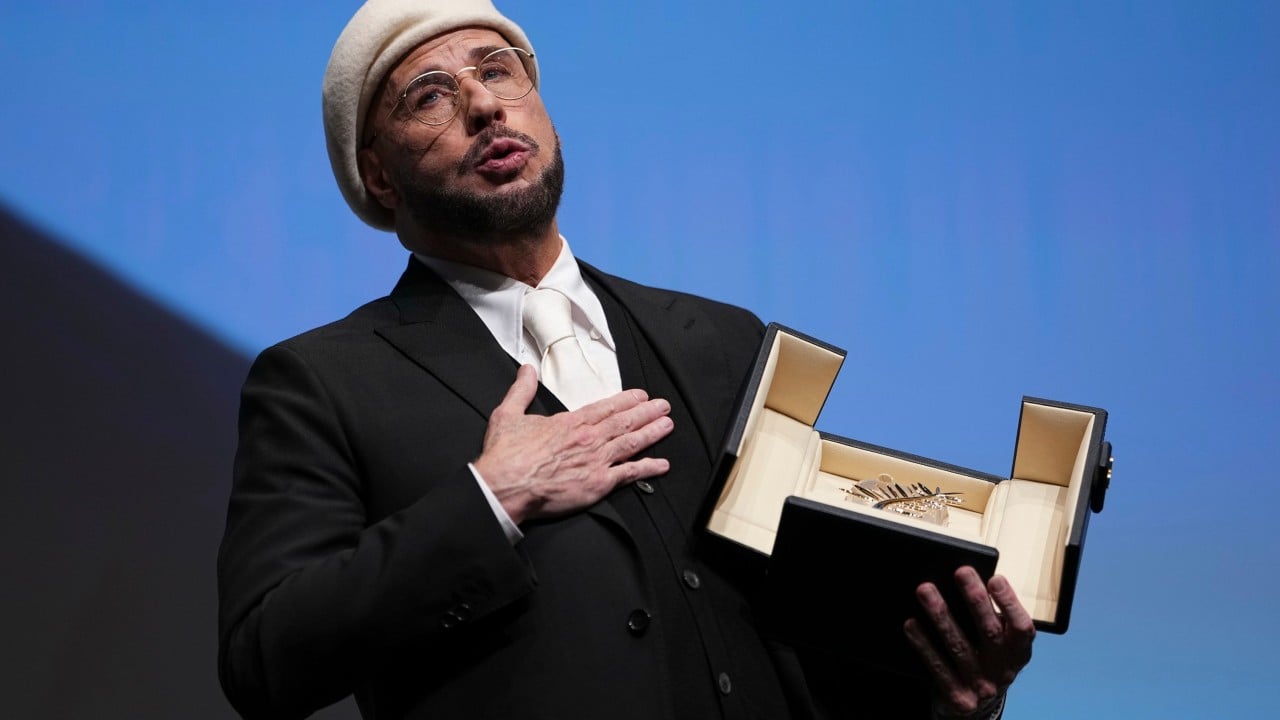
The entertainment press is currently drowning in a collective wave of nostalgia because the Cannes Film Festival decided to hand John Travolta an honorary Palme d'Or. The headlines are calling it a "deserved celebration" and a "triumphant return to the Croisette."
They are wrong. Dead wrong.
This isn’t a celebration of cinema. It is a desperate marketing stunt by a festival struggling to maintain its cultural grip in an era where streaming platforms and TikTok creators dictate the global monoculture. By handing its most prestigious honorary award to a star whose highest-grossing days are decades in the rearview mirror, Cannes isn't honoring the craft. It is worshiping the ghost of 1994.
I have spent twenty years sitting in the distribution meetings where these kinds of festival plays are engineered. I know exactly how the machinery works. When a major festival hands out a lifetime achievement award to a Hollywood legacy act, it is almost never about the filmography. It is about the red carpet currency. Cannes needs the flashbulbs. Travolta needs the prestige rebrand. It’s a transaction, pure and simple.
The Myth of the Cannes Comeback
The lazy consensus among film critics is that Cannes is the ultimate launchpad for artistic reinvention. They point directly to Quentin Tarantino’s Pulp Fiction winning the Palme d'Or in 1994, which famously resurrected Travolta’s stagnant career.
But lightning does not strike twice, and treating Cannes like a magical career-healing font ignores how film distribution actually operates today.
Pulp Fiction was a structural anomaly. It succeeded because Miramax weaponized independent cinema using aggressive, studio-level marketing budgets that simply do not exist for mid-budget auteur films anymore. To suggest that giving Travolta a trophy today somehow honors that legacy is to completely misunderstand why that moment happened.
The industry reality is brutal. A legacy award at a European festival does not translate to box office returns or streaming algorithmic dominance. Audiences do not flock to theaters because a French committee patted an actor on the back for work he did thirty years ago.
Dismantling the Deification of Lifetime Awards
Let’s answer the question the trade publications are too cowardly to ask: What is an honorary Palme d'Or actually worth?
Historically, the festival reserved this honor for directors who shaped the medium but were routinely snubbed by competitive juries—icons like Ingmar Bergman or Woody Allen. It was a course-correction tool for film history.
Now? It has devolved into a glorified loyalty program.
When you look at the mechanics of modern festival programming, an honorary award is often used as leverage. The festival wants a high-profile masterclass that will generate millions of impressions on social media. The talent wants validation.
Imagine a scenario where a festival refuses to compromise on its historical artistic standards. The red carpet loses its star power, luxury sponsors pull their funding, and the event fades into academic obscurity. Cannes knows this. The inclusion of Hollywood royalty is a financial shield that allows them to program obscure three-hour international dramas in the main competition. Travolta’s award is quite literally subsidizing the art films nobody watches.
The Cost of Looking Backward
There is a dark side to this nostalgia trap that the industry refuses to admit. Every time a major festival uses its prime real estate to celebrate the icons of the 20th century, it robs a contemporary creator of the spotlight.
The film industry is currently facing an existential talent crisis. Independent filmmakers are struggling to secure financing, mid-budget dramas have been completely eradicated from studio slates, and theatrical distribution is an absolute minefield.
- The Resource Drain: Festivals possess a finite amount of media oxygen.
- The Media Obsession: The press corps will always prioritize a legacy star's press conference over a brilliant debut feature from an unknown director.
- The Innovation Stagnation: By continuously looking backward, the industry signals that its best days are behind it.
If Cannes truly wanted to protect the future of cinema, it would stop acting as a retirement home for Hollywood elites and start using its massive cultural leverage to force the world to care about the next generation of rule-breakers.
Stop Asking if He Deserves It
People are constantly asking whether Travolta’s filmography—spanning Saturday Night Fever, Grease, and Blow Out—warrants this level of international acclaim.
That is entirely the wrong question.
The issue isn’t the quality of the work from his prime; the issue is the systemic cowardice of the institution giving the award. Cannes wants the cultural authority of an elite artistic arbiter, but it relies on the cheap dopamine hit of Hollywood celebrity culture to stay relevant. You cannot claim to be the vanguard of high art while simultaneously acting as a publicity machine for the American star system.
This honorary award isn't a victory lap for a legend. It is an admission of fear from a festival that doesn't know how to survive without relying on the past.
Next time you see a legacy actor weeping on stage on the French Riviera, ignore the standing ovation. Look at the empty seats in the indie screenings down the street. That is where the real story of cinema is being written, and Cannes is looking the other way.