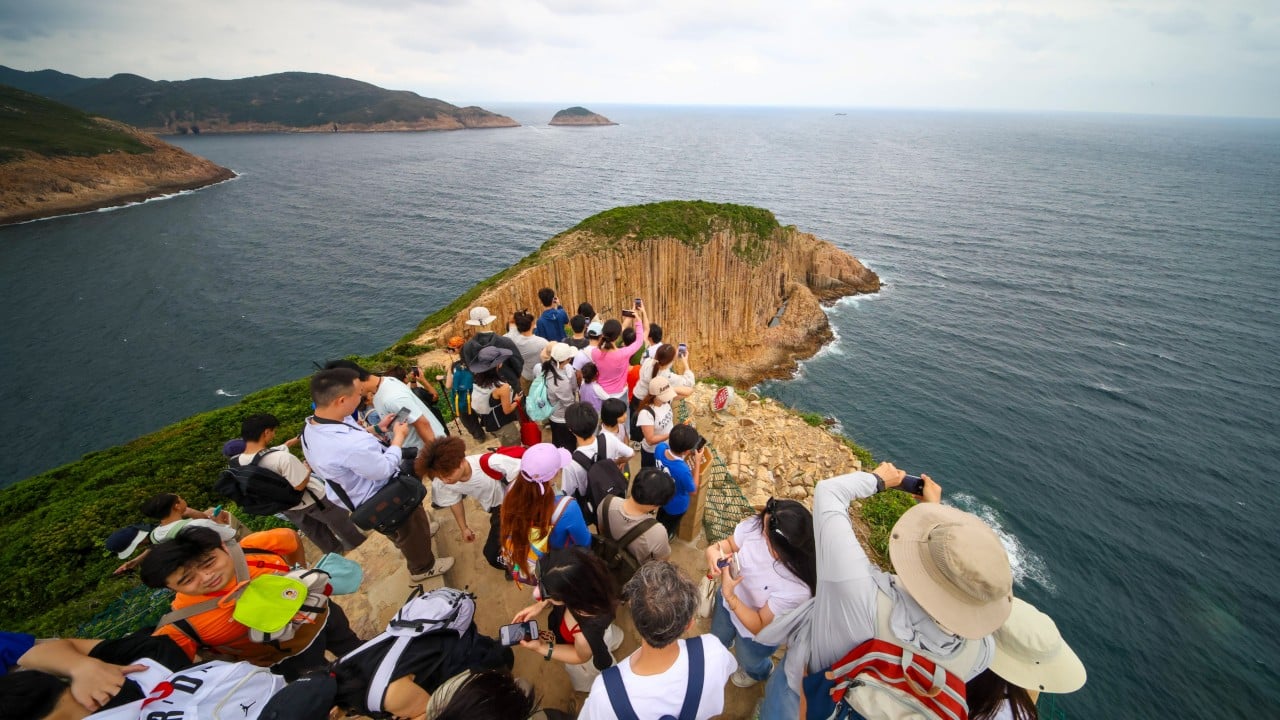
Bureaucrats love a neat little spreadsheet. Give them a bustling natural asset, a surge in weekend foot traffic, and a mild logistical headache, and their immediate, default reflex is always the same: build a velvet rope.
The Agriculture, Fisheries and Conservation Department just announced a trial reservation system capping visitor numbers at the hyper-scenic Po Pin Chau section of the High Island Geo Trail at 2,000 people per day. It is being hailed as a progressive win for conservation, a first-of-its-kind administrative shield protecting Hong Kong's jagged coastlines from the trampling hordes.
It is actually a lazy bureaucratic cop-out that will backfire completely.
The Dangerous Fallacy of Eco-Permits
Let us dispense with the feel-good narrative right out of the gate. The lazy consensus states that if you restrict visitor volume, you automatically reduce environmental degradation. Less footfalls equal less erosion, right? Wrong. That linear logic completely ignores human behavior under artificial scarcity.
When you slap a rigid, first-come-first-served quota on a world-class attraction via digital reservation platforms, you create an artificial commodity. You incentivize hoarding, no-shows, and a black market mentality. More importantly, you funnel every single permitted visitor into compressed, high-intensity two-hour time slots. Instead of a natural, rolling trickle of hikers spread across daylight hours, you engineer a stampede.
I have watched public land managers pull this exact stunt across global outdoor recreation hubs for years. When you restrict access to popular trails without scaling infrastructure or managing transit capacity intelligently, you do not save nature. You just piss off locals, penalize spontaneous outdoor recreation, and concentrate wear and tear into acute bursts that actually accelerate trail erosion.
Why the Bureaucrats Have the Wrong Diagnosis
The government is pointing fingers at the wrong culprit. The issue at Po Pin Chau and the wider Sai Kung country parks is never raw visitor volume. It is infrastructure rigidity and access bottlenecks.
Look at how people get to the High Island Reservoir East Dam. They funnel through narrow public transport loops and restricted road access points that create massive weekend chokepoints. When transport is an absolute nightmare, people cram into rigid windows, leading to sudden surges of bodies standing shoulder-to-shoulder on narrow ridge paths trying to snap the exact same vertical drone shot for social media.
Capping numbers at 2,000 doesn't fix the underlying plumbing. It just treats the symptom while punishing the casual hiker who decides on a Saturday morning that they want fresh air. If you want to protect a coastal trail, you expand the carrying capacity through smart trail architecture—boardwalks, designated viewing platforms, and hardened stone steps—not by locking the front door and throwing away the key.
The Unintended Consequences of Exclusion
Imagine a scenario where public access to nature becomes entirely gated behind QR codes, advance bookings, and app-based lotteries. What happens to the accessibility of the outdoors?
Public wilderness ceases to be a public right. It transforms into an exclusive country club experience for those who plan their weekends weeks in advance or master the digital booking refresh button. This creates a two-tiered system where casual, spontaneous immersion in nature—the very thing urban populations desperately need for mental health—is locked behind administrative red tape.
Furthermore, exclusionary policies breed resentment. When local residents feel locked out of their own backyard country parks in favor of managed tourism flows, stewardship evaporates. People care for what they can access and love. The moment you turn a mountain or a sea stack into a restricted-access theme park exhibit, you kill the public sense of custodianship.
What Real Trail Management Looks Like
If the authorities actually wanted to solve crowding at Po Pin Chau, they would throw out the reservation app and focus on operational realities:
- Dynamic Infrastructure: Invest heavily in trail hardening. Channels, steel mesh steps, and wide timber boardwalks can absorb ten times the foot traffic without a single blade of grass suffering.
- Transport Decentralization: Fix the transport loop. Subsidize flexible, high-frequency shuttle services that disperse hikers across different entry points rather than dumping thousands of people at the exact same dam entrance.
- Decentralization of Attractions: Actively promote alternative coastal formations across the New Territories to bleed off peak-hour pressure from viral Instagram landmarks.
Stop trying to solve structural design failures with velvet ropes. If you manage people like cattle through a turnstile, expect them to trample the pasture. Tear down the quota system, fix the infrastructure, and let the public breathe.


