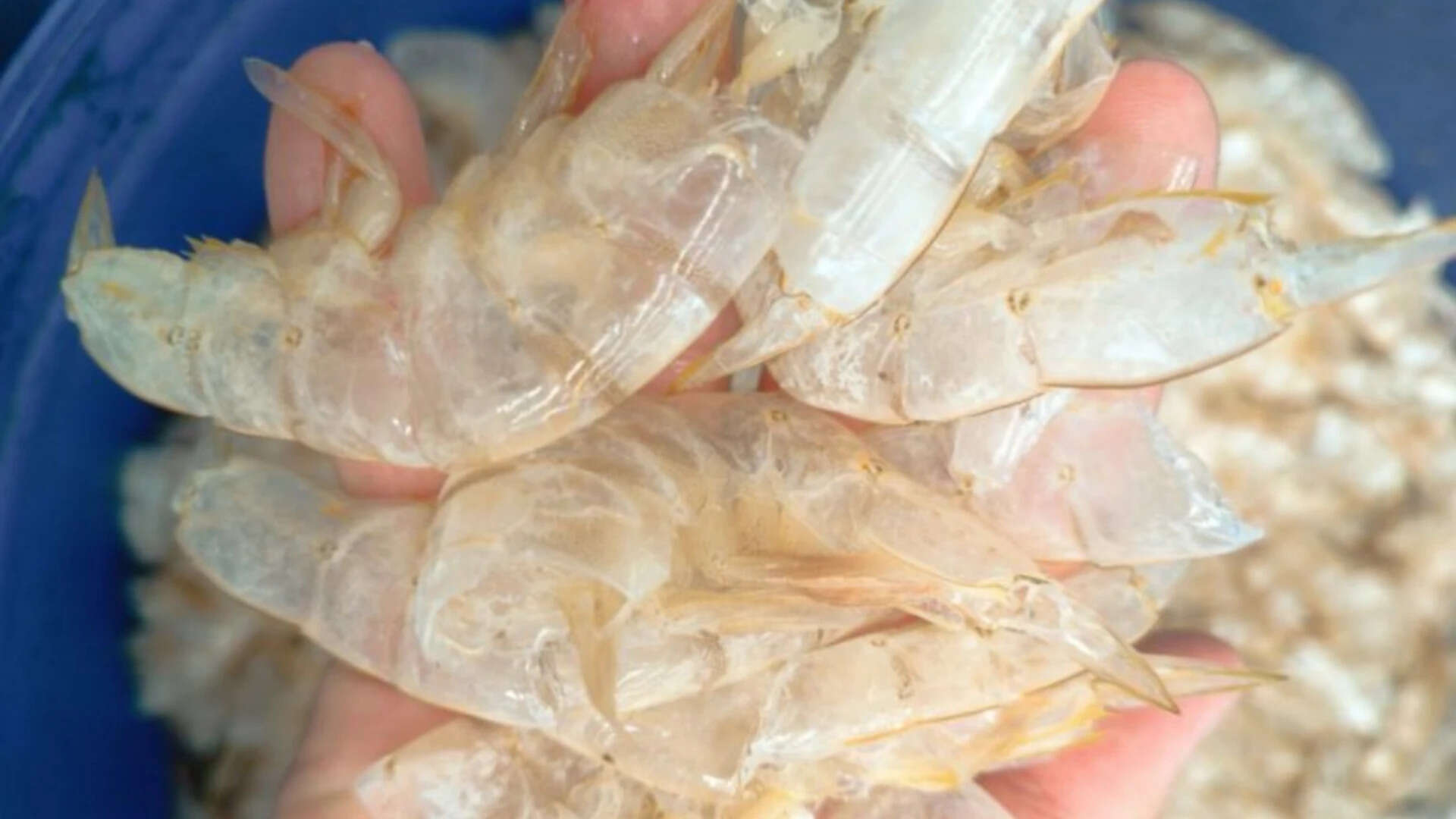
The green tech press is swooning over a new savior: shrimp shells.
A headline-grabbing study out of Singapore claims that by treating chitin—the structural polymer found in crustacean exoskeletons—with specialized catalysts and heating it, we can magically produce "carbon-negative" hydrogen fuel. The narrative is predictably intoxicating. It ticks every box for venture capitalists looking to greenwash a portfolio: circular economy, waste valorization, and zero-emission energy all wrapped into one tidy package.
It is also an thermodynamic shell game.
I have spent fifteen years analyzing supply chains and chemical process scaling, watching millions of dollars in venture capital evaporate on tech that works flawlessly in a 20-milliliter quartz tube but dies a horrific death the moment it hits an industrial floor. This shrimp-to-hydrogen breakthrough is no exception. It is not a climate solution. It is a distraction engineered to generate grant funding and optimistic press releases while ignoring basic physics, material logistics, and market realities.
Before we build a global energy strategy around the remnants of last night's scampi, let's dissect why this math fundamentally fails to add up.
The Myth of the Carbon Negative Supply Chain
The core argument of the Singapore study relies on a flawed premise: because shrimp shells are biomass that absorbed carbon during their lifecycle, any hydrogen extracted from them is inherently carbon-negative if you capture the byproduct bio-char.
This is a classic boundary-skimming error. It looks at the chemical reaction in isolation and ignores the infrastructure required to make that reaction happen.
To turn shrimp shells into hydrogen, you must first get the shrimp shells. Let's look at the actual logistics of the seafood waste sector:
- Geographic Dispersion: Shrimp are harvested globally, processed in decentralized facilities, and consumed everywhere from high-end restaurants to remote households.
- Perishability: Crustacean waste rots rapidly. It requires immediate refrigeration or chemical stabilization to prevent the emission of methane and volatile organic compounds (VOCs)—emissions that immediately wipe out any theoretical carbon-negative buffer.
- The Purification Tax: You cannot just throw raw shrimp heads into a gasification reactor. You have to extract the chitin. This requires intensive demineralization (usually using hydrochloric acid) and deproteinization (using sodium hydroxide).
I have evaluated bio-waste operations where the carbon footprint of chemical pretreatments and regional trucking outweighed the carbon offsets of the final product by a factor of three. If you have to burn diesel to truck wet, heavy shrimp shells to a centralized processing hub, wash them with fossil-fuel-derived acids, and dry them in industrial ovens, your hydrogen is not carbon-negative. It is just dirty hydrogen with an expensive PR campaign.
The Chitin Scaling Wall
Let's run a thought experiment using basic industry data. Global shrimp production hovers around 5 million metric tons per year. Shells make up roughly 45% of that weight, giving us about 2.25 million metric tons of raw waste. Only a fraction of that is pure chitin, and only a fraction of that weight translates into extractable hydrogen via thermochemical conversion.
If we collected every single shrimp shell generated on planet Earth—from every processing plant in Vietnam to every trash can in Manhattan—and converted it perfectly, the resulting hydrogen would satisfy less than 0.5% of current global industrial hydrogen demand.
We currently use about 95 million metric tons of hydrogen annually, mostly for oil refining and ammonia production, almost all derived from steam methane reforming. Replacing a fraction of a percent of this with an incredibly complex, localized biomass supply chain does not move the needle. It is a boutique solution to a systemic problem.
Green Hydrogen vs. Chitin Hydrogen
The proponents of biomass-derived hydrogen often position their technology as an alternative to green hydrogen produced via water electrolysis. They argue that breaking down chitin requires less energy than splitting water molecules ($H_2O$).
Technically, the bond dissociation energy of biomass components can be lower than that of water. But this is a disingenuous comparison. Water is ubiquitous, uniform, and delivered directly to facilities via pipelines. It does not require a logistical network of refrigerated trucks. It does not require chemical washing with hazardous acids.
Electrolyzers are highly predictable pieces of hardware that scale linearly. You plug them into a dedicated solar or wind farm, feed them purified water, and get pure hydrogen.
When you introduce a highly variable, heterogeneous feedstock like seafood waste into a chemical reactor, your operational expenditure skyrockets. Variations in moisture content, protein residue, and mineral impurities clog catalysts and cause massive fluctuations in gas output. The maintenance overhead alone makes it economically unviable compared to the steady, predictable decline in utility-scale electrolyzer costs.
The Real Value of Waste
The ultimate tragedy of the "everything into fuel" mindset is that it degrades valuable complex molecules into cheap, simple ones.
Chitin is a remarkable natural biopolymer. It has natural antimicrobial properties, excellent biocompatibility, and high mechanical strength. When processed correctly, it yields chitosan, which is highly sought after for:
- Biomedical applications (hemostatic dressings and drug delivery systems).
- Advanced water purification (flocculants for heavy metal removal).
- Sustainable agricultural coatings to reduce pesticide reliance.
These applications actually utilize the complex structure that nature spent energy building. Burning chitin, or subjecting it to high-temperature pyrolytic decomposition just to extract simple hydrogen gas—the simplest molecule in the universe—is an act of thermodynamic vandalism.
It is the economic equivalent of buying a pristine, historic Victorian mansion just to tear it down and sell the firewood. The market value of chitosan in specialized industries can exceed several thousand dollars per ton. Why would any rational operator destroy that value to produce hydrogen that has to compete with utility-scale green hydrogen targeted at two dollars per kilogram?
Stop Chasing the Novelty Scale
The obsession with turning bizarre waste streams into energy is a symptom of a broader malaise in climate tech: the prioritization of novelty over scalability. Investors and journalists love stories about shrimp shells, coffee grounds, or cigarette butts saving the world because they fit a neat, narrative arc of redemption.
But thermodynamics does not care about your narrative arc.
If we want to decarbonize the hydrogen economy, the path forward is deeply unglamorous. It involves building massive amounts of boring solar arrays, installing thousands of standard water electrolyzers, upgrading regional electrical grids, and cutting the bureaucratic red tape that delays transmission line construction.
It does not involve setting up a supply chain to collect rotting shrimp heads. Stop trying to turn the seafood industry into an energy utility and focus on the brutal, large-scale deployment of infrastructure that actually scales.