The smell of a stamping plant in Lower Saxony does not change easily. It is a thick, metallic perfume of machine oil, hot steel, and sixty years of absolute certainty.
For decades, if you stood on the catwalk above the assembly line in Wolfsburg or Stuttgart, you were looking at the undisputed center of the automotive universe. Everything the world wanted to drive was born here. The tolerances were measured in microns. The engineering was gospel. Read more on a connected subject: this related article.
Walk that same catwalk today, and the air feels heavier. The machines still hum, and the sparks still fly, yet a quiet panic hangs over the shop floor.
To understand why, consider a hypothetical character named Lukas. Lukas is forty-four, a third-generation transmission engineer in southern Germany. His grandfather built the gearboxes that powered the post-war economic miracle. His father perfected the diesel engines that conquered Europe’s highways. Lukas, naturally, spent his twenties mastering the internal combustion engine, only to be told in his thirties that his life’s work was obsolete. More reporting by Forbes highlights similar perspectives on the subject.
He adapted. He retrained. He poured his nights into battery thermal management and electric drivetrains, believing the promise whispered from Brussels and Berlin: We will build a green wall. We will protect our own while we catch up.
Then came the trade compromises. The tariffs on pure battery-electric vehicles from China made headlines, framed as a bold defensive maneuver to save jobs like Lukas’s. Yet buried beneath the political victory laps was a massive, gaping loophole—a quiet concession involving hybrid vehicles and minimum price floors that has left European automakers exposed.
It is a classic political sleight of hand. Politicians get to claim they stood up to Beijing, while European manufacturers are handed a cardboard shield in the middle of a sword fight.
The Anatomy of a Loophole
When the European Union imposed steep anti-subsidy duties on Chinese battery-electric vehicles—pushing rates as high as 45 percent for certain manufacturers—the move was hailed as a lifeline. On paper, it looked formidable. Chinese giants like BYD, SAIC, and Geely had been flooding European ports with sleek, software-heavy electric cars priced thousands of euros below anything Volkswagen, Renault, or Stellantis could profitably build.
Tariffs were supposed to buy time. Time for European factories to retool. Time for local battery supply chains to mature. Time for Lukas and hundreds of thousands of workers like him to find their footing in a new industrial era.
Except trade wars rarely follow the neat lines drawn by bureaucrats in Brussels.
To understand what happened next, think of a homeowner trying to stop a flood by sandbagging the front door while leaving the French doors wide open in the back. The EU tariffs targeted pure battery-electric vehicles. They did not cover plug-in hybrids. They did not cover standard hybrids.
Chinese automakers did not blink. They simply pivoted.
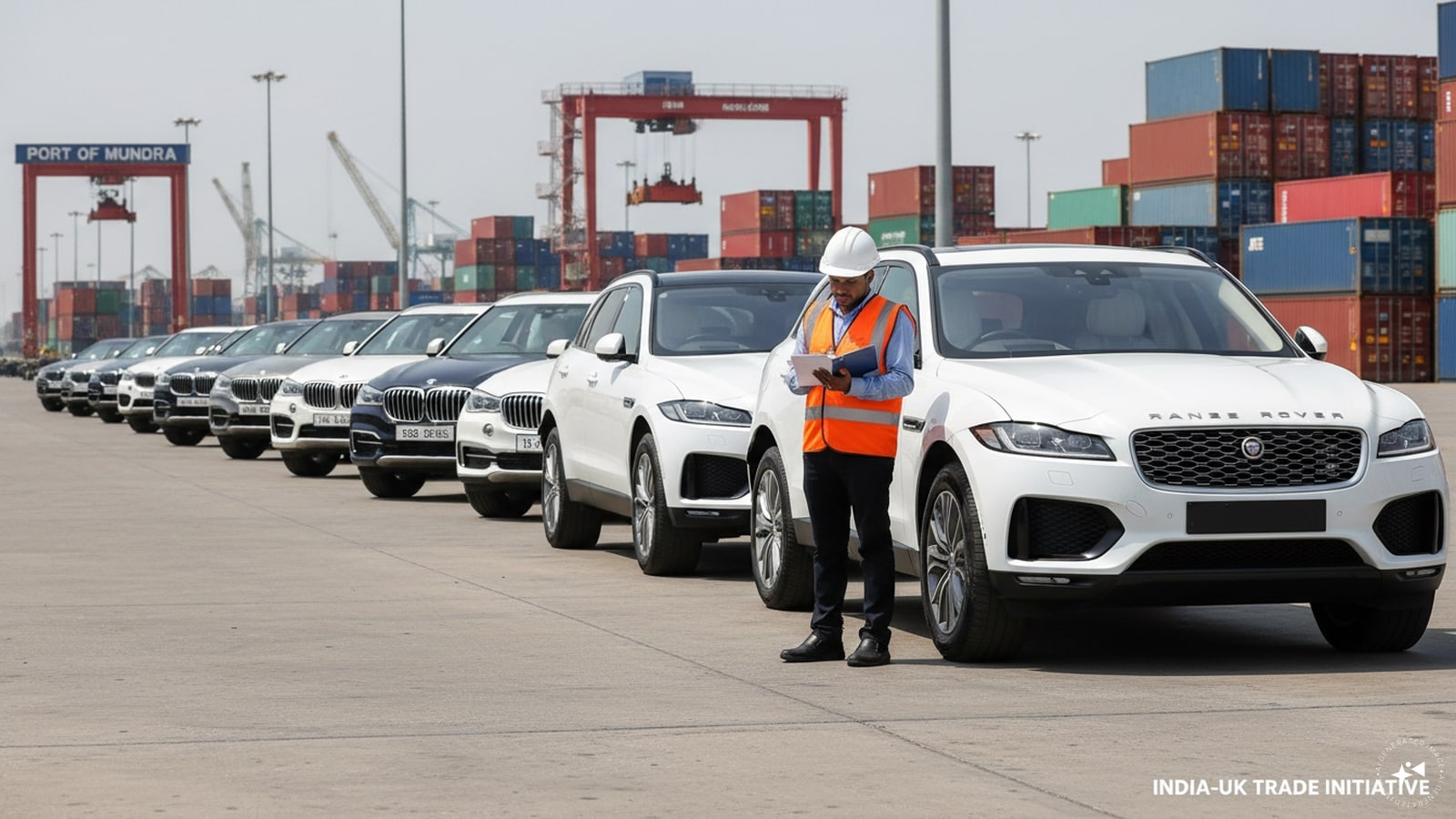
Within months of the tariff announcements, shipping manifests from Shanghai and Shenzhen began to shift. Instead of pure electrics, the cargo holds of roll-on, roll-off vessels arriving in Rotterdam and Zeebrugge were packed with plug-in hybrids. Because these vehicles still carry a small gasoline engine alongside their battery pack, they slipped right past the punitive battery-electric duties, facing only the standard 10 percent EU import tariff.
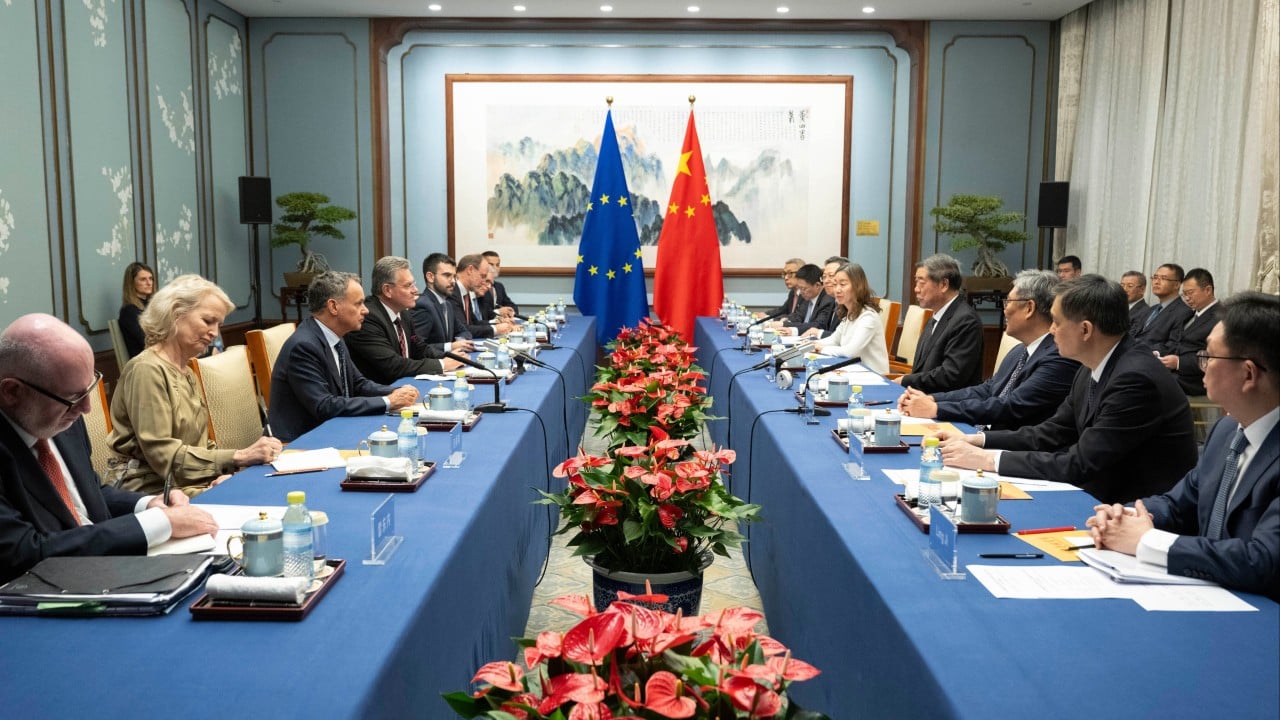
Worse still, subsequent negotiations between Brussels and Beijing floated alternative settlements—agreements centered on minimum import prices and hybrid production allowances rather than hard, impenetrable barriers. The logic from European policymakers was seductive: avoid a full-blown trade war that might provoke Beijing into slapping retaliatory tariffs on European luxury sedans, French cognac, or German pork.
It sounds reasonable in a conference room. On the factory floor, it feels like surrender.
Why Hybrids Are the Trojan Horse
To grasp why this specific blind spot is so devastating to European carmakers, you have to look at what European consumers are actually buying right now.
The transition to pure electric vehicles has hit a wall. Governments across Germany, France, and Sweden slashed buyer subsidies. Charging infrastructure outside major urban centers remains patchy and frustrating. High interest rates have made expensive new electric cars a tough sell for middle-class families worried about grocery bills.
So, what does a hesitant buyer do? They buy a hybrid.
Across Europe, hybrid registrations have surged while pure electric sales have stagnated or dipped. Hybrids are the bridge technology—the safe, comforting compromise that gives drivers electric efficiency for their daily commute without the range anxiety of a weekend road trip. For European legacy automakers, hybrids were supposed to be the cash cow. They are the profitable middle ground that funds the wildly expensive transition to an all-electric future.
By leaving the door open to Chinese hybrids—and softening the blow through negotiated price commitments—Brussels accidentally handed its rivals the keys to Europe’s most lucrative market segment.
And here is the brutal truth that rarely makes it into press releases: Chinese automakers do not just build cheap electric cars. They build astonishingly good hybrids.
Companies like BYD have spent over a decade perfecting plug-in hybrid systems that offer over a hundred kilometers of pure electric range, seamless transitions between gas and battery, and interior tech that makes a base-model European hatchback feel like a relic from 2012. Even after paying the standard 10 percent tariff and shipping costs, they can land these vehicles in European showrooms at prices that undercut domestic rivals by 15 to 20 percent.
The Illusion of Minimum Price Floors
When negotiators discuss replacing tariffs with "price undertakings"—essentially an agreement where Chinese manufacturers promise not to sell their cars below a certain minimum price in Europe—they are falling into an old economic trap.
Let us use an analogy to see why this fails. Imagine you run a neighborhood bakery. Your ingredients cost five dollars per loaf, so you sell your bread for seven. Across the street, a massive industrial conglomerate opens a shop. Because their government subsidizes their flour, electricity, and ovens, their bread costs two dollars to make. They start selling it for four, and you nearly go bankrupt.
The town council steps in to "save" you. Instead of taxing the conglomerate’s bread, they tell the conglomerate: You must sell your bread for at least seven dollars, just like the local baker.
On the surface, it looks fair. The price war is over. Except there is a fatal flaw. When you sell a loaf for seven dollars, you make two dollars in profit. When the conglomerate sells a loaf for seven dollars, they make five dollars in profit.
What do they do with that extra three dollars on every single sale? They pour it into better marketing. They offer free delivery. They upgrade their storefront. They fund research into entirely new recipes, while you are still scraping by on razor-thin margins just to pay your staff.
This is precisely what minimum price floors do in the automotive sector. They do not erase the massive structural cost advantage Chinese firms enjoy—an advantage built on vertical integration, state-backed financing, cheap energy, and near-total dominance over lithium and battery refining. Instead, price floors simply transfer the tariff revenue from European public treasuries directly into the profit margins of Chinese corporations.
European carmakers get no breathing room. They still face competitors with vastly deeper pockets, faster software development cycles, and lower production costs.
The Invisible Stakes in the Supply Chain
I have spent years watching industrial transitions up close, and the thing that always strikes me is how slowly the collapse happens—until suddenly it happens all at once.
It never starts with the famous logos coming down off the headquarters. Volkswagen, Stellantis, and Mercedes-Benz are too big, too politically vital to simply vanish overnight. The rot starts three tiers down, in the quiet towns you never hear about on the evening news.
It happens in a small precision-machining shop in northern Italy that casts aluminum housings for European gearboxes. It happens in a plastics molding plant in central France that makes dashboard trim. It happens in a mid-sized engineering firm in Baden-Württemberg that employs four hundred people and relies on steady orders from Stuttgart to pay its loans.
European car manufacturing is not just a collection of assembly plants. It is a dense, interlocking ecosystem employing roughly thirteen million people directly and indirectly. That is roughly 7 percent of all jobs in the European Union.
When a Chinese hybrid rolls off a ship in Antwerp, almost none of that ecosystem touches it. The battery cells were mined and refined in China. The electric motors were wound in China. The semiconductors, the infotainment screens, the wiring harnesses, the stamped steel—all of it was produced thousands of miles away. Even when Chinese firms build local assembly plants in Hungary or Spain to bypass trade barriers altogether, they often bring their own domestic tier-one suppliers with them, importing pre-assembled kits that require minimal local labor to bolt together.
Lukas, our hypothetical engineer in southern Germany, feels this constriction every week. His department hasn't been shut down, not yet. Instead, the signs are subtler. A hiring freeze. A delayed bonus. A quiet memo announcing that the next-generation platform will be co-developed with a partner abroad because internal R&D budgets have been slashed to protect quarterly earnings.
Why Europe Cannot Simply Out-Engineer Its Way Out
There is a comforting myth that still circulates in European boardrooms: the idea that Western heritage, driving dynamics, and brand prestige will ultimately save the day. People buy a German car for the soul, the thinking goes. They won't trade that for a rolling smartphone.
It is a dangerous delusion.
Spend twenty minutes behind the wheel of a modern Chinese plug-in hybrid, and that arrogance evaporates. The panel gaps are tight. The cabins are whisper-quiet. The voice assistants actually understand natural speech without forcing you to repeat yourself three times. Meanwhile, legacy European brands have spent the last five years stumbling through glitchy software rollouts, capacitive touch buttons that drivers hate, and cost-cutting interior plastics that betray their premium price tags.
More importantly, the nature of the automobile has fundamentally changed. For a century, the barrier to entry in the car business was mechanical complexity. Building a reliable internal combustion engine with thousands of moving parts required decades of institutional knowledge. Europe owned that moat.
Electrification drained the moat. An electric drivetrain has a fraction of the moving parts of a combustion engine. The competitive battlefield has shifted from mechanical engineering to battery chemistry, power electronics, and software architecture. In those domains, Europe has no historical head start. In fact, it is playing catch-up against rivals who move at twice the speed.
Consider the development cycle. Traditionally, a European automaker takes four to five years to take a vehicle from initial concept to showroom floor. Top Chinese manufacturers are doing it in eighteen to twenty-four months. By the time a European committee finishes debating the upholstery options for a 2028 model, its Chinese competitor has already launched two iterations, gathered millions of miles of real-world telematics data, and pushed three over-the-air software updates.
No trade deal built around hybrid loopholes or polite price agreements can bridge a three-year speed gap.
The Trap of Split Loyalties
Why did Brussels craft such a leaky defense in the first place? Because Europe is negotiating with a gun pointed at its own foot.
Unlike the United States—which slapped a blunt, 100 percent tariff on Chinese electric vehicles partly because American automakers sell very few cars in China anymore—Europe’s largest carmakers are deeply entangled with the Chinese market.
For decades, China was the golden goose for German luxury brands. Volkswagen, BMW, and Mercedes-Benz built massive joint ventures there, generating billions in profits that funded their global operations. Even as their market share in China erodes in the face of fierce local competition, executives in Munich and Stuttgart remain terrified of Beijing’s retaliation.
If Brussels pushes too hard on trade barriers, Beijing has made it clear what happens next: punitive tariffs on large-engine European imports, regulatory headaches for European factories operating in China, and restrictions on critical raw materials like graphite and rare earth magnets that European battery plants desperately need.
So European leaders tried to thread the needle. They wanted to look tough enough to appease French and Italian politicians worried about mass-market factory closures, yet soft enough to keep German CEOs from panicking about their Chinese joint ventures.
The result is a policy that satisfies no one and protects nothing. It is half-measures applied to an existential crisis.
What Real Survival Actually Requires
If tariffs on pure electrics are easily bypassed by hybrids, and minimum price floors merely fatten rival margins, what is left?
The uncomfortable truth is that trade policy can never be a substitute for industrial competitiveness. At best, a tariff is a temporary splint—it holds a broken bone in place while the body heals. If the body isn't healing underneath, taking the splint off just reveals the same fracture.
For European automakers to survive the next decade without shrinking into boutique luxury brands, the changes required go far beyond anything happening at the World Trade Organization.
First, Europe has to confront its self-inflicted cost crisis. Industrial electricity prices in Europe remain stubbornly higher than in China or the United States. Regulatory compliance—while well-intentioned—piles thousands of euros onto the production cost of small, affordable vehicles, effectively killing off the entry-level European city car and leaving a massive vacuum for imports to fill. You cannot mandate an affordable green transition while making it prohibitively expensive to manufacture affordable green machines locally.
Second, European carmakers have to swallow their pride and radically rethink how they build. The era of every brand designing its own proprietary software stack, its own battery architecture, and its own autonomous driving platform from scratch is over. The capital required is simply too vast. Survival demands ruthless consolidation, shared platforms, and joint purchasing—even among historic rivals who have spent a century trying to put each other out of business.
Finally, if Brussels is going to use trade defenses at all, they have to be airtight and conditional. Any foreign automaker wishing to sell in Europe—whether pure electric, plug-in hybrid, or standard hybrid—should face strict local content rules. Not superficial assembly where finished parts are bolted together in a warehouse, but genuine value creation: local battery manufacturing, European steel, regional software engineering, and mandatory technology transfers. That is precisely the playbook China used thirty years ago when Western automakers wanted access to its market. It worked then. It would work now.
The Quiet Before the Shift
Back in Lower Saxony, the afternoon shift change is underway. Workers in navy blue coveralls file out past the security gates, squinting into the low autumn sun, talking about weekend football matches and rising heating bills.
They have done everything asked of them. They built the machines that built modern Europe. They adapted when the rules changed, learned new technologies, and trusted that the institutions steering the continent understood the stakes of the game being played against them.
On a spreadsheet in Brussels, the latest trade compromises look balanced, diplomatic, and prudent—a clever way to keep the peace while nudging the market forward.
Down on the asphalt outside the factory gates, looking at the rows of gleaming, newly arrived hybrid crossovers sitting on the transport trucks heading toward the dealerships, the deal looks entirely different. It looks like a white flag folded into the shape of a shield.