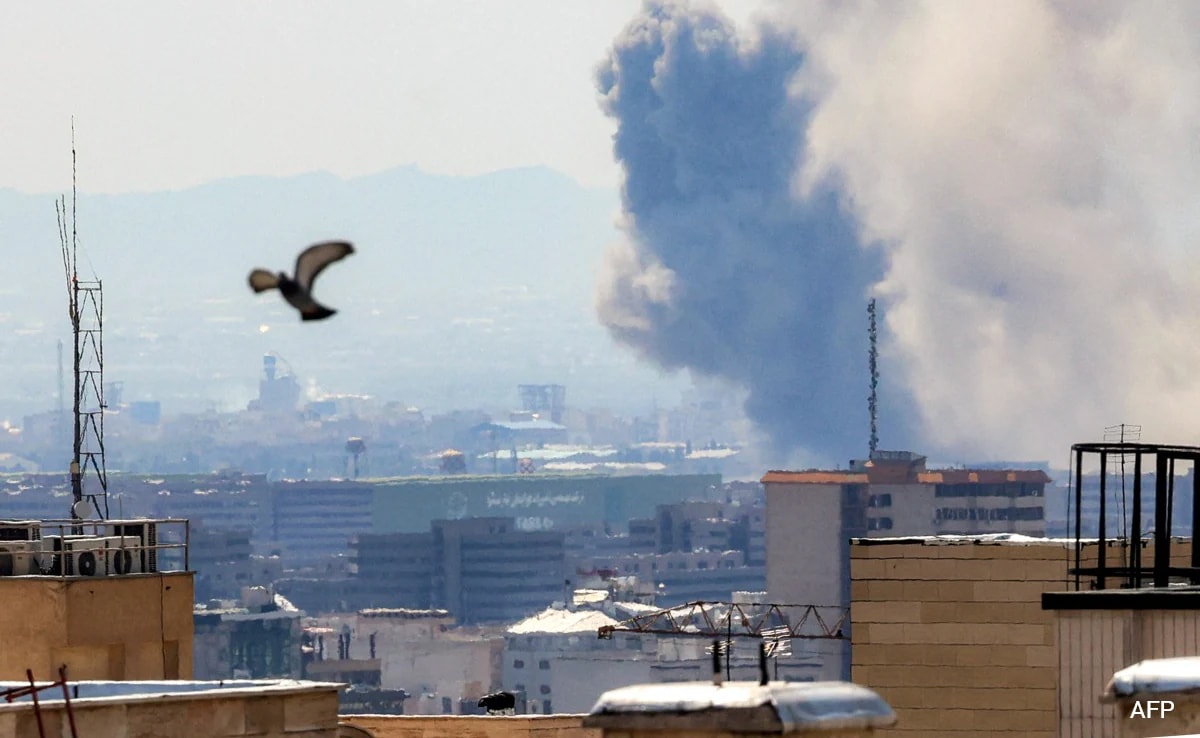
The ink isn't even dry on the two-week ceasefire and the "experts" are already popping champagne. They see a reopened Strait of Hormuz and breathe a sigh of relief. They see diplomatic cables and think the crisis is averted. They are wrong.
A ceasefire in the Middle East isn't a peace treaty. It’s a logistics window. By celebrating a temporary pause in kinetic activity, the markets are pricing in a stability that doesn't exist. Reopening the Strait of Hormuz isn't a return to normalcy; it is a tactical reset that allows every player in the region to reposition their pieces for a much more violent second act.
If you think this two-week breather means the risk to global energy supplies has vanished, you haven't been paying attention to how modern asymmetrical warfare actually functions.
The Myth of the "Cooling Off" Period
The prevailing narrative suggests that a ceasefire creates "room for diplomacy." In reality, diplomacy is often just the facade used to mask the acceleration of procurement. During a pause, supply lines are replenished. Drones are moved into forward positions. Subsurface assets are recalibrated.
When the Strait of Hormuz "reopens," the global economy feels a rush of dopamine. Oil prices dip. Shipping insurance premiums supposedly stabilize. But look at the mechanics. A waterway that carries roughly 21 million barrels of oil per day—about 21% of global petroleum liquids consumption—cannot be "turned on and off" like a kitchen faucet without massive structural stress.
The "consensus" view forgets that the Strait is not just a geographical gap; it’s a psychological pressure point. By agreeing to a two-week opening, Iran isn't backing down. They are demonstrating proof of concept. They have shown they can choke the world’s carotid artery at will and then "generously" offer a reprieve. This isn't a de-escalation. It’s a stress test of Western resolve, and the West just signaled that it will pay almost any diplomatic price to keep the tankers moving for even a fortnight.
Why the US is Chasing a Ghost
The US involvement in this ceasefire is driven by a desperate need for short-term price stability. With domestic pressures mounting, the administration needs the headline of "reopened trade routes" more than it needs a long-term strategic victory.
I have watched policy desks at major energy firms mistake these pauses for "resolution" for decades. They see a dip in the Brent crude volatility index and tell their boards that the "tail risk" is gone. It’s never gone. In fact, the tail risk grows during a ceasefire because the unpredictability of the end of the ceasefire is higher than the unpredictability of an ongoing conflict.
Consider the physics of the region. The Strait of Hormuz is only 21 miles wide at its narrowest point. The shipping lanes themselves are only two miles wide in each direction.
$$W_s = 2 \text{ miles}$$
When you funnel the world's energy through a gap that small, "peace" is an architectural impossibility as long as the underlying geopolitical friction remains.
The Logistics of the Next Strike
Let’s talk about what happens during these two weeks.
- Information Gathering: With the Strait open, civilian traffic increases. This provides the perfect "noise" for state actors to move surveillance assets under the guise of commercial activity.
- Economic Rebalancing: Regional powers use the window to offload stockpiled inventory at slightly higher prices before the next inevitable disruption sends the market into a tailspin.
- Cyber Deployment: Kinetic pauses are almost always accompanied by an uptick in "quiet" warfare. While the missiles stop flying, the code starts embedding.
The "People Also Ask" sections of the internet want to know: "Will oil prices drop after the ceasefire?"
The honest, brutal answer: Yes, for about ten days. Then, the realization hits that the structural issues—the proxy networks, the ballistic capabilities, and the fundamental lack of trust—haven't moved an inch. You aren't buying a recovery; you're buying a volatility spike at a discount.
Stop Trusting the "Two-Week" Timeline
Why two weeks? It’s a specific number designed to soothe the news cycle without requiring any actual concessions. It’s long enough for a tanker to travel from Ras Tanura to the exit of the Persian Gulf, but too short to negotiate a single clause of a meaningful treaty.
If you are a logistics manager or a hedge fund analyst, this ceasefire is a trap. The "consensus" logic says to resume standard operations. The contrarian, insider logic says this is your only window to exit high-risk positions and diversify away from the Gulf.
The Strait of Hormuz is a 19th-century chokepoint in a 21st-century war. Modern anti-ship cruise missiles (ASCMs) and unmanned underwater vehicles (UUVs) have made the physical "opening" of the Strait irrelevant. A waterway is only open if it is safe. If a drone can be launched from a hidden site in the mountains of the Musandam Peninsula at any moment, the Strait is never truly open. It’s just "not currently under fire."
The E-E-A-T Reality Check: The Cost of Being Wrong
I’ve seen traders lose nine figures betting on "diplomatic breakthroughs" in this region. They rely on the words of state department spokespeople who are paid to project optimism.
The hard truth? Iran and Israel are in a systemic conflict that cannot be resolved by a shipping agreement. The US is a superpower trying to manage a decline in regional influence by clinging to the 1980 Carter Doctrine. This doctrine—which states that the US will use military force if necessary to defend its national interests in the Persian Gulf—is being tested to destruction.
When you see a ceasefire, you shouldn't see peace. You should see a countdown. Every hour the Strait is "open" is an hour closer to the moment someone decides the leverage of closing it again is worth more than the status quo.
The downside to this contrarian view is obvious: you might miss a minor rally in the energy markets. You might look "too bearish" at a cocktail party. But the upside is survival. While the rest of the industry is lulled into a false sense of security by a two-week PR stunt, the smart money is bracing for the impact of the ceasefire’s expiration.
The Strategy You Should Be Using
Don't ask "Is it over?" Ask "What was moved while we weren't looking?"
The most successful operators I know don't trade the news of the ceasefire. They trade the certainty of its failure.
- Audit your exposure: If your supply chain relies on 100% throughput via Hormuz, you aren't a business; you're a hostage.
- Ignore the "Peace" Headlines: Look at the insurance premiums. If the underwriters aren't dropping their rates significantly despite the "ceasefire," why should you believe the politicians?
- Watch the UUV deployments: The real war is moving sub-surface. A "reopened" Strait is the perfect distraction for the deployment of autonomous mines that don't care about a two-week signature.
The "Live Update" tickers are giving you a play-by-play of a game that is already rigged. The reopening of the Strait of Hormuz isn't the end of the story. It’s the deep breath before the plunge.
If you’re waiting for the "all clear" signal to return to business as usual, you’ve already lost. The signal is the ceasefire itself. It’s a warning.
Ignore the celebratory rhetoric. Watch the water. The next move won't be a diplomatic handshake; it will be the sound of the world's most vital waterway slamming shut again, only this time, the "experts" won't have a two-week excuse to hide behind.
Get out while the gate is open.