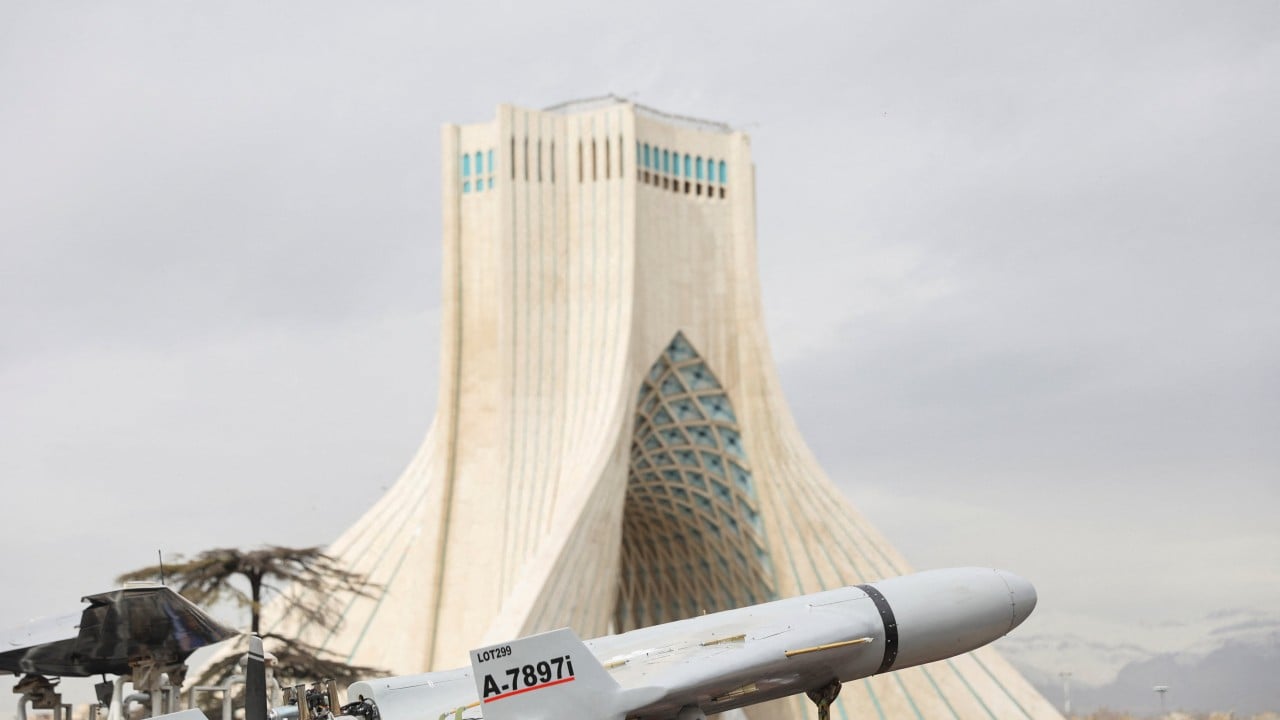
The conventional defense punditry is currently obsessed with a comforting, simplistic narrative. The story goes like this: a diplomatic pause or ceasefire acts as a giant, convenient pause button on global conflict, allowing depleted state actors—specifically Iran—to suddenly roll out the tarps, fire up the assembly lines, and frantically replenish their missile stockpiles.
It is a neat, cinematic visual. It is also logistically illiterate. Meanwhile, you can read similar stories here: Why Modi's Sudden Shift to Central Europe Matters More Than the G7.
Mainstream intelligence analyses frequently treat military supply chains as if they function like a video game inventory. Press a button, wait thirty days, and your munitions counter ticks back up to one hundred percent. This fundamental misunderstanding of defense industrial bases leads western analysts to miscalculate threat levels, overstate the tactical value of continuous bombardment, and misread the true strategic utility of a diplomatic freeze.
Iran did not need a ceasefire to rebuild its arsenal. It never stopped building it in the first place. To explore the bigger picture, check out the detailed article by NBC News.
The Illusion of the Factory Pause Button
To understand why the "ceasefire replenishment" thesis is flawed, you have to look at how modern precision-guided munitions (PGMs) and ballistic missiles are actually manufactured.
Defense manufacturing is not an on-demand artisanal craft. It relies on long-lead procurement cycles. The specialized solid-propellant mixers, the inertial guidance systems, the high-grade carbon fiber for motor casings, and the specific semiconductor components are ordered, vetted, and stockpiled months, sometimes years, in advance.
Continuous kinetic operations do not halt production lines; they deplete the finished inventory sitting in hardened storage facilities. Conversely, a cessation of hostilities does not suddenly accelerate the physical limitations of chemical curing for rocket motors or the precision machining of nozzle throats.
A Lesson from Aerospace Logistics: A manufacturing facility operating at maximum capacity cannot suddenly produce 200% more output just because the guns downrange stop firing. The throughput is governed by tooling availability, specialized labor shifts, and component supply chains—not by the current diplomatic climate.
During intense operational periods, the bottleneck is rarely the factory floor. The bottleneck is transportation, deployment, and operational survival. When a military force is actively dodging counter-battery fire or satellite-directed airstrikes, moving heavy, volatile assets from central assembly plants to concealed launch positions becomes a high-risk gamble.
What a ceasefire actually provides is not a production window, but a distribution window.
The Logistics of Concealment Over Production
I have reviewed defense procurement cycles and supply chain vulnerabilities for years. The real crisis for an asymmetric military power during active conflict is the friction of movement.
When regional airspace is contested and surveillance assets are focused on transit corridors, moving a 15-meter-long medium-range ballistic missile from an underground facility in Isfahan to a launch site or a proxy force in the Levant is a logistical nightmare.
- Active Conflict Constraints: Convoys are targeted, communication lines are monitored, and storage depots are struck before they can be unpacked.
- Ceasefire Realities: The surveillance intensity drops, or the political threshold for conducting preemptive strikes rises. This allows for the relatively unhindered transit of pre-existing inventory.
Therefore, when critics complain that a ceasefire allowed an adversary to "replenish" its stockpiles, they are misidentifying the asset. The missiles were already built. They were simply sitting in a mountain side-tunnel three hundred miles away, waiting for the logistical friction to drop to zero.
Furthermore, Iran's defense architecture relies heavily on decentralized production nodes. By dispersing the assembly of regional workhorses—like the Qiam or the various iterations of the Fateh family—into smaller, modular workshops, they insulate their production from single-point-of-failure airstrikes.
This brings us to a harsh truth that traditional hawks hate to admit: continuous bombing campaigns rarely destroy an adversary's industrial capacity. They merely drive it deeper underground, increasing the long-term resilience of the network.
The Sanctions Fallacy: Microelectronics and Asymmetric Procurement
A secondary argument often tied to the ceasefire narrative is that economic pressure and strict export controls prevent these arsenals from scaling during active conflict. The theory is that a diplomatic breathing room allows an economy to stabilize enough to smuggle in restricted components.
This ignores the reality of modern dual-use technology procurement.
The guidance systems of modern loitering munitions and cruise missiles do not require military-grade chips manufactured exclusively by Western defense contractors. They run on commercial off-the-shelf components, consumer-grade GPS receivers, and field-programmable gate arrays (FPGAs) that can be found in everyday civilian electronics.
[Commercial Microchips] ---> [Transshipment Hubs] ---> [Front Companies] ---> [Assembly Nodes]
Dismantling a downed Shahed-series drone or a cruise missile reveals a patchwork of global consumer tech. These components are smuggled through complex networks of front companies operating in commercial hubs that never stop spinning, regardless of whether a localized ceasefire is in effect. The flow of illicit dual-use technology is constant, driven by global trade volumes that are impossible to police entirely.
To believe that a temporary diplomatic lull dictates the velocity of this procurement network is to completely misunderstand the decentralized nature of modern global smuggling.
The Asymmetric Cost Curve
The true danger of misreading this logistical reality is that Western defense planning remains trapped in an unsustainable cost asymmetry.
Consider the economic math of a prolonged engagement designed to "deplete" an adversary's arsenal. An interceptor missile fired from a Western air defense system or an Aegis-equipped destroyer routinely costs between $1 million and $4 million. The incoming threat—often a liquid-fueled ballistic missile or a slow-flying loitering munition—costs anywhere from $20,000 to a few hundred thousand dollars to manufacture.
$$\text{Cost Asymmetry Ratio} = \frac{\text{Interceptor Cost ($2,000,000)}}{\text{Threat Cost ($50,000)}} = 40:1$$
Attempting to win a war of attrition against an adversary using cheap, distributed manufacturing methods by out-firing them is a mathematically bankrupt strategy. The adversary does not need to out-produce your industry; they just need to exhaust your financial and political will to keep buying multi-million-dollar interceptors.
Admitting this reality exposes the downside of the contrarian view: if stopping the factory lines via traditional bombardment or temporary diplomatic maneuvers is a myth, then the only effective military alternative is far more drastic. It requires targeting the deeply buried, hardened command-and-control nodes and the primary raw material processing facilities—actions that carry immense escalation risks that most Western governments are desperate to avoid.
Stop Asking if the Stockpile is Full
The media will continue to analyze satellite imagery of warehouses and count the number of transport erector launchers visible on a given day. They will keep asking the wrong question: "Did the ceasefire allow them to build more?"
The right question is: "Why are we relying on a strategy that assumes they ever stop?"
Focusing on the diplomatic timeline treats the adversary as a reactive, desperate actor waiting for permission to prepare for war. The reality is far more sobering. The factories run independent of the diplomatic theater. The supply chains are built to withstand the pressure. The inventory is managed with long-term strategic patience.
The belief that a ceasefire creates a sudden spike in an adversary's military capability is a coping mechanism. It allows policymakers to blame diplomacy for a fundamental structural challenge that they have failed to solve through kinetic or economic means. The arsenal isn't growing because the fighting stopped. The arsenal is growing because the system designed to prevent its growth was built for a twentieth-century industrial model that no longer exists.