Borders are lines on a map until thousands of people try to cross them at once. Then they turn into concrete, tear gas, and deep water.
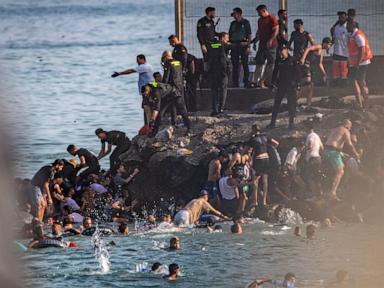
Back in May 2021, the Spanish enclave of Ceuta on the North African coast experienced an unprecedented humanitarian shock. Thousands of people swam, waded, or used makeshift flotation devices to cross the maritime border from Morocco. Most survived the cold Atlantic currents and the exhaustion. Some did not. Among the statistics reported by international media were individual lives with distinct futures, broken dreams, and ordinary routines shattered by desperation. If you liked this article, you might want to check out: this related article.
When we look back at the Ceuta migrant surge, we usually focus on the geopolitical standoff between Spain and Morocco. We talk about diplomatic spats, border fencing, and military deployments. We forget the human cost. Let's talk about the individuals behind the headlines, specifically the physics graduate and the teenager who couldn't swim, and what their stories reveal about the brutal realities of modern migration.
The Human Cost Behind the Border Statistics
Numbers lie by omission. When news outlets report that eight thousand people crossed a border in a single day, our brains register a wave. We picture an anonymous mass. We lose the single human being shivering on the sand. For another angle on this story, see the recent update from Al Jazeera.
During the Ceuta crisis, Spanish authorities and humanitarian workers pulled bodies from the water and processed thousands of arrivals on the beaches of El Tarajal and Benzú. Families across Morocco and sub-Saharan Africa spent days refreshing social media feeds, looking for blurry photos of survivors wrapped in silver emergency blankets.
Two stories cut through the noise of diplomatic wrangling. One belonged to a young man who had spent years mastering complex equations and wave mechanics. The other belonged to a teenager who had never learned how to stay afloat in a local pool, let alone a turbulent stretch of the Mediterranean Sea.
When a Physics Graduate Can Not Beat the Current
Education is supposed to be a ticket out. You study hard, earn your degree, and secure a future. That is the social contract.
In many parts of North Africa, that contract is broken. Young people with university diplomas find themselves selling cigarettes on street corners or waiting tables for pennies. They look at European shores visible across the strait on a clear day and decide that the statistical risk of drowning beats the absolute certainty of lifelong stagnation.
Consider the case of young graduates caught in the Ceuta surge. Armed with degrees in theoretical subjects like physics, they understood fluid dynamics, momentum, and gravitational pull on paper. They knew exactly how strong the tides were around the rocky breakwaters of Ceuta.
Yet, academic knowledge provides zero protection against hypothermia. Understanding how water displaces weight doesn't stop exhaustion from dragging you under when you have been swimming in freezing clothes for three hours.
When these graduates made the choice to jump into the water, they weren't ignorant of the danger. They calculated the risk and decided the odds were worth taking. That is a damning indictment of local economic conditions. If a university-educated scientist prefers risking death in the open ocean over staying home, the system has failed completely.
The Boy Who Couldn't Swim But Crossed Anyway
Desperation defies logic. If you cannot swim, jumping into the sea is suicidal. You know it. Everyone around you knows it.
Yet, during the Ceuta surge, witnesses reported numerous young boys and teenagers who couldn't swim strapping empty plastic water bottles to their chests, tying inner tubes around their waists, or simply holding onto the shoulders of older strangers. They waded into the surf because staying behind felt even more terrifying than drowning.
Peer pressure played a massive role, too. When your friends are running toward the water, you run with them. The momentum of a crowd is a powerful physical and psychological force. You don't want to be left behind while everyone else finds a new life.
For the teenagers who drowned in Ceuta without basic swimming skills, the tragedy is layered with heartbreak. They weren't political activists. They weren't fleeing active war zones in the traditional sense. They were kids chasing TikTok videos of open borders, dreaming of sneaker shops, football academies, and jobs that paid in euros.
Why the Ceuta Route Remains a Desperate Trap
Geography makes Ceuta a unique flashpoint. Because it is Spanish soil attached to the African continent, it represents the shortest physical route into the European Union for anyone already in Morocco. You don't need a smuggler's boat for a treacherous multi-day voyage across the open Mediterranean to Italy or mainland Spain. You just need to walk around a breakwater or swim past a fence at low tide.
That illusion of proximity kills people. The water looks close. The lights of the town shine brightly across the small bay. People underestimate the currents that swirl around the Strait of Gibraltar, where the Atlantic Ocean meets the Mediterranean. The water is cold even in late spring, and the undertow can exhaust an Olympic athlete within minutes.
Border guards on both sides faced impossible choices during the surge. Spanish police deployed tear gas and baton charges while simultaneously pulling drowning teenagers from the surf. Moroccan forces struggled to control crowds surging across the hillsides near Fnideq.
What Actually Happens After the Surge Fades
Media crews pack up their cameras within a week. Politicians sign new cooperation agreements and shake hands in front of flags. The immediate crisis disappears from the front page.
For the families of those who died, the nightmare never ends. Identifying a body across international borders involves bureaucratic nightmares, DNA tests, and repatriation costs that ordinary families cannot afford. Many missing migrants from the Ceuta surge remain officially unaccounted for, lingering in bureaucratic limbo while their mothers and fathers wait by the phone.
Meanwhile, the economic pressures driving these crossings haven't vanished. Inflation, high youth unemployment, and post-pandemic economic fallout across North Africa mean that young people are still eyeing those same fences and beaches today.
Fixing border security by adding more razor wire or increasing naval patrols treats the symptom while ignoring the disease. As long as the wealth gap between Europe and North Africa remains a chasm, people will keep swimming. They will keep trusting empty plastic bottles to keep them afloat.
If we want to stop reading obituaries about physics graduates and teenagers who never learned to swim, we have to look past the political theatre of border enforcement. We have to reckon with the systemic failures that make a perilous ocean swim look like the best option left on the table.