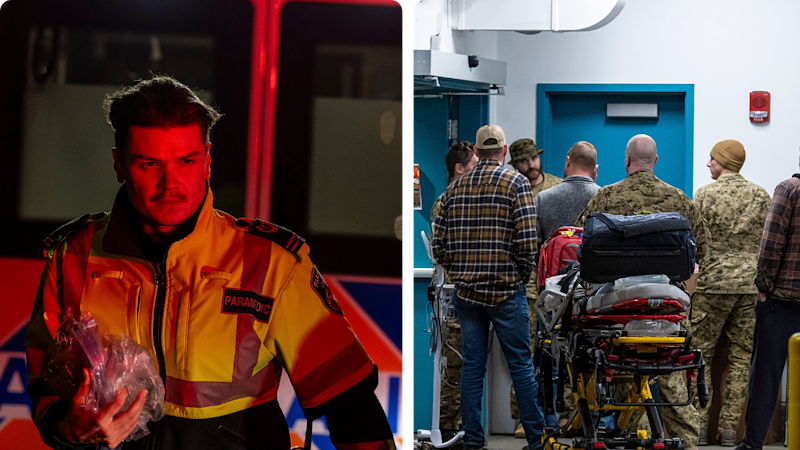
Five Canadian soldiers are dead, dozens more were burned, and a routine training exercise in Alberta turned into one of the darkest peacetime days in modern Canadian military history.
When a fire swept across Canadian Forces Base Wainwright on October 17, 2026, it didn't just burn grass and brush. It tore straight through a training environment where around 84 soldiers with the 3rd Battalion, Princess Patricia's Canadian Light Infantry were conducting attack drills. Initial military findings indicate the blaze started on an automatic grenade launcher range, and wind pushed flames onto troops before things could be contained. Prime Minister Mark Carney called it one of the worst peacetime tragedies for Canada's military on Canadian soil.
Most surface-level news recaps stop at the casualty count and a few sad quotes from politicians. That misses the harder, uncomfortable questions anyone watching defense safety and emergency response should actually ask. How does a live-fire range spark a fast-moving grass fire that overtakes infantry units? Why does specialized burn care stretch out for months rather than weeks? And what happens when a regional hospital system suddenly has to treat dozens of severe burn patients at once?
How a Live Fire Range Turns Into a Fast Moving Threat
Live-fire training exists for a reason. You can't prepare infantry soldiers for high-intensity combat purely in simulators or classroom briefings.
Still, mixing live munitions, dry ground cover, and shifting wind creates a volatile equation. At CFB Wainwright, officials confirmed the fire was reported on the automatic grenade launcher range during training on October 17, and reports point to wind driving flames from a grass fire onto soldiers taking part in exercise drills.
In wildland and range-fire scenarios, wind is the real accelerant. Even a moderate gust can push a low-intensity grass fire across dry terrain faster than troops on foot can reposition, especially when they're focused on tactical movement and firing sequences. When a fire shifts direction behind or alongside a training element, visibility drops fast, heat radiates intensely, and an exercise zone becomes a hazard zone in seconds.
A common misconception is that military bases have instant, limitless fire-suppression assets sitting right next to every range. Bases are large, training ranges sit in expansive fields or bush, and water supply or heavy equipment isn't always right on top of a sudden wind-driven front. That's why the military's board of inquiry is looking at broad questions, including whether training policies were appropriate and why the grass fire wasn't stopped sooner.
The Human Toll and Why Burn Recovery Takes Months
The toll from CFB Wainwright didn't end on October 17. Four soldiers died right away or very shortly after the incident: Sgt. Morgan Wong, Pte. Shaun Farrell, Pte. Aidan Goulding, and Pte. Hayden Lykkemark. Weeks later, on November 13, 2026, Pte. William Douglas Dal Bianco died from his injuries, bringing the death toll to five.
Dozens of other service members were injured, with 39 patients initially hospitalized and 19 reported in critical condition early on. By mid-November, 24 soldiers remained in various hospitals, while 14 had been discharged according to a November 4 Department of National Defence update.
People who haven't seen severe burn care up close often assume once someone makes it past the first few days, the worst is over. Honestly, that's backwards. Deep thermal burns—including third-degree burns covering huge percentages of the body, as referenced in public remarks around the tragedy—require grueling wound management, repeated surgeries, infection control, pain management, and long-term rehab.
As Dr. Sayeh Zielke, interim CEO of Acute Care Alberta, put it, burn recovery isn't a sprint—it's a marathon running through winter and beyond. Specialized burn units have tiny nurse-to-patient ratios because dressing changes and monitoring take hours of focused, high-skill labor every single day.
That's why Alberta requested federal help, leading Emergency Management Minister Eleanor Olszewski to approve deploying military nurses to relieve civilian burn teams caring for injured Canadian Armed Forces members, with deployments slated into mid-January 2027. Reports also noted Health Canada granted special access to RECELL, a spray-on skin treatment, to support care for injured personnel.
Investigations, Secrecy, and What We Still Don't Know
Right after a major base incident, rumors fly online while official details trickle out slowly. Family members reported a communications lockdown at the base immediately following the fire, which a former senior military officer noted to CBC News is standard protocol after a serious event.
Locked-down comms make sense operationally and for privacy while next-of-kin notifications happen, yet they also create friction when families and the public are desperate for clear facts. To its credit, the Department of National Defence and Canadian Armed Forces have rolled out structured updates, naming the fallen soldiers, sharing hospitalization figures, and outlining separate tracks of inquiry.
Three investigations are underway, including military police and a separate military board of inquiry. Brigadier-General Vanessa Hanrahan, Canadian Forces Provost Marshal, has emphasized keeping Canadians informed appropriately as the investigation moves forward, while safety observers note these probes can take up to a year.
We should be candid about what isn't settled yet. Public reporting has linked the origin to the automatic grenade launcher range and wind-driven grass fire conditions, but the formal findings on exact ignition mechanics, range safety controls, wind thresholds, and suppression response haven't been finalized. Jumping to blame before the board of inquiry finishes its work isn't fair to the soldiers or the investigators—though demanding clear answers and real accountability is completely fair.
Practical Next Steps for Families, Responders, and Safety Leaders
When a tragedy hits a military community, good intentions don't always translate into practical action. Depending on where you stand, a few concrete steps matter right now:
- For military families and loved ones: Use official support channels rather than unverified social media threads. The Canadian Forces Member Assistance Program operates 24/7 at 1-800-268-7708, and injured members and families have designated military assistants as points of contact. Keep track of medical, travel, and caregiving expenses early so administrative support doesn't add extra stress later.
- For civilian healthcare and emergency planners: Treat mass-casualty thermal trauma as a multi-month staffing and supply event, not a weekend surge. Build cross-agency surge agreements—like the federal-provincial nursing support deployed in Alberta—and practice rapid burn-unit load-balancing across regions before a crisis hits.
- For range safety and workplace fire leaders: Re-examine live-fire and hot-work rules against wind speed, fuel dryness, and escape routes, not just calendar schedules. Make sure firebreaks, water tenders, and abort triggers are tied directly to changing weather conditions so a spark in dry grass can't outrun the people on the ground.
Carney confirms 4 service members killed in CFB Wainwright fire provides broadcast coverage from the early days of the crisis, helping illustrate the scale of the response and public reaction around the CFB Wainwright fire.


