The Silence in the Hallway
The corridors of the Supreme National Security Council in Tehran do not echo; they swallow sound. In a building where the trajectory of the Middle East is plotted, power is rarely announced with a shout. It is whispered. It is felt in the sudden absence of a familiar face or the subtle shift of a nameplate on a heavy oak door. For years, Ali Larijani was the oxygen in these rooms. To understand why his departure matters, you have to understand the man himself: a philosopher-politician with a penchant for Kant and a survival instinct that would make a desert fox envious.
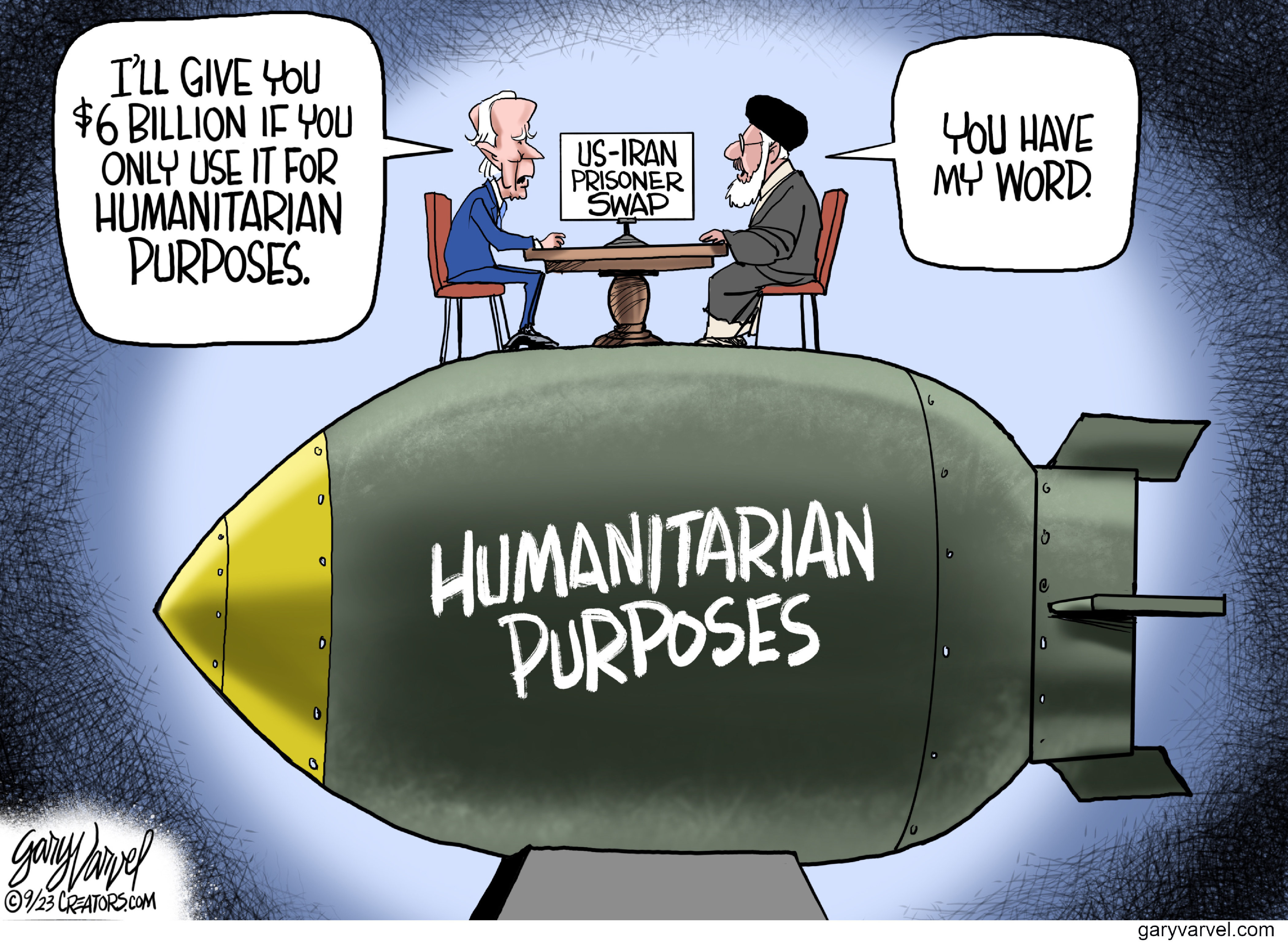
Larijani represented a specific, dying breed of Iranian statesman. He was the "bridge." When the West looked at Iran and saw a monolith of hardliners, Larijani was the nuance. He was the one who could speak the language of the bureaucracy and the language of the street, someone who understood that the survival of the Islamic Republic required a delicate dance between ideological purity and cold, hard pragmatism. For a more detailed analysis into this area, we suggest: this related article.
Now, that bridge has been dismantled.
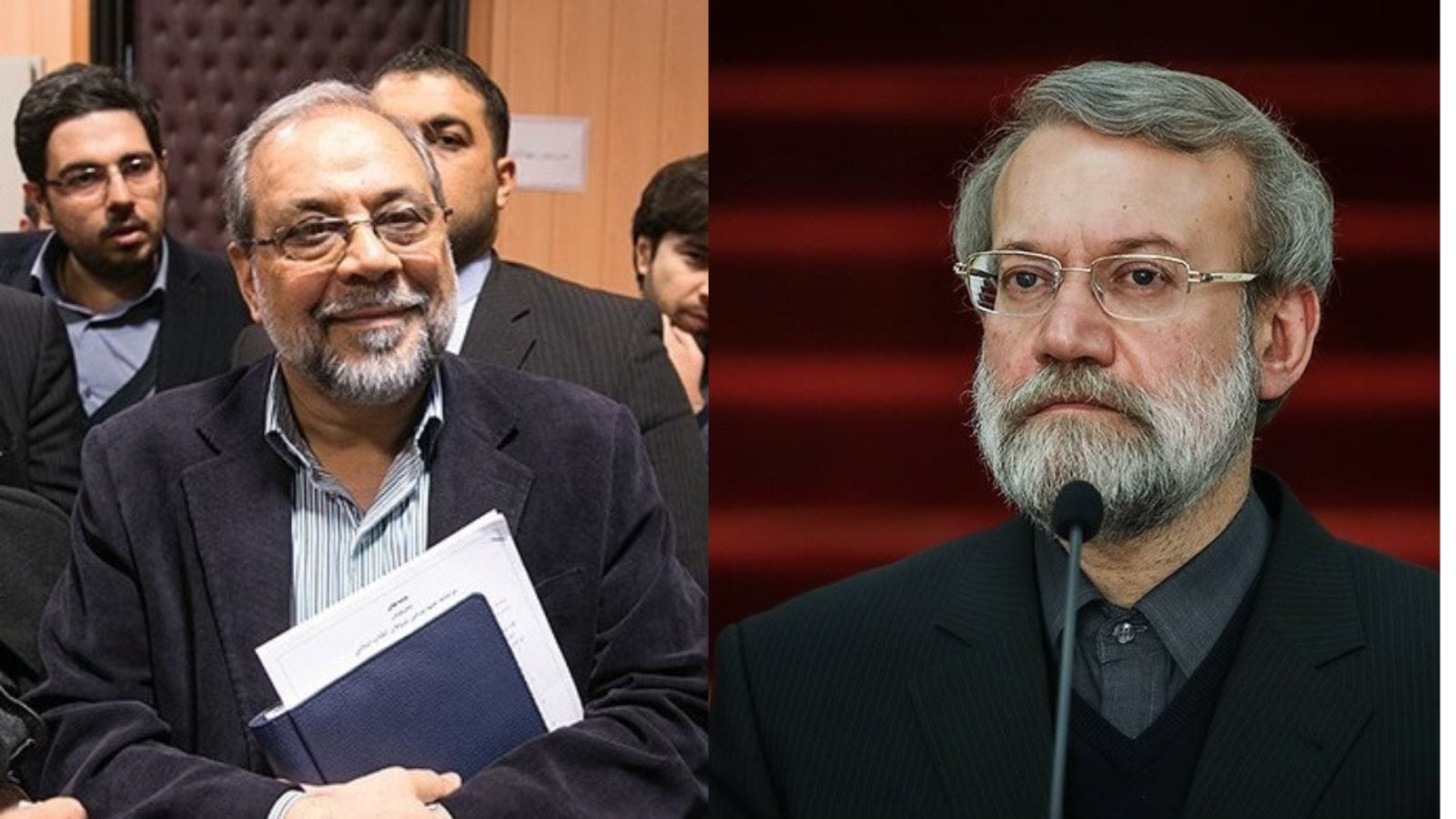
The announcement was sparse. A few lines of state media prose. Ali Larijani, the veteran who steered the nuclear negotiations and balanced the egos of three different presidents, was out. His replacement, Ali Akbar Ahmadian, is not a philosopher. He is a strategist from the ranks of the Islamic Revolutionary Guard Corps (IRGC). This isn't just a personnel change. It is a tectonic shift. It is the sound of a door locking from the inside. For broader information on this topic, comprehensive coverage can also be found at BBC News.
The Architect of the Long Game
To appreciate the stakes, consider a hypothetical diplomat—let’s call him Hassan—sitting in a dim cafe in Geneva or Vienna. For a decade, Hassan relied on Larijani as the "final boss" of Iranian logic. If Hassan could convince Larijani of a deal’s merit, the deal had a heartbeat. Larijani had the ear of the Supreme Leader, Ayatollah Ali Khamenei, but he also had the intellectual agility to see three moves ahead on the global chessboard.
Larijani’s tenure was defined by the 2015 nuclear deal ($JCPOA$). Even as the agreement frayed under the pressure of shifting American administrations, Larijani remained the steady hand. He understood that Iran’s economy was a ticking clock. He knew that for the revolutionary fire to keep burning, the people needed to be able to buy bread. He was the guardian of the middle ground.
But the middle ground is a dangerous place to stand when the winds of change turn into a hurricane.
The domestic pressure inside Iran has reached a boiling point. Economic sanctions have not just pinched the elite; they have hollowed out the middle class. The "Bridge" was no longer enough. The leadership in Tehran has looked at the horizon and decided that diplomacy is a luxury they can no longer afford to prioritize in the same way. They are circling the wagons. They are choosing a fortress over a forum.
The Rise of the Strategist
Enter Ali Akbar Ahmadian. If Larijani was the diplomat’s diplomat, Ahmadian is the soldier’s soldier. His background in the IRGC’s navy and his reputation as a pioneer of asymmetric warfare tell you everything you need to know about the new direction.
Asymmetric warfare is the art of the underdog. It is the philosophy of using a small, agile force to disrupt a much larger, more rigid enemy. It is about speed, unpredictability, and ruthlessness. By placing a man who literally wrote the book on these tactics at the head of the National Security Council, Iran is signaling a pivot.
They are no longer interested in the slow, grinding pace of traditional diplomacy. They are preparing for a world of friction.
Imagine the room where this decision was made. The air would be thick with the smell of black tea and the weight of history. The Supreme Leader does not make these choices lightly. By replacing a civilian-minded aristocrat like Larijani with a military strategist like Ahmadian, the regime is effectively merging its shadow government with its actual military apparatus.
The distinction between "the state" and "the guard" is vanishing.
Why the World Should Be Shivering
This matters to you—whether you are in London, Washington, or Dubai—because the National Security Council is the organ that decides how Iran reacts to a crisis. When a tanker is seized in the Strait of Hormuz, the Council decides the next move. When a drone strike hits a facility in Isfahan, the Council drafts the retaliation.
Under Larijani, those responses were often tempered by a desire to keep a seat at the international table. There was a calculated restraint.
Under Ahmadian, the calculus changes. A military mind views a problem through the lens of victory and defeat, not compromise and concession. The "Invisible Stakes" here aren't just about who sits in a chair; they are about the temperature of the entire region. We are moving from an era of managed tension into an era of unpredictable escalation.
Think of it like a pressure cooker. Larijani was the valve, letting off just enough steam to keep the pot from exploding. Ahmadian is the lid being screwed on tighter. The internal logic is that if Iran looks stronger, more rigid, and more dangerous, the West will back off. It is a high-stakes gamble that ignores the basic laws of physics: eventually, the pressure has to go somewhere.
The Human Cost of the Hard Line
Behind the titles and the geopolitical posturing are millions of people whose lives are dictated by these shifts. There is a young woman in Tehran who just wants to finish her degree and work in tech. There is a shopkeeper in Isfahan who watches the price of imported goods rise every single morning. For them, Larijani was a symbol of a government that at least pretended to care about international integration.
His removal feels like a finality. It tells the Iranian youth that the path to the outside world is being paved over with concrete.
The tragedy of the "Bridge" is that it only works if people on both sides are willing to cross it. For years, Larijani stood in the center, waving at both shores. But as the JCPOA withered and the rhetoric from Washington turned to "maximum pressure," the bridge became a lonely place to be. The hardliners in Tehran pointed at Larijani and called him a dreamer. They pointed at the empty promises of sanctions relief and called him a fool.
In the end, his departure wasn't a coup. It was a surrender to the inevitable.
The New Architecture of Power
What does Iran look like tomorrow? It looks like a country that has stopped trying to explain itself.
The National Security Council will now likely focus on internal stability and regional deterrence with a singular, military focus. Ahmadian's expertise in naval strategy suggests that the Persian Gulf will remain a flashpoint. His deep ties to the IRGC ensure that the military’s budget and influence will remain untouched, regardless of the economic pain felt by the citizenry.
This is the "Securitization" of the Iranian state.
We often talk about countries as if they are individuals, but they are more like massive, slow-moving organisms. Iran has just changed its nervous system. It has replaced its sensory organs—those that sought to feel out the environment and adapt—with a reflex system designed for combat.
It is a somber transformation. It suggests that the window for a grand bargain, a moment of peace that could redefine the 21st century in the Middle East, hasn't just closed. It’s been boarded up.
The ghost of Larijani’s pragmatism will haunt those halls for a while. There will be moments, perhaps during a future crisis, when a voice of nuance is needed to prevent a catastrophe. But those who listen will find only the silence of the new guard. The philosopher has left the building, and the strategist has taken his seat.
History is rarely made by the people who want to talk. It is made by the people who are tired of talking. As the dust settles on this transition, the world is left to wonder what happens when the conversation finally stops.
The map hasn't changed, but the way Iran reads it has. The ink is dry. The guard has changed. The shadows are getting longer.