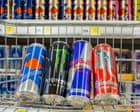
The sound is the same in every schoolyard from Newcastle to Penzance. It is a sharp, metallic hiss, followed by a heavy, syrupy scent of artificial cherry or radioactive citrus wafting through the morning air.
It is 8:15 AM. The bell has not yet rung, but the chemistry is already changing.
Imagine a fourteen-year-old named Leo. He is not a statistical anomaly; he is the boy next door, the kid who forgets his PE kit and struggles with algebra. This morning, like most mornings, his breakfast did not come from a cereal box or a toaster. It came in a cold, oversized aluminum can wrapped in aggressive, neon-colored graphics. He bought it for less than two pounds at the corner shop on his walk from the bus stop.
By the time Leo sits down for double science, his heart is beating at a rate more suited to a sprint than a classroom desk. His fingers twitch against his pencil. He feels invincible, a sudden surge of artificial focus flooding his system.
But biology always demands a payment.
By 11:30 AM, the bill arrives. The focus evaporates, replaced by a gray, heavy fog. His temper shortens. When his teacher asks him to open his textbook, Leo snaps, a sudden flash of irritation that surprises even him. He is not naturally a hostile kid. He is just crashing.
This is the daily cycle playing out across England. For years, we have treated these cans of liquid speed as harmless schoolyard fuel. But behind the flashy marketing and the extreme sports sponsorships lies a quiet, systemic crisis. Now, a line in the sand is being drawn. The sale of high-caffeine energy drinks to children under sixteen is facing an outright ban.
This is not just a story about policy, sugar taxes, or government overreach. It is a story about what we have allowed to happen to our children’s bodies and minds under the guise of a cheap afternoon pick-me-up.
The Chemistry of the Playground
To understand why this ban is moving from a political debate to a hard reality, we have to look past the bright cans and look at the fluid inside them.
A single standard energy drink can contain upward of 150 milligrams of caffeine per liter. To put that in perspective, one of the larger, popular 500ml cans often contains about 160mg of caffeine. That is the chemical equivalent of drinking two double shots of espresso in the span of five minutes, swallowed alongside roughly sixteen teaspoons of sugar.
Now, give that dose to a growing teenager whose brain and nervous system are still under construction.
Medical professionals have been waving red flags for years. When a child consumes this level of caffeine, the physiological response is immediate and intense. The heart pumps harder. Blood vessels constrict. The adrenal glands dump stress hormones into the bloodstream, putting the body into a prolonged state of fight-or-flight.
Teachers see the aftermath every single day.
Consider Sarah, a secondary school English teacher in Yorkshire. She has spent a decade watching the classroom dynamic warp under the influence of these drinks. She describes her first-period classes as a hyperactive blur of bouncing knees and shouting. By fourth period, the room feels like a ward of exhausted, irritable ghosts.
"They are vibrating in their seats at nine, and they are practically asleep or picking fights by midday," Sarah says. "We are trying to teach Shakespeare to kids who are either soaring on a chemical high or suffering from a massive physical crash. It is an impossible battle."
The data backs her up. Multiple studies link high energy drink consumption in youth to poor sleep quality, headaches, stomach aches, and heightened anxiety. We have created a environment where children rely on a liquid crutch to get through the school day, unaware of the toll it is taking on their developing minds.
The Illusion of Energy
We have been sold a lie about what energy actually is.
Real physical energy comes from food, rest, and oxygen. The energy sold in these cans is a counterfeit. Caffeine does not actually create energy; it merely blocks the brain receptors that tell us we are tired. It masks exhaustion, tricking the body into burning resources it does not have.
When you add massive quantities of sugar to the mix, the effect is compounded. The body releases a flood of insulin to cope with the sugar spike, causing blood glucose levels to plummet shortly after. The result is a profound fatigue that makes the teenager reach for yet another can to stop the downward slide.
It is a loop. A trap.
For kids like Leo, the drink is no longer a treat; it is a necessity. He drinks one to wake up, another to stay awake at lunch, and perhaps a third while playing video games late into the night because his sleep cycle is completely shattered.
The industry argues that teenagers are mature enough to make their own choices. They point to coffee shops, where a teenager can walk in and buy a latte without anyone asking for identification.
But there is a fundamental difference in how these products are positioned. Coffee does not come in cans decorated with flame decals, nor is it flavored like sour cherry bubblegum. Coffee shops do not sponsor the esports teams our children watch for hours every weekend.
Energy drinks have been meticulously designed, flavored, and marketed to appeal directly to the young. They are priced to match a schoolchild’s pocket money. They are positioned next to sweets and soft drinks, creating the illusion that they are just another innocent soda.
They are not.
The Weight of the Law
The move to ban these sales to under-16s in England is not an overnight whim. It is the culmination of years of pressure from health campaigners, teachers' unions, and parents who have watched the physical and mental health of a generation slide.
When the ban takes effect, retailers will be legally required to check identification for anyone attempting to buy these drinks, treating them with the same level of age-restricted seriousness as spray paint, lottery tickets, or alcohol. Large chains have already implemented voluntary bans in the past, but the new legislation closes the loopholes, ensuring that the small corner shops on the school run must comply as well.
Predictably, the decision has sparked a fierce debate about the limits of government intervention. Critics decry the move as the nanny state run amok. They argue that parents, not shopkeepers or politicians, should be the ones policing what children put into their bodies.
But this argument ignores the reality of modern parenting.
Parents cannot be in the corner shop at eight in the morning. They cannot police every transaction made with lunch money. When a product is legal, cheap, and highly normalized by peers and media, expecting parents to wage a lone war against a multi-billion-pound marketing machine is unrealistic.
We protect children from other substances that are harmful to their developing bodies. We do not allow them to buy tobacco, alcohol, or high-strength pain relievers. Classifying high-caffeine energy drinks as age-restricted is not about stripping away freedom; it is about recognizing a health hazard for what it is.
The Invisible Stakes
To understand what is truly at stake, we must look beyond the immediate jitters and the classroom disruptions. We have to look at the long-term patterns we are carving into these young brains.
Adolescence is a critical window for neurological development. The prefrontal cortex, the area of the brain responsible for impulse control, decision-making, and emotional regulation, is not fully formed until a person reaches their mid-twenties.
When we flood a developing brain with massive doses of stimulants on a daily basis, we are altering its chemistry during a vital formative stage. We are teaching the brain that the only way to cope with fatigue, stress, or boredom is to consume a chemical stimulant. We are setting up a lifetime pattern of self-medication and dependency.
We must also confront the socioeconomic aspect of this crisis.
The consumption of cheap energy drinks is not distributed evenly across society. Study after study shows that children from lower-income backgrounds are significantly more likely to consume these drinks daily. These are often the same children who may have less access to fresh, nutritious food or safe spaces for physical activity.
For a struggling family, a cheap, highly caloric drink that keeps a child quiet and alert can seem like an easy fix. But the long-term health consequences—obesity, dental decay, cardiovascular strain, and mental health struggles—fall heaviest on those who can least afford them.
The ban is an act of basic protection. It establishes a societal baseline that says our children's health is worth more than a beverage company's profit margin.
A New Morning
Change does not happen instantly when a law is passed. The cans will not vanish overnight. Teens will still try to get older siblings to buy them, or find shops that look the other way.
But the culture will begin to shift.
The normalization of liquid speed in the schoolyard will start to erode. When a product requires an ID check, its status changes. It is no longer just a soda; it is recognized as a drug, a substance with real power and real consequences.
Perhaps tomorrow, Leo will walk past the corner shop. He might feel the pull of the cold, bright cans in the fridge, but without an older face to buy it for him, he will walk on.
He might arrive at school a little tired. He might find the first hour of class difficult. But his body will begin to adjust. His heart will beat at its natural rhythm. His focus, when it comes, will be his own, built on rest and real food rather than a temporary chemical loan that he has to pay back with interest.
We owe our children a childhood that does not require a chemical boost just to survive the school day. We owe them a world where their energy is grown, not manufactured in a factory and sold in a can.
The hiss of the opening can in the schoolyard is a sound we have tolerated for far too long. It is time for a different kind of quiet.