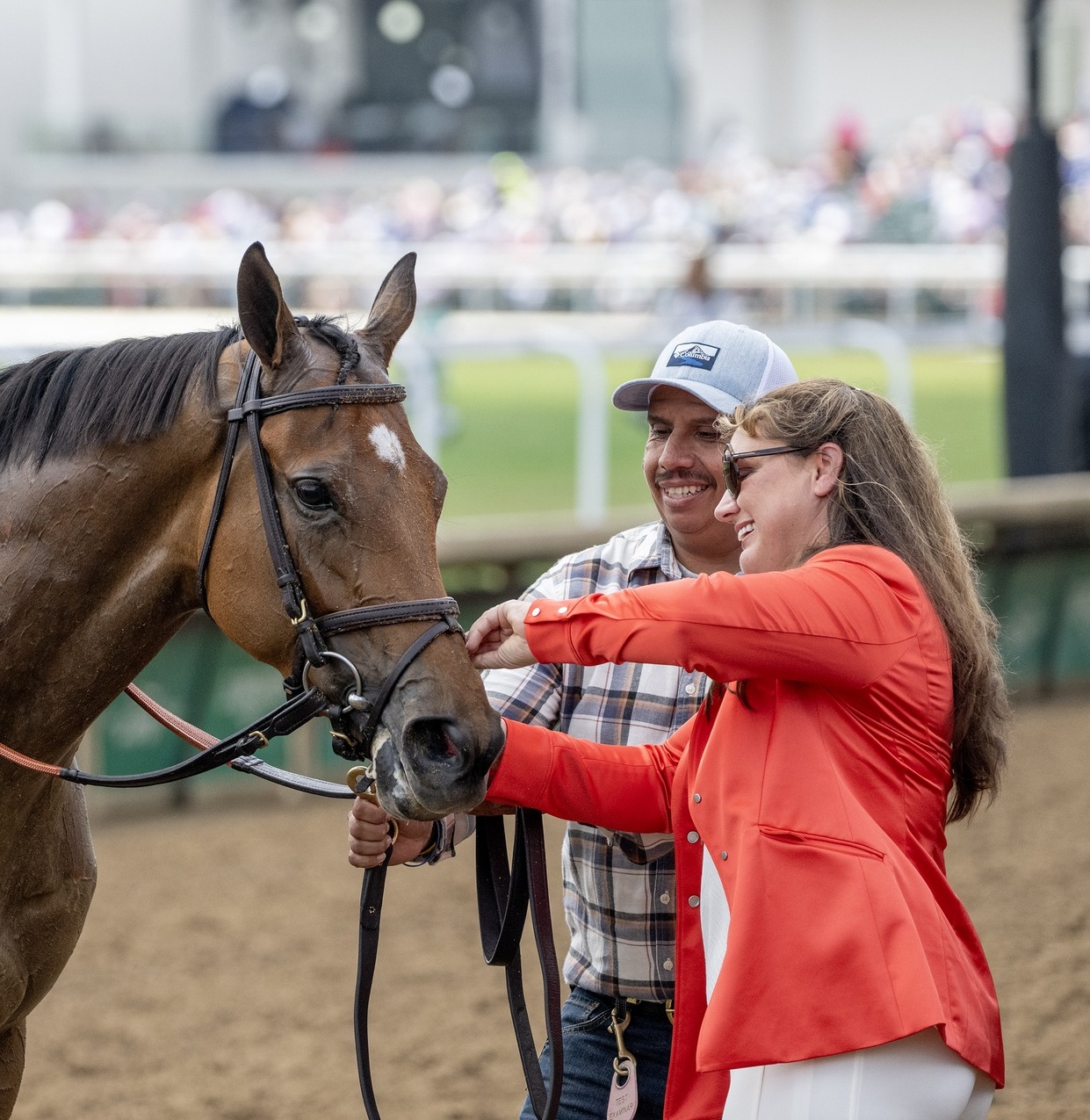
Cherie DeVaux didn't just walk into the winner's circle at Churchill Downs. She kicked the door down. History books now list her as the first female trainer to win the Kentucky Derby, but that single sentence doesn't capture the decade of grueling morning sets, the high-stakes gambles on bloodlines, or the sheer grit it took to get there. Horse racing is a sport built on tradition. Sometimes that tradition feels like a concrete wall. DeVaux proved that even the thickest walls eventually crumble if you hit them hard enough with talent and results.
The path from top assistant to history maker
Success in the Triple Crown isn't about luck. It's about preparation. Before she was a household name, Cherie DeVaux was the secret weapon in Chad Brown’s powerhouse stable. She spent years as his top assistant. She worked with champions like Lady Eli. She learned the nuances of turf versus dirt and how to peak a horse for a specific Saturday in May. Most people would’ve stayed in that comfortable spot. Being a top assistant for a Hall of Fame trainer is a good life. But DeVaux wanted her name on the program.
She went solo in 2018. Starting your own stable is a massive risk. You need owners who trust you with millions of dollars in equine talent. You need a staff that shares your vision. Most of all, you need a horse that can run like the wind. She didn't find that horse overnight. It took years of steady growth and consistent winning at tracks like Keeneland and Saratoga to prove she wasn't just a great assistant, but a world-class head coach.
Why her Kentucky Derby win changed the game
For over a century, the Kentucky Derby was a boys' club. Plenty of talented women trained horses, but they rarely got the "big horse" from the big owners. Owners often defaulted to the established names—the Bafferts, the Pletchers, the Lukas's. DeVaux changed the math. Her win wasn't a fluke or a lucky trip in a muddy track. It was a tactical masterclass.
Her training style is often described as patient. She doesn't push two-year-olds just to see them run early. She waits. She lets the bone structure catch up to the speed. This approach pays off in the final furlong of a 1.25-mile race when other horses are hitting the wall. When her colt surged past the leaders at the sixteenth pole, it wasn't just a win for her stable. It was a signal to every owner in the industry that the gender of the trainer is irrelevant compared to the quality of the preparation.
Behind the scenes of a championship stable
If you visit a DeVaux barn, you’ll notice it’s quiet. That’s intentional. Horses are flighty animals. They pick up on stress. DeVaux runs a tight ship where the focus stays on the individual needs of the animal. Some horses need more time on the track; others need more time in the round pen or under a therapeutic blanket.
She's also known for her data-driven approach. While old-school trainers rely purely on "eye," DeVaux incorporates modern biometrics and heart rate monitoring. She blends the "feel" of a horseman with the precision of a scientist. That’s the sweet spot in modern racing. You can't ignore the data, but you can't let it replace the soul of the sport either.
The importance of the owner trainer relationship
You don't get to the Derby without the right partners. DeVaux has built a roster of owners who understand her long-term vision. They don't demand a race every three weeks. They understand that a horse is an elite athlete, not a machine. This mutual respect allows her to skip "easy" races to save a horse for the ones that actually matter.
What it takes to win in Louisville
Churchill Downs is a quirky track. The crowd noise alone can wash out a nervous horse before they even reach the gate. DeVaux’s Derby winner was famously calm in the paddock. That’s a testament to the "schooling" she puts them through weeks in advance.
- Physical Conditioning: High-intensity intervals that mimic the early speed of the Derby.
- Mental Preparation: Exposing the horse to the sights and sounds of a massive crowd.
- Nutritional Precision: Tailoring feed programs to ensure peak energy without excess weight.
The Derby is a 20-horse cavalry charge. It’s chaotic. It’s dangerous. You need a horse that can handle dirt being kicked in its face and a jockey who doesn't panic when the holes close up. DeVaux’s ability to communicate the race plan to her rider is a huge part of her success. She’s direct. She’s clear. She doesn't overcomplicate things.
Breaking the 150 year drought
Before DeVaux, women had come close. Shelley Riley finished second in 1992 with Casual Lies. Others had runners that finished in the middle of the pack. But the winner's circle remained elusive.
Winning the Derby is hard for anyone. Most trainers go their entire careers without even getting a horse into the starting gate. To do it as a woman in a male-dominated field adds a layer of scrutiny that most people can't imagine. Every loss is analyzed. Every mistake is magnified. DeVaux handled that pressure by ignoring the noise and focusing on the four-legged athletes in her care.
Practical steps for the next generation of trainers
If you're looking at Cherie DeVaux and wondering how to follow in her hoofprints, the path is clear but difficult. Don't expect a shortcut.
Start by working for the best. Find a trainer whose style you admire and become indispensable to them. Learn the business side, not just the horse side. You need to know how to read a balance sheet as well as you read a racing form.
Most importantly, build your reputation on integrity. In a sport that has faced its share of scandals, DeVaux stands out as a clean, honest operator. Owners want to win, but they also want to know their horses are being treated with respect. That’s the ultimate lesson of the DeVaux era. Excellence doesn't have a gender. It just has a work ethic.
Keep your eyes on the upcoming stakes races at Belmont and Saratoga. DeVaux isn't done. One Derby trophy is great, but she’s building a legacy that will likely include many more. Watch how she handles her younger prospects this summer. That’s where the next champion is currently being made.



