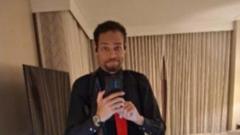
New images showing a suspect taking selfies before the Washington press dinner shooting tell a story of calculated indifference. You’d expect someone about to pull a trigger in a crowded room to look nervous or agitated. Instead, these photos show a man who looks like he’s just enjoying a night out. He’s posing. He’s checking his angles. He's blending in with the elite crowd while carrying a hidden intent that would soon shatter the evening.
This isn’t just a break in a high-profile case. It’s a terrifying look at how modern violence often mirrors the performative nature of our digital lives. Law enforcement released these images to piece together the final moments before the chaos started. If you weren't looking for a threat, you'd never see it in these frames. That’s the most disturbing part.
Why those pre-shooting selfies change the investigation
The discovery of these photos on the suspect’s devices and social media backups gives investigators something more valuable than just a face. It gives them a timeline. Security experts often look for "pre-attack indicators," which usually involve pacing, sweating, or constant checking of exits. This suspect did the opposite. He used the "grey man" strategy, essentially hiding in plain sight by acting exactly like everyone else in the room.
Everyone at the Washington press dinner was taking selfies. It’s a vanity-heavy event. By participating in that social ritual, the suspect built a temporary shield of normalcy. Investigators now believe this wasn't a sudden snap or a moment of passion. Taking photos of yourself at the scene of a crime before you commit it suggests a level of narcissism and premeditation that suggests he wanted his face to be remembered. It’s a digital breadcrumb trail he left on purpose.
Breaking down the security failures that night
The Washington press dinner is supposed to be one of the most secure rooms in the country. You’ve got high-ranking officials, media moguls, and sometimes the President. People are asking how a person with a weapon and a smartphone could spend enough time taking selfies to fill a gallery without being flagged.
- The check-in bottleneck. High-volume events often struggle with the sheer number of people entering at once. If the metal detectors are tuned too low or the bag checks are rushed, things slip through.
- Behavioral profiling gaps. Security teams are trained to look for people who look "out of place." If the suspect is dressed in a tuxedo and smiling for his front-facing camera, he doesn't trigger the typical red flags.
- The selfie distraction. We’ve reached a point where holding a phone in front of your face is a universal pass to be anywhere. It’s a "blind spot" in modern security.
Security professionals call this "social engineering." He didn't hack a door; he hacked the social expectations of the room. He looked like he belonged, so everyone assumed he did.
What the digital trail tells us about the suspect
Law enforcement hasn't just looked at the photos. They’re looking at the metadata. Every photo has a digital "fingerprint" called EXIF data. This tells police the exact second the photo was taken and, often, the GPS coordinates of the device. By mapping the time of these selfies against the dinner’s schedule, police have created a second-by-second map of his movements.
We see him in the lobby at 6:45 PM. He’s near the bar at 7:15 PM. By 7:40 PM, he’s in the main ballroom. Each photo shows a different background, proving he was scouting the entire layout while pretending to be another guest. He wasn't just taking selfies; he was performing reconnaissance under the guise of being a narcissist.
The psychological profile emerging is one of "mission-oriented" violence. This isn't a guy who got into a fight in the parking lot. This is someone who wanted to be part of the event he intended to destroy.
The role of facial recognition in the arrest
While the selfies helped the public identify him, it was advanced facial recognition that sealed the deal. Modern law enforcement uses systems like Clearview AI or specialized FBI databases that can cross-reference a grainy selfie against every public image on the internet. Within hours of the photos being flagged, investigators had a name, a home address, and a social media history.
This is where the suspect’s vanity backfired. By trying to document his "big moment," he provided the highest-quality reference images the police could ask for. He handed them the evidence on a silver platter. It’s a weirdly ironic twist—his desire for digital immortality is exactly what’s going to put him in a cell for the rest of his life.
How venues are changing after the Washington shooting
You can bet that future high-profile dinners won't look the same. The "selfie suspect" has forced a rethink of how VIP security handles guests. Expect to see more "no-phone zones" or at least more aggressive behavioral monitoring of people who seem too focused on their devices.
- AI-driven behavior analysis. New camera systems are being tested that flag "abnormal" movement patterns, even if the person looks "normal" to the human eye.
- Enhanced perimeter sweeps. We're going to see more dogs and more electronic sniffing tools at the very first point of contact, not just at the ballroom doors.
- Strict credentialing. The days of "plus-ones" getting easy access to these events are likely over.
The reality is that we live in a world where the line between a guest and a threat is thinner than ever. These new images are a wake-up call. They show us that the person looking for the best lighting might actually be looking for the best line of sight.
If you’re attending a high-security event soon, don't be surprised if the security guards are looking at your phone as much as they're looking at your hands. They’re looking for the next person who tries to hide a dark intent behind a bright filter. The best thing you can do is stay aware of your surroundings and report anyone whose behavior feels "performative" rather than genuine.