Most Western analysts completely missed the real story behind Beijing's latest leadership reshuffle. Everyone spent the past few years obsessing over Xi Jinping's anti-corruption purges, assuming the Chinese Communist Party (CCP) was permanently sidelining uniformed officers from political decision-making. That assumption aged poorly.
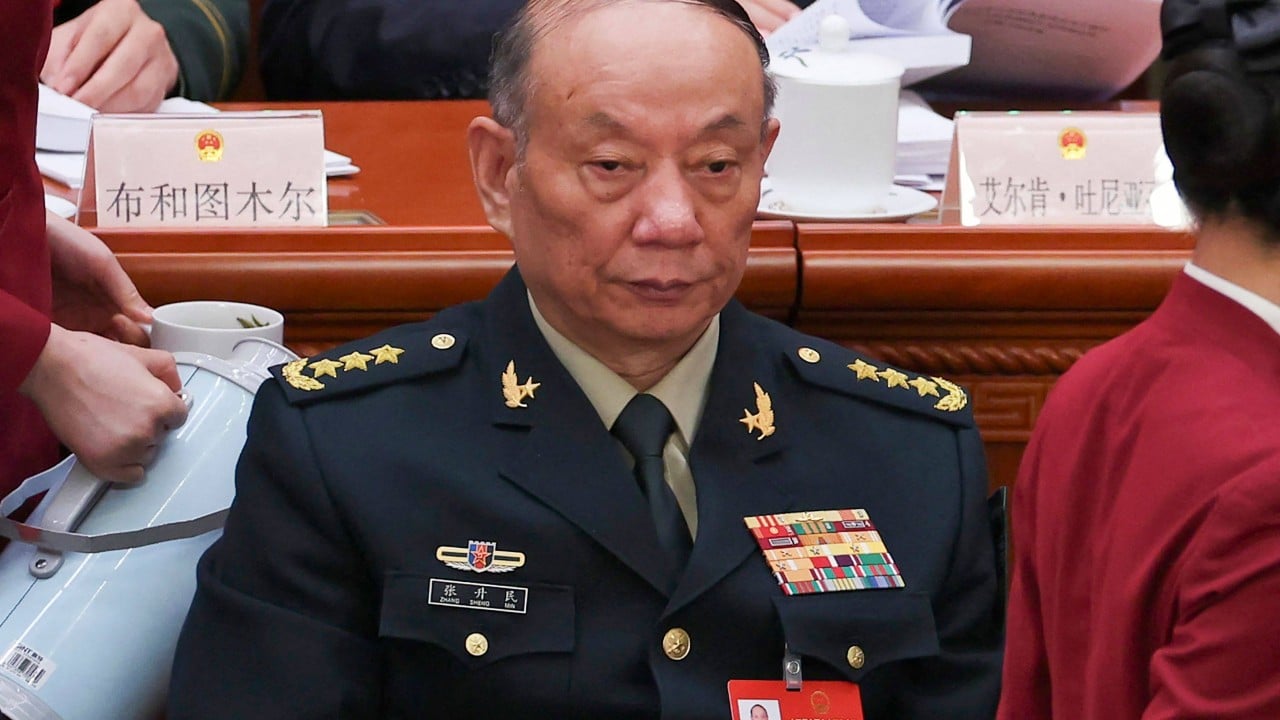
China is poised to restore a stronger, more visible military presence to its top leadership at the upcoming party congress, reversing a notable institutional shift from the 2022 reshuffle. When the 20th Party Congress wrapped up in October 2022, the seven-member Politburo Standing Committee—the apex of power in Beijing—contained zero active military officers, and the broader 24-member Politburo featured only two People's Liberation Army (PLA) generals, Zhang Youxia and He Weidong. Now, mounting geopolitical pressure, leadership attrition from sweeping defense purges, and Beijing's accelerating modernization timelines are forcing the Party to pull the brass back into the inner circle.
If you've watched Chinese elite politics for any length of time, you know this isn't just bureaucratic musical chairs. Mao Zedong famously wrote that political power grows out of the barrel of a gun, and in Beijing, who sits in the room when decisions get made tells you everything about what the Party fears most.
What Actually Happened to Military Representation in 2022
To understand why restoring military presence to top leadership matters right now, you have to look at how unusual the 2022 lineup really was. Historically, the CCP has maintained a careful equilibrium between civilian technocrats and senior PLA commanders at the highest tiers of governance.
Back during the 1990s, General Liu Huaqing sat directly on the Politburo Standing Committee, giving the military a formal vote at the very top table. Even after Liu retired in 1997, the standard convention settled into having two uniform-wearing Central Military Commission (CMC) vice chairmen occupy seats on the full Politburo. That arrangement gave the PLA direct input on foreign policy, crisis management, and budget allocation without letting generals dictate civilian economic policy.
Then came the 20th Party Congress in 2022. Xi Jinping stacked the Standing Committee with loyalists from his provincial days in Fujian and Zhejiang, leaving the PLA represented strictly through the two CMC vice chairmen on the wider Politburo. On paper, it looked like total civilian consolidation.
It didn't last.
Within months of that congress, a massive corruption scandal tore through the PLA Rocket Force and the Equipment Development Department. Defense Minister Li Shangfu vanished from public view before being formally ousted and expelled from the Party. Former Defense Minister Wei Fenghe met the exact same fate. Rocket Force commanders were replaced wholesale by officers brought in from the PLA Navy and Air Force.
Suddenly, the Party leadership faced an awkward reality. You can't run a massive military modernization campaign—or manage high-stakes friction in the Taiwan Strait and the South China Sea—when your top political bodies lack trusted, battle-ready military voices who actually understand operational logistics.
Why Beijing Needs Generals Back in the Room
People often assume Xi Jinping wants yes-men in uniform. That's only half true. Yes, he demands absolute political loyalty, which is why the CMC Chairman Responsibility System remains the bedrock of Party control over the gun. Loyalty alone doesn't fix procurement bottlenecks or coordinate joint amphibious operations, though.
Three concrete pressures are driving the push to elevate military figures back into top leadership slots at the party congress:
- Operational Complexity Across Theaters: Modern warfare isn't managed by regional infantry commanders anymore. The PLA's reorganization into five Theater Commands requires tight integration between cyber, space, naval, and missile forces. Civilian party secretaries simply don't have the technical background to evaluate whether the military can actually execute what diplomats threaten.
- Crisis Management Bandwidth: Look at the friction points surrounding China today. You have daily naval standoffs near Second Thomas Shoal in the South China Sea, continuous air and maritime patrols around Taiwan, and persistent border tension with India along the Line of Actual Control. When an incident happens at 3:00 AM, civilian leaders need senior officers already sitting inside the decision loop, not waiting outside the door for a briefing.
- Rebuilding Trust After the Rocket Force Purges: Firing dozens of senior generals sends a strong disciplinary message, yet it also paralyzes lower-level officers who become terrified of making any decision that might look suspicious later. Elevating credible, technically competent commanders to top Party organs signals to the rank and file that the high command is stabilized and back in business.
Honestly, it's a classic authoritarian dilemma. Purge too hard and your military loses initiative; empower generals too much and you risk creating competing power centers. Restoring military representation to top leadership is Beijing's attempt to strike a new balance before its 2027 centenary modernization deadline arrives.
The Institutional Mechanics of the Party Congress
If you don't follow the granular mechanics of CCP congresses, the hierarchy can look like alphabet soup. Getting the distinctions right is critical because promotion to one body means something entirely different than promotion to another.
At the very bottom of the elite pyramid sits the Central Committee, roughly 200 full members and 170 alternates. The PLA routinely holds around 20 percent of these seats, making it the single largest institutional bloc inside the Party. That baseline hasn't gone anywhere.
The real battleground is the Politburo (usually 24 or 25 members) and the Politburo Standing Committee (currently 7 members).
When analysts talk about restoring military presence to top leadership, they're looking at two specific possibilities. The first is expanding military representation on the full Politburo beyond the traditional two CMC vice chairmen—potentially bringing in the Defense Minister or a senior operational theater commander to give the armed forces three or four voices at the Politburo table. The second, far more dramatic move would be placing a uniformed CMC vice chairman back onto the Politburo Standing Committee for the first time since Liu Huaqing stepped down in 1997.
Don't bet against an expanded Politburo presence, even if a Standing Committee seat remains a higher hurdle. In 2022, the Politburo actually shrank from 25 to 24 members—the first time in decades it held an even number, largely because a planned seat wasn't filled. Restoring that missing slot with a senior military figure requires zero structural changes to the Party charter.
What Most Commentators Get Wrong About Civil-Military Relations in China
Whenever news breaks about Chinese generals gaining political clout, cable news pundits immediately start speculating about power struggles or generals pushing Xi toward war. That's a fundamental misreading of how the PLA operates.
The PLA isn't a national army in the Western sense. It's the armed wing of the Chinese Communist Party. Every officer rises through a dual-command structure where a political commissar shares authority with the operational commander at every single level, from a company up to a Theater Command.
When I look at the profiles of rising PLA officers, the ones getting promoted aren't rogue nationalists freelancing on foreign policy. They're career institutionalists who spent decades proving their ideological reliability alongside their technical competence. Putting more of them into top Party leadership doesn't mean the military is taking over the Party; it means the Party is hardwiring military preparedness directly into its central nervous system.
There's also a widespread misconception that stronger military representation automatically makes Beijing more reckless. In practice, experienced operational commanders are often more cautious about kinetic conflict than nationalist diplomats in the Ministry of Foreign Affairs. Generals know where the logistical weak spots are. They know how hard an amphibious crossing actually is, and they know what happens to modern naval assets when anti-ship missiles start flying. Having seasoned commanders inside the Politburo can actually inject a dose of cold military realism into rooms otherwise dominated by ideological theorists.
Who Stands to Gain Inside the PLA High Command
Watching personnel shifts ahead of a party congress requires tracking career trajectories rather than official speeches. Beijing rarely announces strategic pivots in plain English, so the personnel roster is the policy statement.
Several distinct factions and service branches are positioned to benefit from an expanded military presence at the top:
- Joint Operations and Theater Commanders: Officers who have actually run the Eastern Theater Command (which oversees Taiwan) or the Southern Theater Command (which manages the South China Sea) hold massive leverage right now. Unlike older generations of generals who spent their entire lives in ground force units, these commanders understand integrated joint logistics.
- Naval and Aerospace Specialists: Because the Rocket Force took the brunt of the corruption investigations, officers with clean records from the PLA Navy and the newly restructured Information Support Force have stepped into vacuum roles. Promoting a naval or aerospace specialist to the Politburo signals that Beijing's strategic priority remains maritime power projection and high-tech deterrence.
- Political Work and Discipline Inspectors: Given the obsession with rooting out graft in defense procurement, senior military discipline inspectors who helped clean up the equipment departments carry enormous trust with Xi Jinping. Their elevation would guarantee that political vetting stays front and center during weapons development.
Notice who isn't on that list: traditional ground-force bureaucrats from interior military regions. Their era of dominating the PLA's political representation is finished.
Regional Ripple Effects Across the Indo-Pacific
You don't need to be a Sinologist to see how this plays out across Asia. Neighbors in Tokyo, Taipei, Manila, and Canberra watch the composition of China's Politburo closely because personnel shifts dictate operational tempo.
If Beijing elevates additional generals to top leadership, defense ministries across the Indo-Pacific will read it as confirmation that military readiness is eclipsing domestic economic recovery as the Party's primary benchmark for success. Expect immediate downstream effects:
- Defense Budgeting: A stronger military bloc inside the Politburo makes it far harder for civilian economic planners to slow down the growth of China's official defense budget, even when local governments are drowning in debt and youth unemployment remains stubborn.
- Gray-Zone Assertiveness: More operational commanders in top leadership usually translates into tighter coordination between the PLA Navy, the China Coast Guard, and maritime militias. That means smoother, more persistent pressure campaigns in disputed waters without necessarily crossing the threshold into open warfare.
- Diplomatic Messaging: When military leaders sit closer to the center of power, military-to-military crisis hotlines with the United States become even more vital—and paradoxically harder to establish, because senior PLA officers treat direct engagement with Washington as a political bargaining chip rather than a routine safety valve.
The U.S. Department of Defense already tracks these shifts closely in its annual China Military Power Report, noting how the CCP increasingly fuses civilian economic planning with military modernization under its Military-Civil Fusion strategy. Putting more uniforms back into the top political tier simply formalizes what's already happening across China's industrial base.
How to Track These Shifts Before the Official Announcement
If you want to know who's moving into top leadership before the state media communiqués drop, ignore the rumor mills on social media and watch three specific indicators in official Xinhua dispatches and PLA Daily editorials:
First, track study session attendance. Whenever the Politburo holds one of its collective study sessions on national defense or technological self-reliance, state television pans across the room. Watch which non-Politburo generals are seated at the main table alongside the core leadership—that seating chart is almost always a preview of upcoming promotions.
Second, look at inspection tour entourages. When Xi Jinping visits a regional Theater Command or a defense manufacturing hub, the specific deputy chiefs of the CMC departments walking two steps behind him are the ones currently holding his confidence. If an officer disappears from those inspection photos for more than sixty days, they're usually under investigation.
Third, watch language shifts in PLA Daily commentaries. Pay attention to whether editorials emphasize "strict governance of the military" (which signals ongoing purges and consolidation) or "enhancing capacity to win regional wars" (which signals that the disciplinary phase is wrapping up and operational commanders are taking the wheel).
Beijing's decision to restore a heavier military footprint to its top leadership isn't a sign of sudden instability, nor is it a guarantee of imminent conflict. It's a pragmatic correction by a regime that realized you cannot sideline your generals while simultaneously asking them to reshape the balance of power in Asia. Watch the seating charts at the next major Party plenum—the uniforms are moving closer to the center of the table.