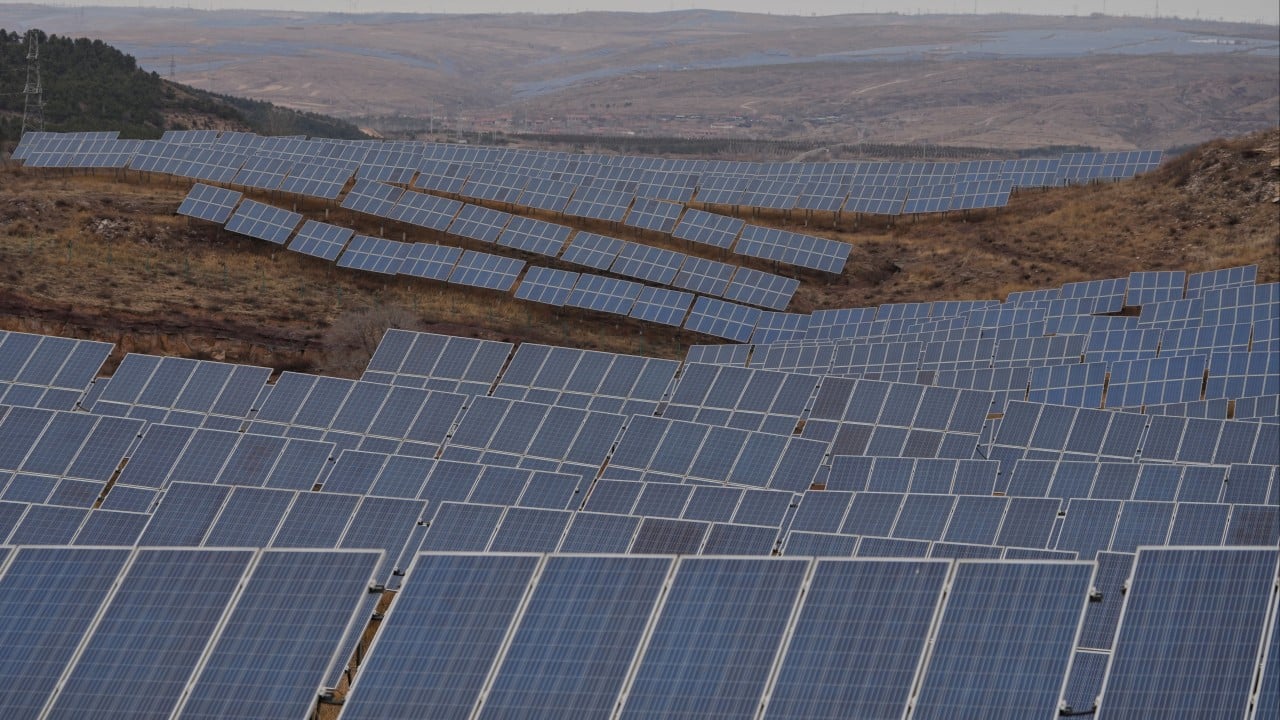
The global tech sector has a power problem, and China is attempting to solve it with an orbital panopticon. As artificial intelligence clusters and massive data centers strain electrical grids worldwide, Beijing has deployed a specialized network of AI-driven surveillance satellites to map, monitor, and manage every single solar panel and wind turbine across the country. This is not a futuristic experiment. It is a desperate, real-time intervention to prevent a massive infrastructure collapse.
The problem is not a lack of green energy. China has built more renewable infrastructure than any other nation. The crisis lies in transmission. Most of the country's power-hungry data centers sit in coastal economic hubs like Shenzhen, Shanghai, and Beijing. Meanwhile, the massive wind farms and solar arrays are buried deep in the remote western deserts of Xinjiang and Inner Mongolia. Connecting the two requires juggling unpredictable weather patterns with an inflexible, state-controlled power grid. For a different view, read: this related article.
To bridge this massive geographical chasm, Beijing has turned to automated satellite reconnaissance. By feeding high-resolution orbital imagery into machine-learning models, state planners can now track the precise degradation of solar cells, predict turbine output based on cloud movement, and allocate coal-fired backup power with unprecedented speed.
It is a high-stakes gamble to keep the lights on in the factories powering the global tech supply chain. Related insight on this matter has been shared by MIT Technology Review.
The Generation Choke Point
Building clean energy infrastructure is relatively easy. Integrating it into an industrial power grid is notoriously difficult.
Solar and wind power are inherently intermittent. Clouds block the sun; winds die down without warning. When a sudden storm sweeps across the Gobi Desert, gigawatts of expected electricity vanish from the network in minutes. In the past, grid operators relied on slow, manual reporting from regional substations to balance the load. By the time a drop in voltage was reported, the damage to precision manufacturing plants or data storage facilities down the line could already be done.
+-------------------------------------------------------------+
|               THE CHINESE POWER DISCONNECT                  |
+-------------------------------------------------------------+
|  WESTERN PROVINCES                                          |
|  (Xinjiang, Inner Mongolia, Tibet)                          |
|  - Massive Solar Arrays & Wind Farms                        |
|  - Low Local Power Demand                                   |
|                                                             |
|           |============= ultra-high voltage =============> |
|           |             transmission lines                 |
|                                                             |
|  EASTERN PROVINCES                                          |
|  (Beijing, Shanghai, Guangdong)                             |
|  - High-Density Data Center Clusters                        |
|  - Exploding Industrial AI Power Demand                     |
+-------------------------------------------------------------+
The AI-driven satellite system changes this dynamic by shifting from reactive management to predictive modeling. Computer vision algorithms scan daily satellite feeds, automatically identifying new solar installations that may not even be registered on official provincial logs yet. The system cross-references these visual data points with atmospheric tracking models to calculate exactly how much power will hit the grid four to six hours in advance.
This hyper-accurate forecasting allows coal plants—which still form the bedrock of China's energy security—to ramp up or down in lockstep with renewable fluctuations. If the satellites see a dust storm approaching a major solar valley in Qinghai, western coal plants receive an automated command to burn more fuel before the solar drop occurs.
The Secret Surge of Data Center Demand
The driving force behind this sudden urgency is the domestic explosion of generative computing. While global attention focuses on American tech giants, Chinese firms are quietly spinning up massive server clusters to train proprietary language models and run industrial automation networks. These facilities are incredibly power-hungry. A single modern data center can consume as much electricity as a medium-sized city.
Local governments face a brutal dilemma. They must approve new data infrastructure to meet national economic targets, but their local power grids are already running at maximum capacity.
"The true metric of technological dominance is no longer just chip design; it is the raw wattage available to run those chips."
This reality has forced a massive redistribution of computing assets. Under a state initiative known as "Eastern Data, Western Computing," tech firms are being pressured to build their newest server farms directly adjacent to the western energy sources. Yet, running a data center in a remote desert introduces severe operational challenges, including a lack of skilled tech labor and increased latency for users back east.
For the facilities that must remain on the coast, the grid requires absolute stability. The orbital tracking system acts as an artificial nervous system, ensuring that the ultra-high-voltage (UHV) transmission lines running across the continent are never overloaded or underutilized.
The Failure Modes of Orbital Automation
Relying entirely on algorithmically managed infrastructure introduces significant vulnerabilities that state media rarely acknowledges.
- Algorithmic Blind Spots: Machine learning models are trained on historical weather data. As climate volatility increases, unprecedented weather events confuse the predictive software, leading to massive misallocations of backup power.
- Data Friction: Provincial governments frequently falsify energy production numbers to meet local economic quotas. When the physical reality captured by satellites conflicts with the paperwork filed by local bureaucrats, the automated system can freeze, requiring human intervention that slows down response times.
- Physical Vulnerability: Centralizing grid management into an orbital data loop creates a glaring target. If the satellite downlinks are jammed or compromised, grid operators lose their predictive visibility, leaving them blind to sudden generation drops.
Furthermore, this high-tech management system does not solve the fundamental physics problem of electricity transmission. Even with advanced UHV lines, a significant percentage of power is lost as heat during the thousands-of-miles journey from west to east. The AI can optimize the flow, but it cannot eliminate the inherent inefficiency of the geography.
The Shadow Coal Economy
The ultimate irony of China's high-tech green energy surveillance is that its primary purpose is to optimize the burning of fossil fuels.
Clean energy advocates often point to China's massive renewable capacity as a sign of an impending green transition. The ground reality is far more complicated. Because solar and wind are unreliable, every new gigawatt of renewable energy added to the grid requires a corresponding investment in dispatchable backup power. In China, that means coal.
The satellite network allows the state to run its coal plants with ruthless efficiency, keeping them on standby until the exact moment the algorithms detect a drop in renewable output. Instead of replacing fossil fuels, the automated green energy network has effectively turned coal into an insurance policy for the tech sector.
[Satellite Tracking Feed] ---> [AI Predictive Model] ---> [Automated Grid Routing]
                                                                  |
       +----------------------------------------------------------+
       |                                                          |
       v                                                          v
[Drop in Solar/Wind Output]                              [Surge in Tech Demand]
       |                                                          |
       +----------------------------+-----------------------------+
                                    |
                                    v
                       [Activate Coal Backup Power]
This symbiotic relationship between clean energy and fossil fuels means that as data center demand grows, coal consumption will likely remain high for the foreseeable future. The algorithms are not designed to eliminate carbon; they are designed to guarantee uptime for the state's digital infrastructure.
Implications for Global Infrastructure
What is happening inside China is a blueprint for the challenges facing the rest of the industrialized world. The United States and Europe are dealing with their own aging grids, surging AI power demands, and intermittent renewable sources. The primary difference lies in execution.
While Western nations rely on market mechanisms, decentralized utility companies, and localized smart grids to balance power loads, Beijing has opted for a top-down, authoritarian approach driven by machine vision. It is an attempt to solve an engineering problem through pure surveillance.
The success or failure of this initiative will determine whether China can maintain its manufacturing dominance while simultaneously scaling its domestic AI capabilities. If the satellite-managed grid holds, it will provide a massive, state-subsidized advantage to Chinese tech firms. If it fails, the resulting blackouts could paralyze critical sectors of the global economy.
The orbital panopticon is operational, the data centers are humming, and the coal plants are waiting for the next cloud to pass over the desert. Ensure your supply chains are prepared for the volatility this centralized experiment will inevitably produce.