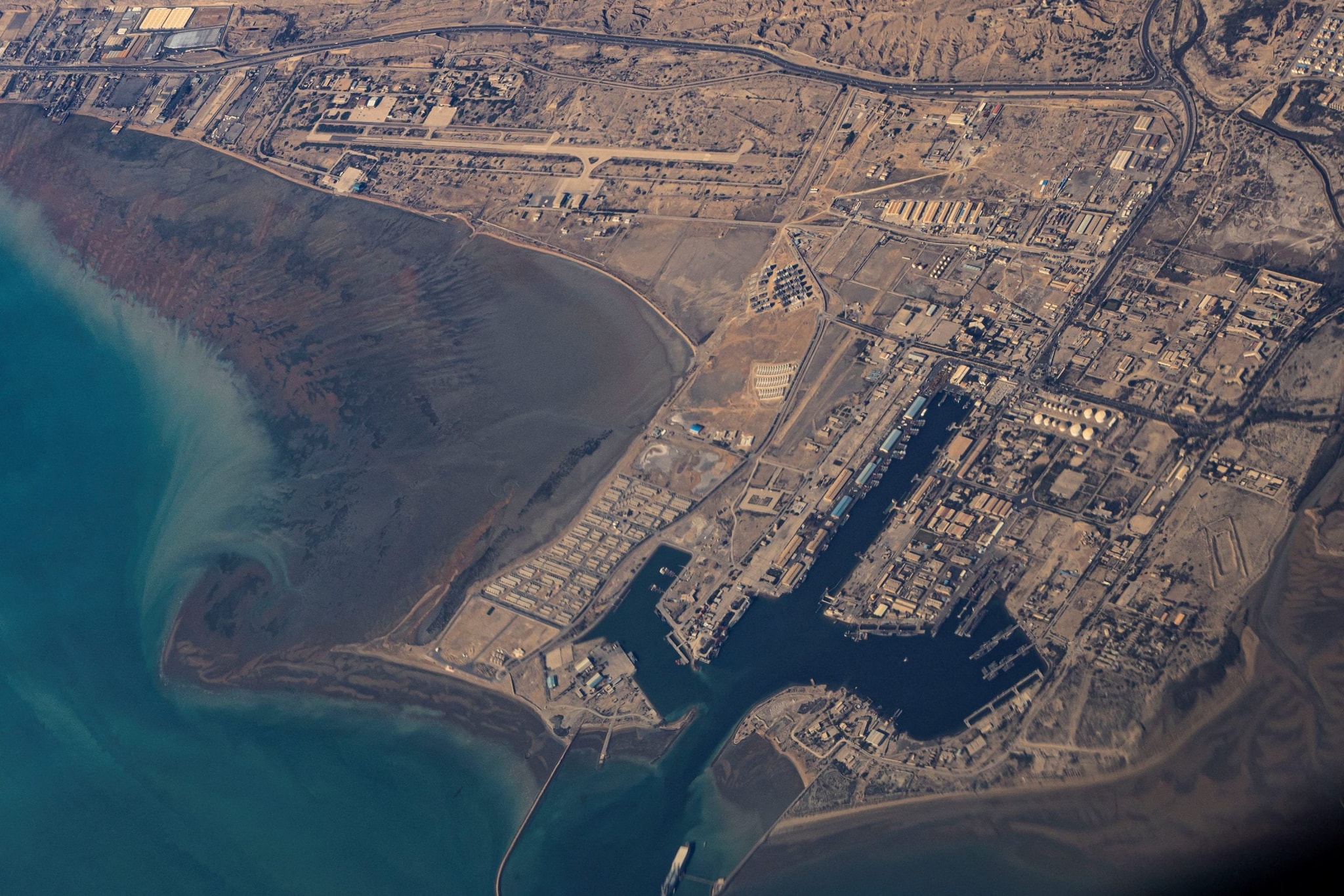
Twenty-one miles. That is the distance across the narrowest stretch of the Strait of Hormuz. To a marathon runner, it is a grueling hour or two of pavement. To a sailor, it is a blink. But to the global economy, those twenty-one miles are the carotid artery of civilization. If that artery is squeezed, the world doesn't just slow down. It gasps.
Imagine a man named Arjun in Mumbai. He is not a diplomat. He is not a hedge fund manager. He is a delivery driver who relies on a small petrol-powered scooter to feed his family. He has no idea that a few hundred miles away, a fleet of steel giants is navigating a corridor where one wrong move—or one intentional act of aggression—could triple the cost of his fuel by sunset. Arjun is the face of the "impact" that economists discuss in sanitized boardrooms. He is the human collateral of a geography he never studied.
The Strait of Hormuz is the world's most important oil transit chokepoint. It connects the Persian Gulf with the Gulf of Oman and the Arabian Sea. Roughly one-fifth of the world’s total oil consumption passes through this needle’s eye every single day. We are talking about 20 million barrels of crude, condensate, and refined products.
The Anatomy of a Squeeze
When the flow of energy stops, the reaction is not a gradual decline. It is a cardiac arrest. The sheer volume of energy passing through this waterway makes it irreplaceable. There are pipelines, yes. Saudi Arabia and the United Arab Emirates have invested billions in overland routes to bypass the Strait. But these pipelines, even at maximum capacity, can only handle a fraction of what the tankers carry.
The math is brutal.
If the Strait were to be blockaded, the global supply-demand balance would shift so violently that the price of Brent Crude would likely vault into the triple digits within forty-eight hours. This isn't just about the price at the pump. It’s about the plastic in your medical supplies. It’s about the fertilizer for the grain that feeds the Midwest. It’s about the electricity powering the server farms that hold your digital life.
Consider the countries standing directly in the path of this potential storm.
India and China are the most vulnerable. They are the engines of the modern world, and those engines run on Middle Eastern oil. China imports millions of barrels a day through the Strait. Their strategic petroleum reserves are deep, but they are not infinite. A prolonged closure would force Beijing into a choice between domestic stability and economic expansion.
India’s situation is even more precarious. With a massive population and a developing infrastructure, India’s sensitivity to oil price shocks is visceral. When the cost of a barrel rises, the Indian Rupee often falters. Inflation climbs. The price of onions in a local market in Delhi is tied, by an invisible and unbreakable thread, to the safety of a tanker in the Strait.
The Invisible Fleet
Look at the tankers themselves. These are not just ships; they are floating cities of steel. A Very Large Crude Carrier (VLCC) can be over 1,000 feet long. From the bridge, the horizon looks infinite, but in the Strait, the navigable lanes are only two miles wide in each direction. They are separated by a two-mile buffer zone.
The sailors on these ships live in a state of quiet, high-stakes tension. They know that they are targets in a geopolitical chess match they didn't sign up for. In 2019, when "limpet mines" were attached to the hulls of tankers in the region, the insurance industry reacted instantly. The cost of "War Risk" insurance skyrocketed.
This is the hidden tax of instability. Even if a single drop of oil isn't spilled, the mere threat of a blockade increases the cost of everything. Companies pass those insurance premiums down to the consumer. You pay for the tension in the Strait every time you buy a plane ticket or a gallon of milk.
The Asian Dependency
South Korea and Japan sit at the end of this long, watery pipeline. For Japan, a nation with almost zero domestic energy resources, the Strait is a lifeline in the most literal sense. After the Fukushima disaster, Japan’s reliance on imported Liquefied Natural Gas (LNG) grew exponentially. A significant portion of that LNG comes from Qatar, passing right through the Strait of Hormuz.
For a citizen in Tokyo, a blockade doesn't just mean expensive gas. It could mean rolling blackouts in the dead of winter. It means the intricate, high-speed machinery of Japanese industry grinding to a halt. The vulnerability is absolute. This is why these nations spend so much diplomatic capital on Middle Eastern stability. They aren't just being neighborly; they are protecting their pulse.
The Myth of American Independence
There is a common misconception that because the United States has increased its domestic shale production, it is immune to what happens in the Strait. This is a dangerous fallacy.
Oil is a fungible global commodity. Even if the U.S. didn't import a single drop from the Persian Gulf, the global price is set by the total supply. If 20% of the world's oil vanishes from the market, the price in Texas rises just as fast as the price in London or Singapore.
The U.S. economy is a massive, complex organism. It thrives on predictability. A blockade introduces the ultimate variable: chaos. The disruption of global supply chains would hit American manufacturing, which relies on intermediate goods produced in energy-dependent Asian factories. The ripples become waves, and the waves become a tsunami.
The Psychological Toll
Statistics are cold. They don't capture the fear of a small business owner in Manila who realizes his transport costs are now higher than his profit margins. They don't capture the anxiety of a mother in a developing nation who sees the price of kerosene—her only means of cooking—double overnight.
We live in a world that is "just-in-time." Our grocery stores hold three days of food. Our factories hold hours of inventory. We have sacrificed resilience for efficiency. The Strait of Hormuz is the place where that trade-off is most exposed.
A blockade would be a moment of forced honesty for the human race. It would reveal exactly how dependent we are on a geography most of us couldn't find on a map. It would show us that our "advanced" civilization still rests on the ability of large ships to pass through a tiny gap in the earth's crust.
The tension in the region ebbs and flows like the tide. There are months of calm where the world forgets the Strait exists. Then, a headline breaks. A drone is downed. A tanker is seized. And suddenly, the world holds its breath.
We are all Arjun on his scooter. We are all moving through our days, unaware of how thin the ice is beneath us. The Strait of Hormuz is not just a geographic coordinate. It is a reminder of our collective fragility. It is the place where politics, chemistry, and human survival collide in twenty-one miles of blue water.
Somewhere out there, right now, a captain is gripping a railing, staring out at those narrow lanes. He carries the heat and light of a million homes in his cargo hold. He moves slowly, carefully, through the silence. He knows what the rest of the world often forgets: everything we have built depends on the freedom of the sea.
One day, that silence may break. And on that day, the world will realize that those twenty-one miles were the only thing keeping the dark at bay.
Would you like me to analyze the specific economic bypass strategies, such as the East-West Pipeline or the Abu Dhabi Crude Oil Pipeline, to see how much of the global risk they actually mitigate?