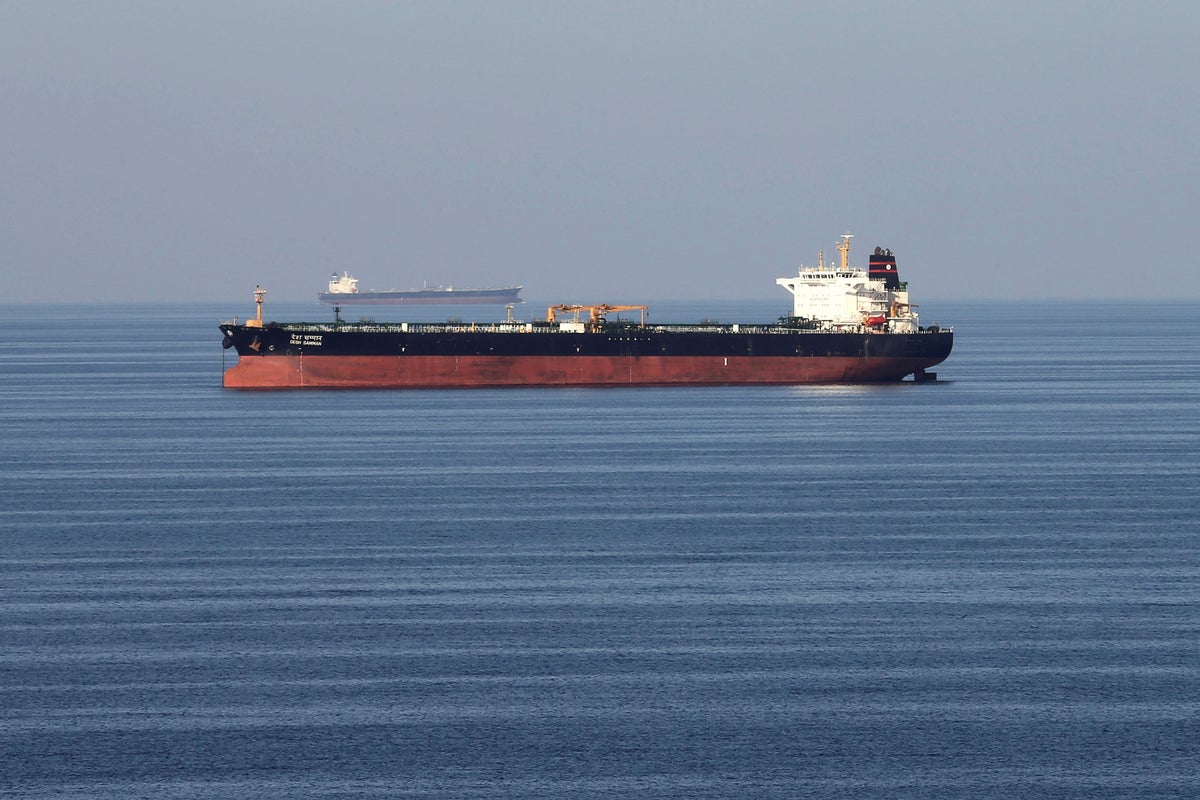
The Strait of Hormuz is not just a geographic narrow; it is the jugular vein of the global economy. At its tightest point, the shipping lanes are only two miles wide, yet through this corridor passes roughly 20% of the world’s total consumption of liquid petroleum. If this artery is severed, the result isn't a mere price hike. It is a systemic cardiac arrest for industrial nations. While the media often focuses on the immediate drama of drone strikes or seized tankers, the underlying reality is a terrifyingly thin margin between stability and a global depression.
The Geography of Vulnerability
The Strait connects the Persian Gulf with the Gulf of Oman and the Arabian Sea. It is the only sea passage from the Persian Gulf to the open ocean. On the north coast sits Iran, and on the south coast sits the United Arab Emirates and Musandam, an enclave of Oman. Most of the world’s heavy hitters in oil production—Saudi Arabia, Kuwait, Iraq, the UAE, and Qatar—depend on this single exit point.
Logistics dictate the risk. Because the navigable channels are so narrow, even a single sunken VLCC (Very Large Crude Carrier) or a cluster of sophisticated sea mines could effectively paralyze transit. Unlike a highway where you can pull onto the shoulder, a disabled 300,000-ton tanker creates a physical and navigational barrier that brings the entire parade to a halt.
The Asymmetric Iranian Leverage
Tehran understands that it cannot win a conventional naval war against the U.S. Fifth Fleet. It doesn't need to. Iran’s strategy relies on asymmetric warfare, utilizing a swarm of fast-attack boats, shore-to-ship missiles, and subsurface mines. This is a low-cost, high-impact doctrine designed to exploit the physical constraints of the Strait.
When Iran threatens to close the Strait, it is exercising "deterrence by denial." By making the passage too dangerous for commercial insurance companies to cover, Iran can effectively shut down the Strait without firing a shot at every single vessel. Once the insurance premiums skyrocket or underwriters withdraw coverage entirely, the flow of oil stops as surely as if a physical wall had been built across the water.
The Insurance Trap
In 2019, following a series of attacks on tankers near the Fujairah bunkering hub, the Joint War Committee in London expanded the list of waters considered high-risk. This wasn't just a clerical change. It resulted in "war risk" surcharges that added hundreds of thousands of dollars to the cost of a single voyage.
For a global economy running on just-in-time delivery, these costs are passed directly to the consumer at the pump and the power plant. If a full-scale blockade were attempted, the cost of shipping oil would become secondary to the sheer unavailability of it.
The Myth of Easy Diversification
Politicians often point to pipelines as the solution to Hormuz. The reality is far less comforting. While Saudi Arabia operates the East-West Pipeline and the UAE has the Abu Dhabi Crude Oil Pipeline, these alternatives can only handle a fraction of the volume that moves by sea.
- The East-West Pipeline (Petroline): Can move about 5 million barrels per day (bpd).
- The Abu Dhabi Pipeline: Handles roughly 1.5 million bpd.
- The Total Shortfall: With over 20 million bpd moving through the Strait, these pipelines combined cover less than a third of the required capacity.
The math is brutal. You cannot replace a super-highway with a dirt track and expect the traffic to flow at the same speed. Most of the world’s spare production capacity is located behind the "Hormuz Gate." If the gate closes, that spare capacity might as well be on Mars.
The Liquefied Natural Gas Factor
We often talk about oil, but the Strait is equally critical for Liquefied Natural Gas (LNG). Qatar is one of the world’s largest LNG exporters, and virtually all of its output must pass through Hormuz. Unlike oil, which can be stored in strategic reserves for months, the global LNG supply chain is much tighter.
Europe, having pivoted away from Russian pipeline gas, is now significantly more dependent on seaborne LNG. A disruption in the Strait would not just cause a gasoline shortage in the United States; it would cause a literal blackout and heating crisis in Europe and Asia. The interdependence of the global energy market means that a regional skirmish in the Middle East is now a direct threat to a factory in Germany or a data center in Tokyo.
China's Growing Anxiety
While the U.S. has historically been the "policeman" of the Strait, its domestic shale revolution has reduced its direct reliance on Middle Eastern crude. The same cannot be said for China. Beijing is now the world’s largest importer of oil, and a massive portion of its energy security is tied to the stability of the Persian Gulf.
This creates a complex geopolitical friction. China wants the U.S. to maintain the security of the shipping lanes but resents the strategic leverage that security provides Washington. Conversely, if the U.S. were to step back, China lacks the "blue water" navy capability to secure the Strait itself. This power vacuum is exactly what keeps energy analysts awake at night.
The Mechanics of a Market Spike
How high could prices go? In a total closure scenario, some analysts project oil hitting $200 or even $250 per barrel. But focusing on the price per barrel misses the point. The real danger is the physical shortage.
Modern economies are not built to handle a 20% drop in energy supply overnight. It would trigger emergency rationing, the grounding of commercial aviation, and a massive spike in the cost of all transported goods. We are talking about a systemic inflationary shock that would make the post-pandemic price increases look like a minor adjustment.
The Technological Shadow War
Today’s threats are not just about torpedoes. We are seeing the rise of electronic warfare and GPS jamming in the region. Tankers have reported "spoofing" incidents where their navigation systems show them in Iranian territorial waters when they are actually in international shipping lanes.
This digital interference creates a fog of war that increases the risk of a miscalculation. A captain, believing he is in safe waters, could inadvertently spark an international incident that escalates into a kinetic conflict. The margin for error is shrinking as the technology for interference becomes cheaper and more accessible to non-state actors and regional proxies.
The Strategic Petroleum Reserve is a Band-Aid
The U.S. Strategic Petroleum Reserve (SPR) is often cited as the ultimate safety net. While the SPR is a massive asset, it is designed to mitigate short-term supply shocks, not a sustained blockade of the world’s most important energy corridor. Furthermore, the SPR consists of crude oil, not refined products. You cannot put crude into a truck; it has to go through a refinery first. If the global supply chain is broken, the logistical hurdles of moving and refining that emergency oil become a bottleneck in themselves.
The world operates on a thin layer of "buffer" stock. When that buffer is threatened, the market reacts with violence. The volatility we see today is a reflection of the fact that the world has no "Plan B" for a closed Strait of Hormuz. We are all passengers on a ship steered by regional tensions and ancient grievances.
Assess your own energy exposure. Whether you are managing a global supply chain or a household budget, the stability of that two-mile-wide channel in the Middle East is the single most important variable in your financial future.