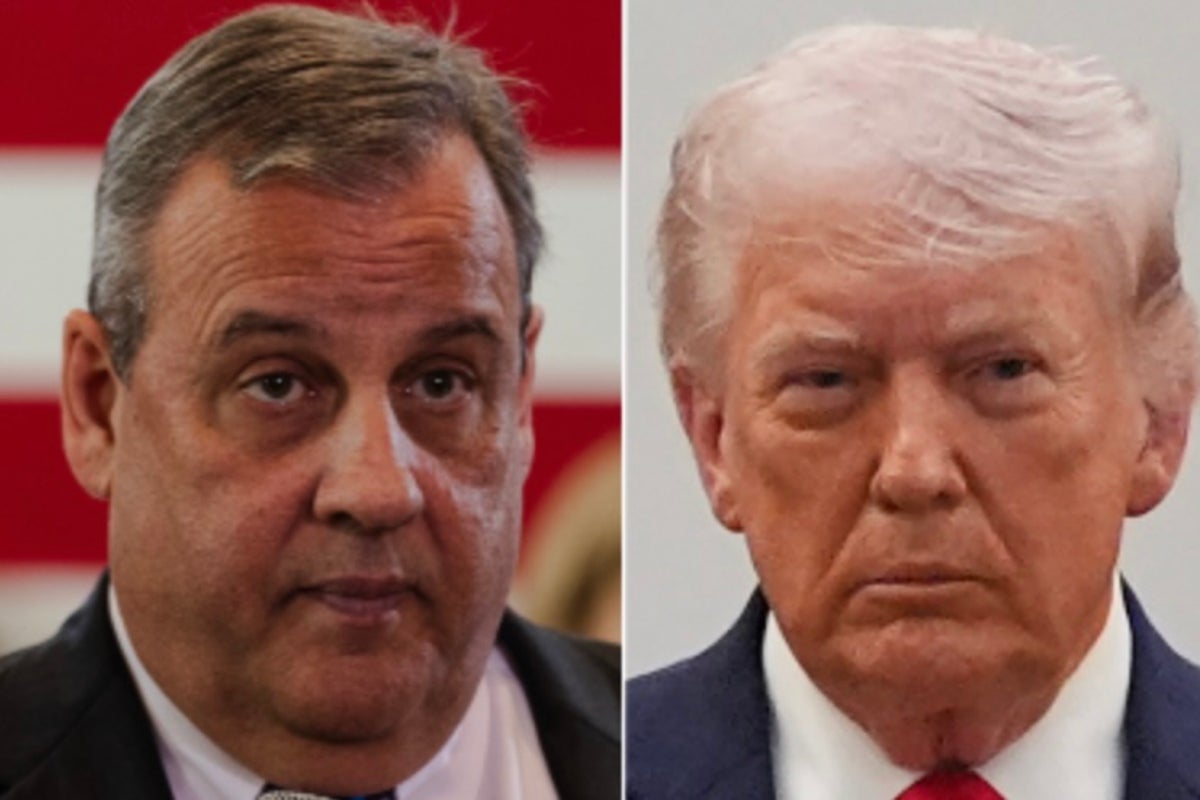
Donald Trump didn't just wake up on November 4, 2020, and suddenly believe the election was stolen. According to Chris Christie, the former President’s longtime ally turned fierce critic, Trump knew exactly what happened. He saw the numbers. He felt the shift. He understood that the math simply didn't add up in his favor.
Christie has spent years telling anyone who’ll listen that the "stolen election" narrative wasn't a delusion; it was a strategy. In various interviews and his book Republican Rescue, Christie paints a picture of a man who realized his time was up and decided to flip the table rather than walk away. It’s not about whether Trump is "crazy." It’s about the fact that he’s a performer who knows when the audience has stopped clapping.
The moment the reality set in
According to Christie, the internal realization happened much faster than the public tantrum suggested. During the 2024 primary cycle and in the years following the 2020 exit, Christie recounted conversations and observations from within the inner circle. He argues that Trump is a "smart man" who understands how TV and polling work. When the networks started calling states like Arizona, the panic wasn't because of "fraud"—it was because the path to 270 electoral votes had vanished.
Christie’s take is pretty simple: Trump is a salesman. If a salesman loses a deal, he doesn't tell his boss he messed up; he says the client was rigged against him.
- Trump saw the early returns in Pennsylvania and Michigan.
- He knew the "red mirage" would fade as mail-in ballots were counted.
- His advisers, including Christie, told him the truth in real-time.
[Image of the 2020 US Election Electoral College Map]
Why the big lie persists anyway
You might wonder why someone would keep up a charade if they knew it was false. For Trump, the "Stop the Steal" movement served two massive purposes. First, it kept his base fired up and loyal. Second, it was a phenomenal fundraising tool. People don't donate to a "loser," but they’ll dump millions into a "fighter" who’s being "cheated."
Christie has been vocal about how this has damaged the Republican Party. He believes that by focusing on 2020, the GOP is looking in the rearview mirror while the car is headed for a cliff. He’s called Trump "a coward" for not admitting the truth, suggesting that the refusal to concede is a sign of weakness, not strength.
The Christie-Trump fallout
The relationship between these two was once tight. Christie headed Trump’s transition team in 2016 and coached him for the 2020 debates. But the line was drawn on election night. When Trump stood in the White House at 2:30 a.m. and claimed he’d won, Christie was on ABC News calling it "an indefensible position."
That was the end of the road. Since then, Christie has used his platform to try and "rescue" the party from what he calls "truth deniers." He’s not just talking about Trump; he’s talking about the entire ecosystem that formed around the idea that the 2020 results were fake.
What the data actually showed
If you look at the 2020 results, the margin wasn't just a few hundred votes in one town.
- Joe Biden won the popular vote by over 7 million.
- The Electoral College was 306 to 232.
- Over 60 lawsuits filed by the Trump team were dismissed for lack of evidence.
Even Bill Barr, Trump’s own Attorney General, famously told him the claims of widespread fraud were "bullshit." Christie’s point is that Trump isn't deaf. He heard Barr. He heard the judges. He just chose to ignore them because the lie was more profitable than the truth.
Moving past the 2020 ghost
Christie’s advice to his party has been consistent: stop talking about 2020 if you want to win in 2026 and beyond. He’s argued that voters in swing states like Pennsylvania, Wisconsin, and Arizona are tired of hearing about old grievances. They want to know about the economy, the border, and the future.
Honestly, the most interesting part of Christie's crusade is the psychological angle. He’s essentially saying that Trump is gaslighting the entire country. It’s a bold claim from a guy who used to be in the room where it happened. Whether you like Christie or not, his insight into the Trump psyche is unique because he actually knows the guy. He’s seen the man behind the curtain, and he’s telling us there’s no magic there—just a guy who can’t admit he lost.
If you’re trying to make sense of the current political climate, the first step is to stop expecting a confession. It’s never coming. The next step is to look at the candidates who are still running on the 2020 platform and ask yourself if they’re trying to lead or just trying to keep the grievance alive. You have to decide if you're interested in the reality of the numbers or the theater of the claim.


