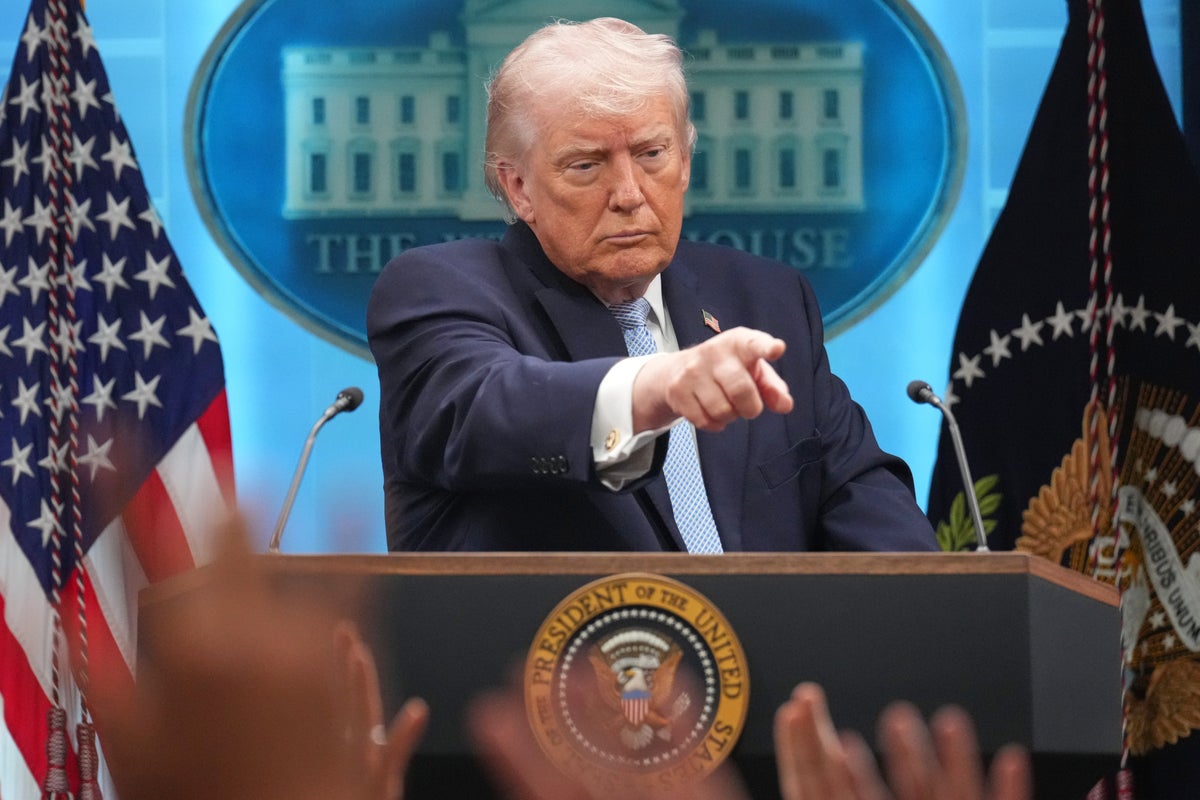
Donald Trump is doubling down on a message that makes even his most seasoned supporters lean in. He isn't just talking about tax cuts or border walls anymore. He's talking about the literal end of Western civilization. When you hear him say a "whole civilization will die," he isn't just tossing out a campaign line. He sounds dead serious. Whether you think he’s a prophet of doom or a master of hyperbole, you can't ignore the weight he's putting behind these words lately.
It's a terrifying thought. A civilization doesn't just vanish overnight, right? Yet, Trump argues that the foundations are rotting so fast that the entire structure is ready to buckle. He points to a mix of open borders, failing economies, and a perceived loss of national identity as the primary culprits. He’s betting that voters feel this same existential dread when they look at their grocery bills or watch the news. Read more on a related topic: this related article.
Why the Civilization Argument Resonates Right Now
Most politicians talk about the next four years. Trump is talking about the next four centuries. That’s why people are listening. He’s tapped into a deep-seated fear that the American experiment is hitting a wall. Honestly, it’s a smart move. If you believe the country is just "having a rough patch," you might vote for a moderate. If you believe the world is ending, you look for a wrecking ball.
The "death of civilization" narrative isn't unique to 2026. Historians like Oswald Spengler wrote about this over a hundred years ago. Trump is bringing those academic fears into the rally setting. He’s telling people that the things they value—safety, tradition, and a stable dollar—are being traded away by an elite class that doesn't care if the ship sinks. More reporting by USA Today delves into comparable views on the subject.
He often frames it as a choice between national survival and globalist ruin. By using such high-stakes language, he makes every policy debate feel like a battle for the soul of the West. It’s not about a 2% shift in the interest rate anymore. It's about whether your grandkids will recognize the country they live in.
The Specific Threats Trump Highlights
Trump doesn't just say we're doomed and leave it there. He builds a case. He focuses on three main pillars that he claims are currently under sustained attack.
The Border and Demographic Shift
To Trump, a country without a border isn't a country. It’s just a space. He argues that the mass influx of people from different cultures without proper integration leads to a fractured society. He isn't just talking about crime statistics here. He’s talking about the dilution of a shared American "story." He believes that once that story is gone, the civilization that grew out of it can't survive.
Economic Decay and the Death of the Middle Class
You've heard it a thousand times. The "forgotten man and woman." But now, the rhetoric has shifted from "they're hurting" to "they're being erased." Trump views the current economic path—high debt, inflation, and the decline of manufacturing—as a slow-motion suicide. He argues that a civilization is only as strong as its ability to produce things and provide for its own. If the middle class disappears, the social contract vanishes with it.
The Culture War as an Existential Fight
This is where things get really heated. Trump describes the "woke" movement not as a simple political disagreement, but as a "malignant ideology" designed to tear down Western values. He’s essentially saying that if we stop believing in our history and our heroes, we lose the will to defend our future. It’s a psychological collapse preceding a physical one.
Is This Just Campaign Rhetoric
Critics say he's just scaring people for votes. They point to the fact that the U.S. has survived civil wars, depressions, and world wars. They argue that "civilization" is much more resilient than a single election cycle. And they have a point. The U.S. GDP is still massive. Our military is still the strongest. Our cultural exports still dominate the globe.
But Trump’s supporters see it differently. They see the decay in the streets of major cities. They feel the loss of purchasing power. They hear their kids being taught things in school that they find abhorrent. To them, Trump isn't creating the fear. He’s just the only one acknowledging it. They feel like they’re living in a house with a cracked foundation while everyone else is arguing about the color of the curtains.
The Historical Context of Doomsday Politics
History is full of leaders who warned of total collapse. Sometimes they were wrong. Sometimes they were the only ones who saw it coming. Think of Winston Churchill in the 1930s. He was called a warmonger and a crank for suggesting that Western civilization was at risk. He turned out to be right.
Then you have the "Malthusian" thinkers of the 1970s who swore we’d all be starving to death by the year 2000 because of overpopulation. They were dead wrong. Technology and innovation saved the day.
Trump is positioning himself as the modern Churchill. He wants you to believe that the threat is so existential that "business as usual" is a form of suicide. He’s using the most extreme language possible because he believes the situation is, well, extreme.
What Happens if the Warning is Ignored
If you follow Trump's logic to its end, the "Lord save us" part of the sentiment makes sense. He’s suggesting that we’re reaching a point of no return. Once a civilization loses its internal cohesion and its economic sovereignty, it rarely gets them back. It just fades away or gets absorbed.
He’s basically telling the electorate that this is the final exit on the highway. If you miss this turn, there’s only a cliff ahead. It’s a binary choice. Total victory or total destruction. That kind of framing makes compromise impossible. It turns every political opponent into an existential enemy.
How to Navigate the Doom and Gloom
It’s easy to get overwhelmed by this kind of talk. Whether you believe Trump is right or he’s just a gifted salesman, the stress is real. So, what do you actually do with this information?
First, look at the data yourself. Check the fiscal health of the country. Look at the real-world impact of immigration policies. Don't just take a politician's word for it—any politician. Civilizations do fail, but they usually fail because people stop paying attention to the small things that hold them together.
Focus on your local community. One of the best ways to "save a civilization" is to make sure your own neighborhood is thriving. Strong families, local businesses, and community ties are the ultimate hedge against national decline. If the top is rotting, you’d better make sure the bottom is solid.
Stop doomscrolling for hours. It doesn't help you or the country. It just makes you easier to manipulate. If you're worried about the economy, learn a new skill or start a side hustle. If you're worried about the culture, get involved in your kids' education. Real action is the only antidote to existential dread.
The civilization conversation is going to get louder as the election approaches. Trump isn't backing down from this "final battle" narrative. It's the core of his 2026 pitch. You're going to hear about the "end of days" and "total collapse" a lot. Keep your head on straight, look at the facts, and decide for yourself if we’re at the end of the book or just starting a difficult new chapter.
Pay attention to how candidates talk about the long-term future. Anyone can promise a stimulus check. Very few are willing to talk about the structural integrity of the nation fifty years from now. Whether you agree with Trump's conclusions or not, he’s forced that conversation into the mainstream. Now it’s on everyone else to prove him wrong or provide a better way to fix the leaks.
Move your focus from national anxiety to personal agency. Start by diversifying your assets if you're worried about the dollar. Engage with people in person rather than arguing on the internet. Civilizations are built on trust. If you want to keep yours alive, start rebuilding that trust in your own circle. Don't wait for a leader to save the world when you haven't checked on your neighbor in six months.