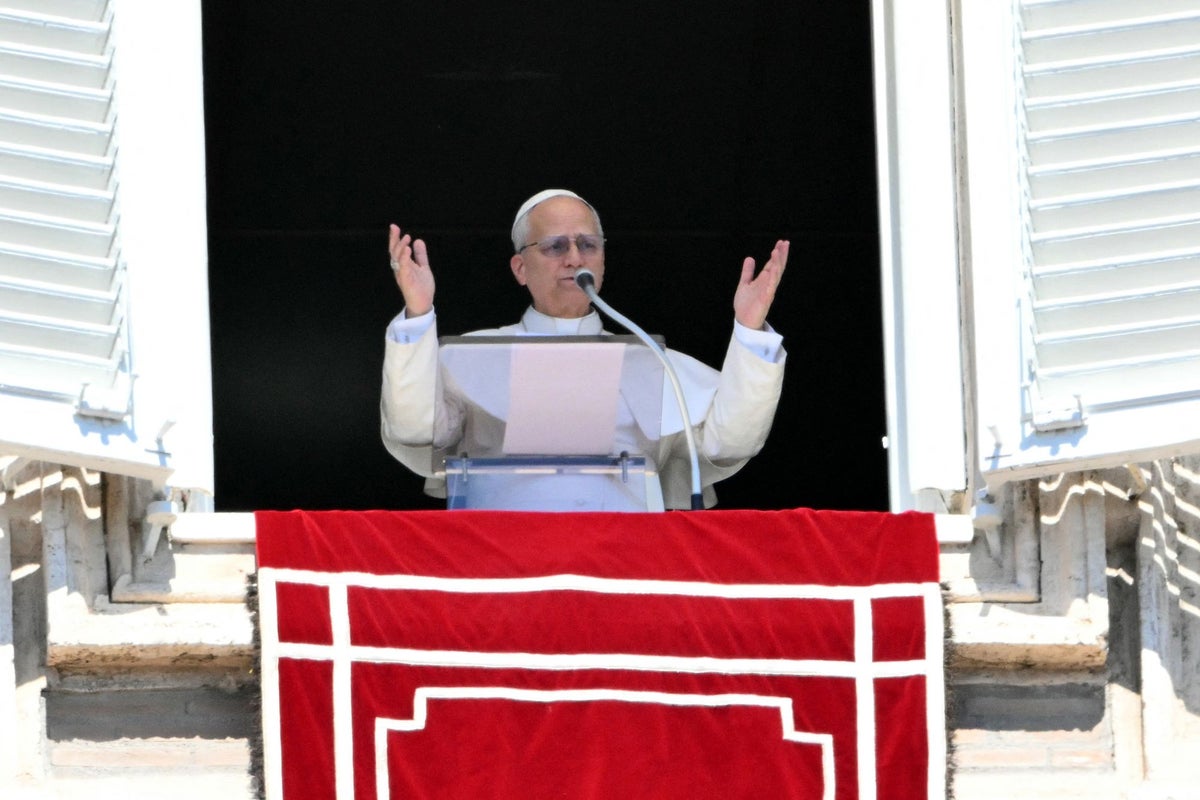
The outrage machine is humming at a perfect pitch. On one side, you have a President threatening to erase 52 cultural sites in Iran, citing the harsh logic of asymmetric warfare. On the other, you have Pope Leo and a chorus of internationalist observers clutching their pearls, decrying the "unacceptable" threat to "civilization."
The media loves this binary. It’s clean. It’s moralistic. It’s also completely detached from how power actually functions in the 21st century. Also making news lately: The Empty Pavements of Red Square.
When Pope Leo calls a threat to cultural sites "unacceptable," he isn't making a tactical observation; he is performing a ritual of preservation for a world order that no longer exists. The assumption—the "lazy consensus" of the global elite—is that cultural heritage acts as a shield, a neutral zone that rational actors must respect to remain within the "civilized" fold.
But here is the truth that makes people uncomfortable: In modern conflict, "civilization" is not a static museum. It is a weaponized asset. If you treat it as an untouchable relic while your opponent treats it as a tactical bunker, you have already lost. Further details regarding the matter are explored by USA Today.
The Myth of Neutral Heritage
We’ve been conditioned to believe that history is a shared human ledger. It isn’t. History is the property of the victor, and in the current geopolitical climate, cultural sites are increasingly being used as human shields for kinetic capabilities.
I’ve watched analysts spend weeks debating the ethics of a strike while a rogue regime moves missile batteries into the shadow of an ancient ziggurat. Why do they do it? Because they know the West is paralyzed by the exact sentimentality Pope Leo is currently peddling.
When a leader like Trump threatens these sites, the reflexive horror from the Vatican and the UN ignores the actual utility of the threat. Is it "wrong" to destroy a 2,500-year-old mosque? By every traditional moral metric, yes. But is it "effective" to signal to an adversary that their most prized psychological anchors are no longer off-limits?
That is the question the "civilized" world refuses to answer.
The Papal Blind Spot
The Pope speaks from the perspective of an institution that measures time in centuries. That’s fine for theology, but it’s a disaster for deterrence. Deterrence requires the credible threat of disproportionate pain. If you tell an adversary, "We will fight you, but we promise not to touch your history, your symbols, or your pride," you are giving them a safe harbor for their ideology.
Let’s dismantle the premise that "protecting civilization" is a universal good. In many cases, these sites are the literal foundations of the regimes we claim to oppose. They are used to manufacture a sense of divine right and historical inevitability. By treating them as sacred, we inadvertently validate the regime’s narrative.
The Vatican’s stance isn't just about art and architecture. It’s about maintaining the illusion that there is a set of rules that everyone follows. This is the "Rules-Based International Order" fallacy. It’s a ghost. It’s a comfort blanket for people who don't want to admit that we are moving back into a world of raw, Westphalian competition where "unacceptable" is just a word used by people who lack the means to stop the inevitable.
Deterrence is Not a Dinner Party
Critics argue that targeting cultural sites is a war crime under the 1954 Hague Convention. They are right. It is. But laws are only as strong as the enforcement behind them. When the international community fails to enforce red lines on chemical weapons, nuclear proliferation, or state-sponsored hit squads, the sanctity of a pile of ancient stones becomes a secondary concern.
The contrarian reality is this: The most "humane" way to handle a conflict is to make it so terrifyingly costly that it never happens.
If the threat of losing "civilizational" markers prevents a hot war that would kill hundreds of thousands of people, which path is actually more moral? The Pope chooses the stones. A realist might choose the lives.
The Economic Reality of Cultural Warfare
Beyond the moral grandstanding, there is a hard-nosed business reality to this. Cultural heritage is a massive component of soft power and tourism revenue. It is a nation's brand.
In the corporate world, if a competitor is using their brand equity to mask predatory behavior, you don't respect the brand; you dismantle it. You expose the rot behind the logo.
Iran’s "civilization" is its greatest export and its most effective diplomatic tool. By threatening it, the United States isn't just threatening buildings; it is threatening the very source of Iran’s international legitimacy. This is the "scorched earth" policy of the digital age. It’s messy, it’s ugly, and it’s arguably the only thing that actually registers with a regime that views traditional sanctions as a mere cost of doing business.
Stop Asking if it’s "Right" and Start Asking if it’s "True"
People Also Ask: "Does destroying cultural sites actually stop a war?"
The honest, brutal answer is: We don't know, because the West has been too afraid to try it since 1945. We operate on the assumption that it would only radicalize the population. This is a patronizing view of "the other." It assumes that people value ancient ruins more than they value their children’s future, their stability, or their lives.
We’ve seen what happens when we play by the "civilized" rules. We get twenty-year quagmires where we spend billions protecting the very culture that is being used to radicalize the next generation of insurgents.
Imagine a scenario where we stopped treating the enemy's narrative as something to be "respected" and started treating it as a target.
The Hypocrisy of the "Unacceptable"
The most grating part of this entire discourse is the hypocrisy. The same entities decrying these threats often remain silent when those same cultural sites are repurposed as centers for torture or military command.
Where was the "unacceptable" label when historical landmarks were turned into gallows?
The outcry isn't about the stones. It’s about the discomfort of realizing that the era of polite, limited warfare is over. We are back to the basics: blood, soil, and the destruction of the enemy’s will to exist as a coherent entity.
The Real Risk: Escalation or Clarity?
There is a downside to this approach. It’s the "Barbarization of Strategy." Once you cross the line of threatening "civilization," you invite the same in return. If you threaten the Persepolis, you shouldn't be surprised when someone looks at the Statue of Liberty or the Vatican itself with a predatory eye.
But we are already there. The idea that our own symbols are safe because of some unspoken gentleman’s agreement is a delusion. Our adversaries don't care about the Hague Convention. They care about what works.
If the West continues to fight with one hand tied behind its back—clinging to the "unacceptable" labels of a bygone era—it will be buried under the ruins it tried so hard to protect.
Pope Leo can keep his moral high ground. It’s a beautiful view, but you can’t hold a perimeter from there.
Stop pretending that "civilization" is a neutral bystander in the theater of war. It is the prize, the weapon, and the casualty. Choose one.