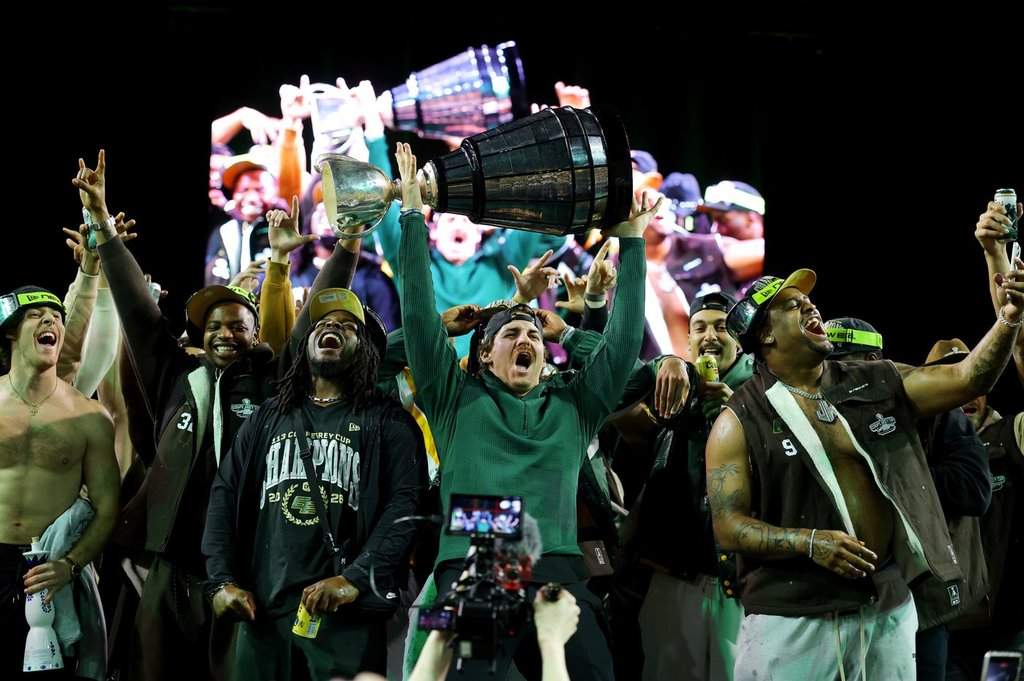
Cody Fajardo is signaling he wants back in Edmonton, and the reason has less to do with sentiment than cold CFL arithmetic. Fresh off a Grey Cup victory with the Edmonton Elks, the veteran quarterback told fans he is open to staying put—a public overture designed to force the front office into an uncomfortable decision between an aging championship starter and the salary cap flexibility required to defend a title.
In the Canadian Football League, championship rosters rarely stay intact for long. The hard salary cap does not care about parade routes or locker-room chemistry. When a quarterback wins a ring late in his career, both sides enter a high-stakes negotiation masked as mutual affection. Fajardo’s public comments are the opening bid in that exact standoff. Also making headlines in related news: Why Top Ajax Academy Prospects Are Walking Away From Football for Music.
The Economics of a Championship Hangover
Winning a Grey Cup creates an immediate accounting problem. Every player on a championship roster enters the offseason with leverage, and agents know that general managers face intense public pressure to run it back. Yet the CFL’s salary management system leaves almost zero margin for nostalgia.
Quarterbacks account for the single largest slice of any team’s cap sheet. When a veteran starter delivers a title, his market value spikes at the precise moment his physical durability begins to trend downward. Edmonton’s brass now has to weigh what Fajardo just accomplished against what he will cost in 2026 and beyond. Additional insights into this topic are detailed by FOX Sports.
Consider the structural realities governing every CFL front office after a title run:
- The Cap Squeeze: Role players who contributed to a championship run demand raises, forcing teams to shed either depth or high-priced veterans.
- The Quarterback Premium: Paying top-of-market money to a veteran signal-caller limits a team’s ability to retain the offensive linemen who kept him upright.
- The Injury Tax: CFL football is brutal on pocket-and-scramble quarterbacks, and aging starters require reliable, reasonably priced backups who can win four to six games a year.
Fajardo understands this dynamic better than most. He has already lived through the cycle of being crowned a franchise savior, enduring the inevitable roster purge, and eventually watching a team pivot toward younger, cheaper legs. By telling fans he may stay, he shifts the burden of explanation onto Edmonton’s management. If he walks, the front office has to explain why they let a Grey Cup winner leave the building.
What Fajardo Actually Brings to the Table
Strip away the celebration confetti and look at the tape. Fajardo has never been a prototype pocket passer who shreds defenses with effortless 50-yard vertical shots. His value has always lived in the gray areas of Canadian football—extending broken plays, absorbing hits in the third quarter, and converting second-and-medium when the scripted offense stalls.
That style wins games in November. Weather turns ugly across the prairies, passing windows shrink, and offenses that rely purely on timing routes often freeze up. A quarterback willing to lower his shoulder for six yards on second down becomes worth his weight in gold when temperatures drop below freezing.
The catch is obvious. That exact playing style accelerates wear and tear.
The Durability Equation
Every hit a quarterback takes in July collects interest in October. Over the course of a grueling 18-game regular season plus playoffs, a dual-threat veteran accumulates bruised ribs, tweaked hamstrings, and battered throwing shoulders. Front offices do not pay for what a quarterback did in the Grey Cup; they pay for how many starts he can realistically survive the following autumn.
Edmonton’s medical and scouting staff have to answer a blunt question. Can Fajardo take 18 weeks of punishment behind an offensive line that will inevitably lose one or two starters to free agency? If the answer is anything less than a confident yes, committing heavy guaranteed money becomes a massive gamble.
Leverage Plays in the CFL Offseason
Public remarks from veteran players during the offseason are rarely accidental. A throwaway line to fans at a post-season event or during a community appearance travels across sports radio within minutes. It shapes the narrative before formal contract talks even reach a critical stage.
Fajardo’s message accomplishes three things simultaneously:
- It signals loyalty to the fanbase. Fans hate feeling like a mercenary passed through town just to grab a ring and cash out elsewhere. Expressing a desire to stay insulates the player from public backlash if negotiations sour.
- It sets a floor for other suitors. Any rival general manager considering a run at Fajardo now knows they cannot lowball him. They have to beat the appeal of defending a title in a familiar system.
- It pressures Edmonton’s timeline. Teams love dragging out veteran negotiations until February free agency so they can see who else hits the open market. A popular quarterback publicly expressing interest in returning forces the club to engage early or risk looking ungrateful.
This is standard operating procedure for seasoned veterans. You praise the city, thank the supporters, express genuine interest in running it back, and let your agent handle the hard numbers behind closed doors.
The Edmonton Dilemma
For the Elks, the situation is far more complicated than simply sliding a blank check across the table. Franchise management spent years digging out of a prolonged competitive slump before climbing back to the top of the mountain. Sustaining that success requires discipline, not emotional decision-making.
Look at recent CFL history. Teams that mortgage their cap structure to keep an aging title core together almost always hit a wall within two seasons. The offensive line thins out, special teams coverage units get younger and less disciplined, and suddenly the star quarterback is running for his life on every snap.
On the other hand, letting a championship quarterback walk without an immediate, proven successor is career suicide for a general manager. Fans do not buy tickets to watch a rebuilding project the year after a parade. If Edmonton moves on from Fajardo, whoever takes the first snap of training camp will be judged against a Grey Cup standard from day one.
Evaluating the Succession Plan
A hypothetical scenario illustrates the bind Edmonton faces. Suppose the Elks offer Fajardo a modest, incentive-laden one-year deal designed to protect their cap space. Fajardo’s camp counters with a demand for multi-year security and top-tier guaranteed money. If Edmonton refuses and hands the keys to a younger, less expensive backup, they save hundreds of thousands of dollars to spend on defense and receivers.
If that younger quarterback struggles out of the gate and the team starts 1-5, the front office looks incompetent. If they cave to Fajardo’s demands and he suffers a season-ending injury in Week 6, they are stuck with dead cap space and no backup plan. Neither path offers safety.
Why Quarterback Loyalty Is an Illusion
The phrase "he may stay" carries an intentional escape hatch. Notice the phrasing. It is not a blood oath to retire in green and gold, nor is it a demand to be traded. It is a calculated middle ground that keeps every door open while free agency approaches.
In professional football, loyalty lasts exactly as long as the guaranteed money holds out. Teams cut beloved captains the moment their production dips below their cap hit, and players sign with bitter division rivals for an extra fifty thousand dollars without blinking. Both sides understand the rules of engagement.
Fajardo has been around the block enough times to know how quickly front-office sentiment evaporates. He knows that the same executives praising his grit today will replace him tomorrow if a cheaper option emerges in training camp. His comments to fans reflect genuine appreciation for a city that embraced him, paired with the sharp instincts of a veteran protecting his market value.
What Happens Behind Closed Doors Next
Over the coming weeks, the public pleasantries will give way to cold spreadsheets. Edmonton’s personnel department will grade every snap of Fajardo’s championship season, separating genuine quarterback play from moments where elite receiver talent or favorable defensive matchups bailed him out.
They will look closely at his third-quarter completion rates, his turnover-worthy throws under pressure, and how often he bailed out of clean pockets prematurely. Those metrics tell a much clearer story than a Grey Cup trophy sitting in a display case.
Meanwhile, Fajardo’s representation will quietly gauge interest across the rest of the league. Quarterback-needy franchises always exist in a nine-team league where one injury can derail an entire season. Even if another team never intends to sign him, having a credible second bidder in the wings is the only way a veteran quarterback extracts maximum value from his current employer.
Fans in Edmonton want a simple fairy tale where the hero rides back into town to defend the crown. The reality is a tense negotiation over cap percentages, injury guarantees, and diminishing athletic margins—and until ink hits paper, every warm quote is just another move on the board.