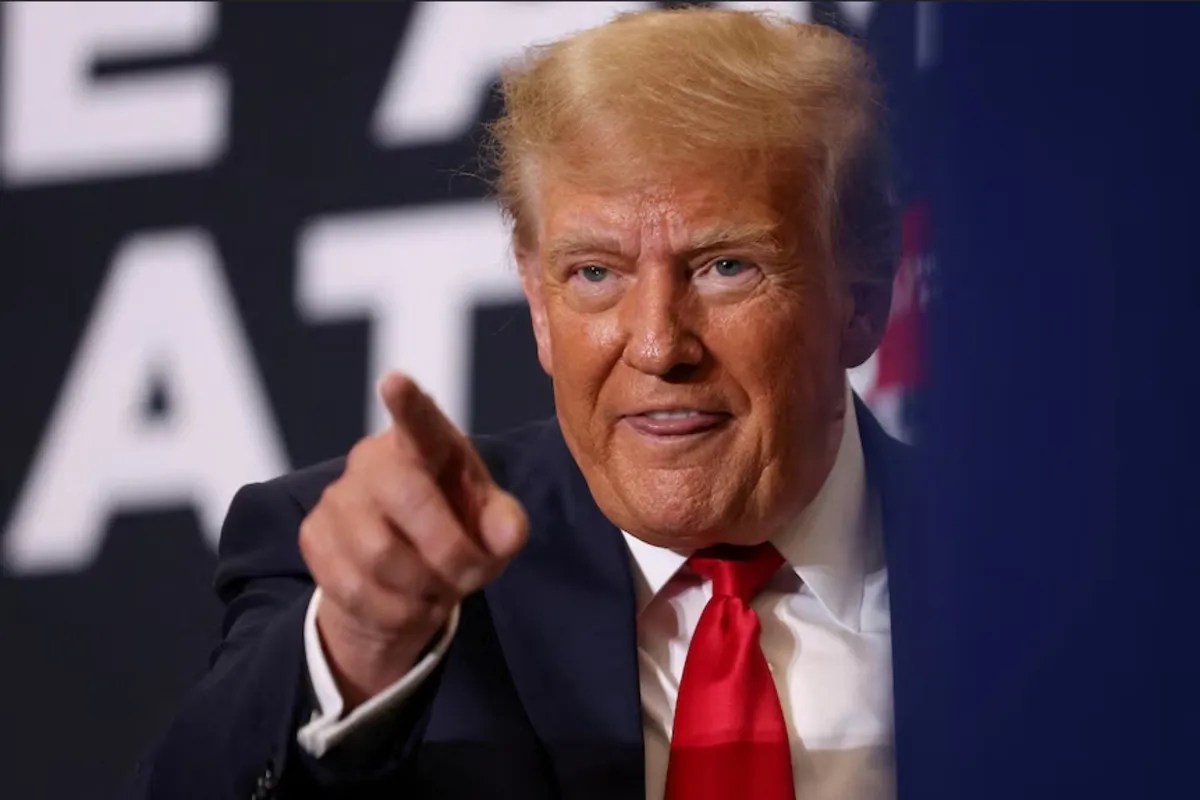
Executive threats of criminal detention against frontier artificial intelligence executives represent a structural shift from regulatory compliance to direct state coercion over private compute infrastructure. When political leadership deploys personal intimidation—such as instructing a technology executive to "say goodnight to your wife" via a proxy threat of arrest—the interaction ceases to be a routine policy dispute and becomes an exercise in asymmetric sovereign leverage. Understanding this mechanism requires stripping away sensationalist political framing and examining the underlying game theory, statutory authorities, and capital allocation risks that govern the intersection of state power and foundational model development.
The Architecture of Executive Coercion
In standard administrative law, disputes between the executive branch and private corporations operate through predictable, rules-based channels: rulemaking under the Administrative Procedure Act, antitrust enforcement, export controls, and procurement contracts. Personal threats of arrest bypass these institutional buffers entirely. They introduce immediate, non-diversifiable personal tail risk to corporate officers, altering the fiduciary calculus of a technology firm overnight. You might also find this related article insightful: The Leather Jacket, the Spy Allegations, and the Impossible Tightrope of Global Silicon.
This tactic operates through three distinct mechanisms of coercion:
- Asymmetric Liability Shifting: Corporate fines and regulatory delays are absorbed by institutional balance sheets and equity holders. A threat of physical detention transfers the cost of non-compliance directly onto the individual decision-maker, creating an acute principal-agent divergence between the executive's personal safety and the shareholders' long-term governance preferences.
- Pre-Emptive Compliance via Ambiguity: By leaving the specific statutory violation unstated while issuing a severe personal warning, the state forces the target to self-censor or over-comply. The ambiguity prevents legal counsel from mounting an immediate procedural defense because no formal indictment or subpoena exists to challenge in court.
- Signaling to Adjacent Market Participants: High-profile intimidation of a single sector leader functions as a deterrent across the entire industry. Competitors observe the personal vulnerability of peer executives and adjust their own product roadmaps, content moderation policies, and government cooperation protocols without requiring direct intervention from regulators.
Statutory Mechanics and the Limits of Presidential Detention Authority
To separate political theater from operational reality, legal and risk teams must evaluate the actual statutory mechanisms through which an executive branch can detain a corporate officer. Under the United States constitutional framework, the President lacks unilateral authority to order the arbitrary arrest of a domestic civilian. Any lawful detention requires either a criminal indictment secured through the Department of Justice (DOJ) or the invocation of specialized emergency statutes. As highlighted in recent reports by The Verge, the implications are notable.
The Department of Justice Bottleneck
Initiating a federal arrest requires probable cause presented to a magistrate judge or a grand jury indictment. While an executive can pressure DOJ leadership to prioritize investigations into specific individuals or corporations, the evidentiary threshold for criminal charges—such as wire fraud, obstruction of justice, or violations of the Espionage Act—remains insulated by judicial review. A threat of arrest without an underlying criminal predicate functions primarily as psychological warfare rather than an immediate legal execution.
National Security and Emergency Statutes
Where traditional criminal law moves slowly, national security frameworks offer compressed timelines. The Defense Production Act (DPA) grants the executive branch broad authority to compel private companies to prioritize government contracts and allocate critical resources, including compute clusters and model weights, for national defense. Refusal to comply with a valid DPA order carries criminal penalties, including fines and imprisonment. Similarly, the International Emergency Economic Powers Act (IEEPA) allows the executive to regulate or prohibit transactions involving foreign adversaries, creating strict-liability traps for AI firms operating global APIs or managing international cloud infrastructure.
The gap between a verbal threat and an actual arrest lies in the institutional friction of these statutes. However, for a public or late-stage private AI company, the mere initiation of a federal investigation triggers severe secondary consequences long before a courtroom verdict is reached.
The Cost Function of Non-Compliance for AI Enterprises
Frontier AI laboratories exhibit a unique structural vulnerability compared to traditional software enterprises. Their capital intensity, reliance on specialized hardware supply chains, and dependence on federal procurement make them uniquely sensitive to executive hostility.
- Cloud and Compute Supply Chain Fragility: Training and inference at scale require uninterrupted access to gigawatt-scale power infrastructure and advanced semiconductors. Executive actions targeting export licenses, energy permits, or cloud vendor partnerships can starve a lab of compute capacity without ever filing a criminal charge.
- Federal Procurement Exclusion: Defense and intelligence contracts represent the highest-margin, stickiest revenue streams for foundational model providers. Executive hostility leads directly to debarment or quiet exclusion from classified networks, ceding lucrative national security monopolies to more compliant competitors.
- Capital Markets and Valuation Compression: Institutional investors price regulatory predictability into late-stage private valuations. When an AI executive becomes a personal target of the head of state, the perceived discount rate on the company's future cash flows spikes. Secondary market liquidity freezes, and initial public offering timelines face indefinite postponement due to unquantifiable litigation and regulatory overhangs.
Game Theory of Executive-Founder Confrontations
The interaction between a populist or strongman executive and a technocratic founder follows a predictable strategic matrix. The founder operates within a framework of empirical optimization, long-term product cycles, and contractual certainty. The political executive operates within a framework of immediate narrative dominance, loyalty enforcement, and zero-sum power dynamics.
When the executive issues an existential personal threat, the founder faces two dominant strategies, neither of which preserves the status quo:
Strategy A: Institutional Entrenchment and Public Escalation
The executive documents the threat, mobilizes board oversight, and prepares for public litigation if administrative retaliation follows. This approach protects corporate autonomy and signals governance integrity to institutional shareholders. The operational limitation is severe: it locks the company into a multi-year war of attrition against the full investigative apparatus of the state, consuming executive bandwidth and delaying model deployment cycles.
Strategy B: Quiet Accommodation and Structural Alignment
The executive absorbs the threat privately, avoids public confrontation, and subtly adjusts corporate policies—such as relaxing safety guardrails, altering model alignment behaviors, or restructuring government affairs leadership—to neutralize the political friction. While this preserves immediate operational continuity and protects enterprise valuation, it compromises institutional independence and establishes a precedent that coercive threats successfully extract corporate concessions.
Operationalizing Geopolitical Risk in AI Governance
Boards of directors and general counsels at frontier technology firms cannot rely on traditional public affairs playbooks to manage direct executive coercion. Standard lobbying assumes a transactional, rules-based legislative environment. Managing sovereign intimidation requires hardening corporate governance and technical infrastructure against abrupt political shocks.
First, boards must decouple individual executives from unilateral decision-making authority over sensitive compliance and model-alignment thresholds. By vesting final approval for government data requests, content policies, and national security partnerships in an independent board committee, the company reduces the utility of targeting a single founder or CEO. If the individual executive lacks the unilateral authority to capitulate, personal coercion loses its strategic leverage.
Second, legal teams must establish pre-emptive evidentiary protocols. Every informal communication from executive branch intermediaries—particularly off-the-record warnings or verbal threats—must be contemporaneously logged, notarized, and archived within privileged legal channels. Establishing a clear factual record creates immediate deterrence against unlawful administrative retaliation, as any subsequent regulatory audit or DOJ inquiry can be challenged in federal court as vindictive prosecution under the Fifth Amendment.
Third, infrastructure architects must minimize single-jurisdiction operational bottlenecks. While frontier compute clusters remain physically anchored to domestic power grids, corporate structures, intellectual property holding entities, and inference routing should maintain modular flexibility. Relying entirely on domestic federal contracts for revenue growth exposes the enterprise to catastrophic concentration risk whenever executive administrations shift.
The episode illustrates a permanent structural reality for foundational technology leaders: as artificial intelligence models transition from commercial software tools to sovereign strategic assets, the executives controlling them will no longer be treated as ordinary market participants. Governance frameworks that fail to account for direct personal coercion by state actors leave both the leadership and the underlying capital infrastructure exposed to sudden, non-market capture. Boards must immediately audit their executive succession plans, formalize whistleblower and retaliation documentation procedures, and insulate core model governance from unilateral individual control before the next political cycle tests the resilience of their corporate charter.