A standard headline ripples through the media, and everyone follows the exact same script.
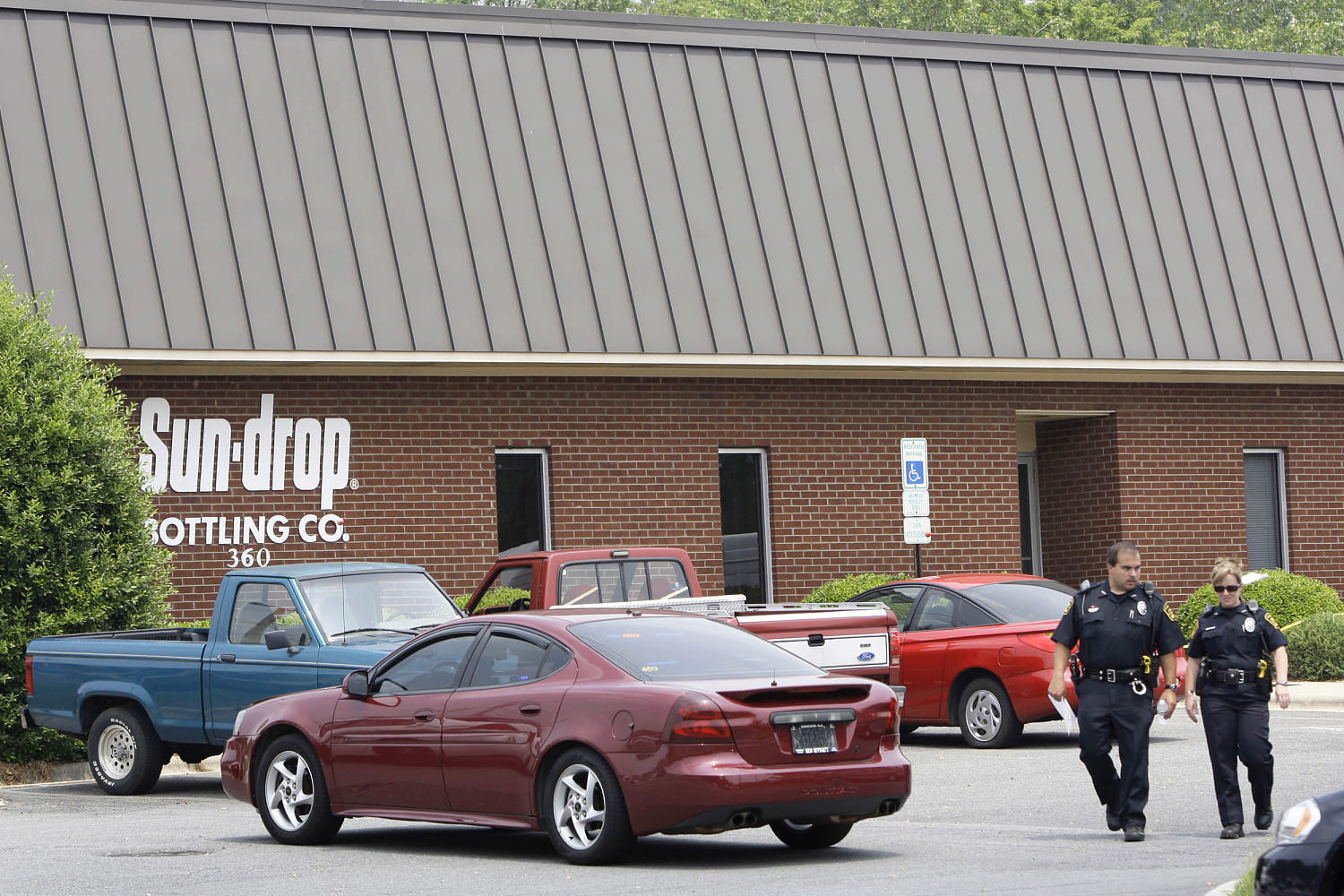
"Police make arrest in 2008 double killing at a North Carolina beverage distribution company."
The narrative writes itself. The public breathes a sigh of relief. The department holds a press conference. The talking heads praise the relentless, tireless march of justice. We are told that patience is a virtue, that the gears of the legal system grind slowly but exceedingly fine, and that no one escapes the long arm of the law.
It is a comforting story. It is also completely wrong.
Celebrating an arrest made nearly two decades after a crime occurs is not proof of a functional system. It is the definitive diagnostic marker of systemic failure. When a double homicide at a Hendersonville beverage plant takes eighteen years to yield a suspect, we are not witnessing a triumph of investigative persistence. We are witnessing the catastrophic cost of institutional inertia, flawed prioritization, and an investigative framework that relies more on accidental luck than systemic efficiency.
Let’s dismantle the lazy consensus surrounding cold case breakthroughs and look at the brutal reality of how these investigations actually operate.
The Illusion of the Tireless Cold Case Unit
The mainstream media loves to paint cold case detectives as lone crusaders staring at a corkboard covered in red string for eighteen years. They want you to believe that a dedicated team spent 6,570 consecutive days meticulously re-examining the evidence from that tragic night at the North Carolina distribution center.
I have spent years analyzing law enforcement data and consulting on municipal budgets. Here is the reality check: that is not how police departments work.
Cold case units are the underfunded stepchildren of municipal law enforcement. When a new homicide occurs tonight, every available asset is deployed immediately. The detectives assigned to files from 2008 are simultaneously managing active caseloads, filling in on shift rotations, and drowning in paperwork. The 2008 file sat on a shelf, untouched, gathering dust for years at a time.
The breakthrough in a case this old rarely comes from a detective suddenly discovering a hidden clue in old notebook entries. It almost always comes from one of two external catalysts:
- A national DNA database finally matches a sample because the suspect committed a completely unrelated crime decades later.
- An associate of the killer gets squeezed on an entirely separate charge and decides to trade a long-buried secret for a lighter sentence.
Calling this a triumph of the original investigation is like credited the goalie for a goal scored by the forward on the opposite end of the ice. The system did not solve the crime through proactive brilliance; it stumbled into the solution through passive longevity.
The Hidden Cost of Delayed Justice
We need to talk about what happens during an eighteen-year gap between a violent crime and an arrest. The conventional narrative treats this interval as a neutral waiting period. It is anything but neutral.
Think about the victims' families. For nearly two decades, they lived without resolution, enduring a profound psychological weight. Meanwhile, a person capable of a double execution-style killing walked free among the public. They held jobs, drove on public roads, interacted with neighbors, and lived a life that their victims were denied.
Furthermore, consider the sheer degradation of the legal process over time:
- Memory Rot: Human memory is not a digital video recording. Eyewitness testimony from 2008 is notoriously unreliable by 2026. Defense attorneys will easily dismantle a witness who tries to recall the exact color of a jacket or the precise timing of a vehicle departure from eighteen years ago.
- Evidence Degradation: Physical evidence degrades. Paper trails vanish. Businesses close down, and corporate records from a 2008 beverage distributor are lost to server migrations or shredding schedules.
- Mortality: Key witnesses, original responding officers, and even alternative suspects die.
When a case takes this long to reach a courtroom, the probability of a successful prosecution plummets. An arrest is not a conviction. By celebrating the mere handcuffing of a suspect decades later, we lower the bar for what we consider operational success.
Dismantling the DNA Panacea
The immediate defense of these long timelines usually boils down to three letters: DNA. The public has been conditioned by television procedurals to believe that forensic science is a magical wand that requires decades to mature before it can reveal the truth.
This is a fundamental misunderstanding of forensic capability. The core technology behind Short Tandem Repeat (STR) DNA analysis has been highly sophisticated since the late 1990s. The Combined DNA Index System (CODIS) was fully operational well before 2008.
When a breakthrough is attributed to "new forensic technology," it rarely means the science didn't exist in 2008. It usually means one of two things:
- The department lacked the budget or the political will to prioritize the state crime lab backlog, meaning the evidence sat in a climate-controlled locker for a decade before an technician actually loaded it into a machine.
- The case was forced to rely on investigative genetic genealogy, a private-sector methodology that utilizes commercial ancestry databases.
If the answer lay in commercial databases, that points to a policy failure, not a scientific limitation. We have built a legal framework that hampers law enforcement data collection while allowing private companies to commodify genetic profiles. Relying on the fact that a suspect's third cousin decided to take an ancestry test in 2023 is not a reliable strategy for public safety. It is a lottery.
Why the Current Investigative Model is Broken
If you ask a police chief why a case took eighteen years to solve, they will invariably point to a lack of resources. They need more staff, more funding, more hardware.
That is a flawed premise. The issue is not the volume of resources; it is the allocation architecture.
The standard law enforcement model prioritizes the immediate aftermath of a crime, which makes sense. But if the case is not solved within the first 48 to 72 hours, the intensity drops off a cliff. The case file is shoved into a queue, transitioning from an active investigation to a passive waiting game.
Imagine a corporation operating this way. If a major product launch fails, a competent company does not wait eighteen years to review the diagnostic data and fix the systemic error. They run immediate, agile retrospectives. They pivot.
Law enforcement agencies, bound by bureaucratic paralysis, do the opposite. They run the same plays, using the same stale methodologies, until external circumstances accidentally hand them a breakthrough. Then, they take a victory lap.
The Actionable Alternative: Continuous Direct Audit
We must stop treating cold cases as a separate, lower tier of justice. If we want to prevent eighteen-year delays, we need to completely overhaul how unresolved violent crimes are managed.
Instead of allowing files to sit on desks until a random tip comes in, departments must implement a system of Continuous Direct Audit.
- Mandatory Jurisdictional Transfer: If a homicide remains unsolved after 12 months, the file should be legally required to transfer outside the original jurisdiction to an independent, state-level elite task force. This removes local political pressures, eliminates internal biases, and forces a completely fresh set of eyes onto the evidence before the trail goes cold.
- Automated Forensic Re-Processing: Evidence should not wait for a detective’s whim to be re-tested. Any unsolved violent crime file should automatically trigger comprehensive forensic re-testing every 24 months, utilizing the absolute latest standard variations without requiring administrative sign-off.
- The Downside to Acknowledge: This approach requires stripping local departments of their autonomy over high-profile cases. It creates bureaucratic friction and can damage morale among local detectives who feel their authority is being undermined. It is an uncomfortable, aggressive strategy that forces friction into the system.
But continuing with the status quo—where families wait two decades for an arrest while the state hopes for a lucky break—is unacceptable.
The arrest in the 2008 North Carolina double killing shouldn't be a cause for celebration. It should be treated as a somber reminder of a timeline that failed everyone involved. We must stop praising a system that takes eighteen years to answer a question that should have been solved in weeks.
Stop looking at the headline as a victory. Start looking at it as an indictment.